
 IN
Tower Cranes
12 products available
What are Tower Cranes?
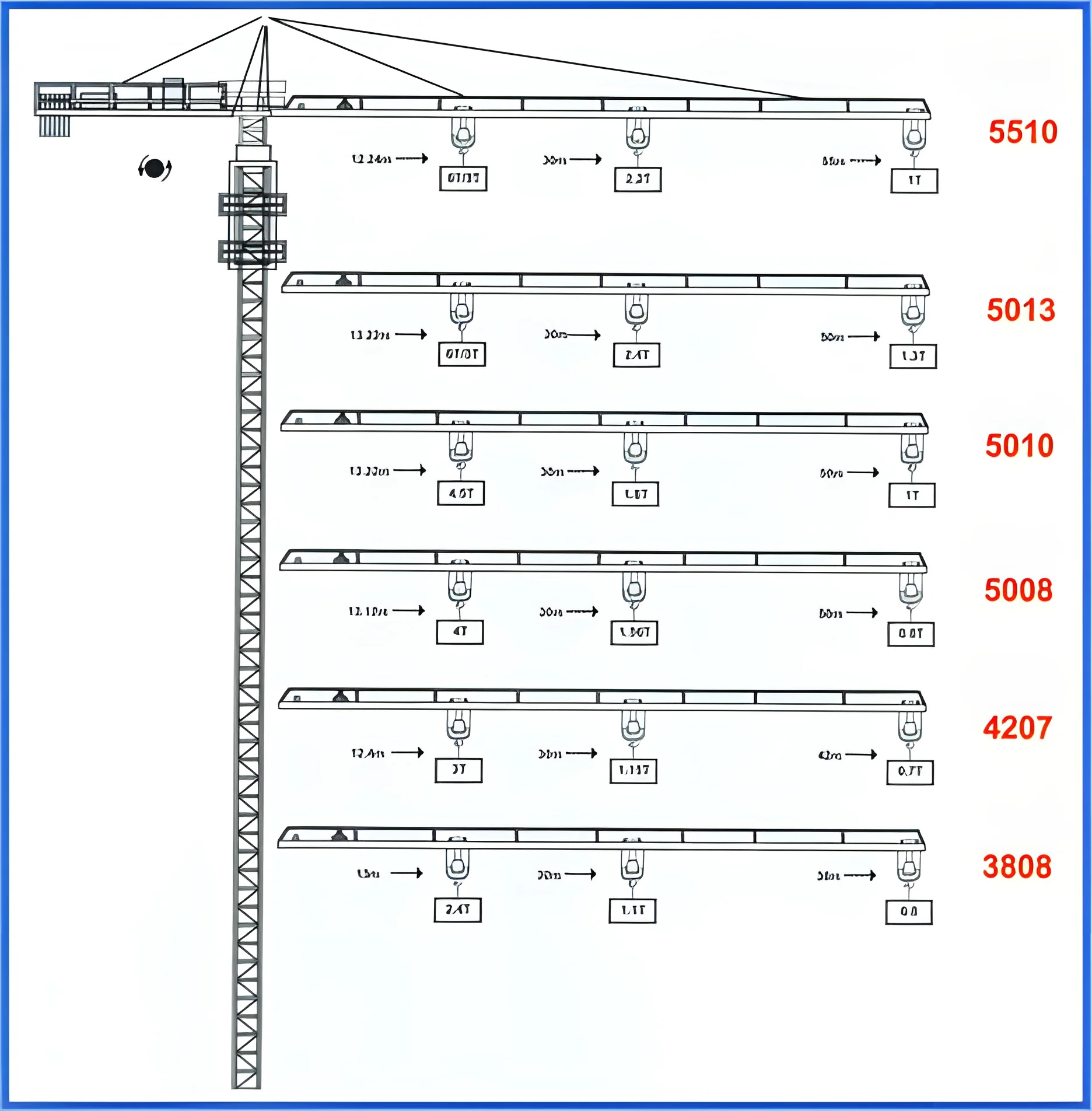
Tower cranes are a type of crane commonly used in the construction industry. They are characterized by their tall, vertical structures and their ability to lift heavy loads to great heights. Tower cranes operate using a horizontal arm, known as a jib, which can rotate 360 degrees. This design allows them to effectively move materials and equipment across a construction site.
These cranes are primarily used for building skyscrapers, bridges, and large commercial structures. Their height and lifting capacity make them ideal for projects that require the transportation of heavy materials, such as steel and concrete. In addition to construction, tower cranes can also be used in other sectors, including infrastructure development and heavy industrial applications. As urban areas continue to grow and demand for tall buildings increases, the relevance of tower cranes in the industry remains significant.
Key Features and Specifications
Tower cranes are engineered with several key features that enhance their performance and usability. Understanding these specifications is crucial for businesses looking to utilize tower cranes effectively.
Key specifications include:
1. Lifting Capacity
- This specification defines the maximum weight a tower crane can lift.
- Typical ranges can vary from 5 tons to over 20 tons.
2. Working Height
- The maximum height to which the crane can lift materials.
- This typically ranges from 30 meters to over 100 meters, depending on the model.
3. Jib Length
- Refers to the length of the horizontal arm.
- Common jib lengths range from 30 meters to 80 meters.
4. Slewing Radius
- The radius within which the crane can rotate.
- Usually between 2 meters to 4 meters.
5. Base Dimensions
- The size of the crane’s base, which affects stability.
- Base dimensions typically range from 4 meters to 6 meters.
6. Power Supply
- Indicates whether the crane operates on electric or diesel power.
- Most modern cranes are electric, but diesel options are also available.
7. Control System
- Describes how the crane is operated, either manually or through remote control.
- Advanced models may include automated features for enhanced efficiency.
8. Safety Features
- Includes emergency shutdown systems and overload protection.
- Compliance with international safety standards is a key consideration.
In summary, understanding the features and specifications of tower cranes helps businesses select the right equipment for their projects and ensures safety and efficiency on the job site.
Common Applications and Use Cases
Tower cranes are versatile and utilized across various industries. Their ability to lift heavy loads makes them indispensable in many construction projects.
1. Construction: Tower cranes are used in residential and commercial building projects. They facilitate the lifting of heavy materials, such as concrete and steel, to great heights.
2. Infrastructure Development: They play a critical role in constructing bridges and highways. Their lifting capabilities allow for the placement of heavy components with precision.
3. Industrial Manufacturing: In manufacturing plants, tower cranes can assist in the installation of large machinery and equipment, improving operational efficiency.
4. Energy Sector: Tower cranes are employed in the construction of wind turbines and other energy infrastructure, enabling the lifting of heavy components.
5. Mining: In mining operations, they are used for lifting heavy machinery and materials, ensuring safe and efficient transport.
6. Demolition: Specialized tower cranes are used for controlled demolition of tall structures, allowing for safe dismantling.
7. Telecommunications: Tower cranes assist in constructing communication towers, ensuring proper installation at elevated heights.
Product Variants and Subcategories
While specific variants of tower cranes may not be available, there are several classifications based on size, capacity, and application.
Luffing Jib Tower Crane: This type features a jib that can be raised and lowered, providing greater flexibility in confined spaces. It is ideal for projects near existing structures.
Flat Top Tower Crane: This variant has a flat top design, which simplifies transportation and assembly. It is commonly used in urban construction settings.
Hammerhead Tower Crane: Known for its distinctive shape, this crane provides excellent lifting capabilities and is often utilized in high-rise construction.
Self-Erecting Tower Crane: These cranes can be erected and dismantled without additional equipment, making them suitable for smaller projects or limited access sites.
Benefits and Advantages
Tower cranes offer numerous benefits that make them a valuable asset for construction projects.
Key benefits include:
1. Enhanced Efficiency: Tower cranes can lift and move materials quickly, significantly reducing construction time.
2. Increased Safety: Equipped with advanced safety features, they minimize the risks associated with lifting heavy loads.
3. High Lifting Capacity: Their ability to lift substantial weights makes them suitable for various applications.
4. Versatility: Tower cranes can be used in diverse industries, from construction to manufacturing, showcasing their adaptability.
5. Space Optimization: Their vertical design allows for efficient use of limited ground space at construction sites.
6. Cost-Effectiveness: While the initial investment may be high, the efficiency and time savings they provide can lead to lower overall project costs.
Buying Guide for B2B Buyers
When sourcing tower cranes, there are several factors to consider to ensure you make an informed decision.
1. Quality Assessment: Evaluate cranes based on their build quality and adherence to industry standards. Look for manufacturers with a history of reliability and performance.
2. Supplier Verification: Conduct thorough background checks on potential suppliers. Ensure they have a solid reputation and provide adequate support and service.
3. Pricing and MOQ: Understand the pricing structure and minimum order quantities. Compare offers from different suppliers to find the best value.
4. Delivery and Lead Times: Discuss delivery schedules and lead times with suppliers. Timely delivery is crucial for maintaining project timelines.
5. Compliance Requirements: Ensure that the cranes meet all relevant regulatory and safety standards in your region. Compliance with standards like CE is essential for operational safety.
Compliance and Certifications
Compliance and certifications are critical in the tower crane industry. Quality standards and safety regulations ensure that cranes operate effectively and safely.
Relevant quality standards, such as ISO 9001, establish frameworks for quality management and manufacturing processes. Compliance with these standards guarantees that tower cranes are produced consistently and meet customer expectations.
Industry certifications, like CE, indicate that products comply with European safety and environmental requirements. These certifications provide confidence to buyers regarding the safety and reliability of the cranes.
Safety and testing requirements include rigorous assessments to ensure that cranes can handle specified loads without failure. Regular inspections and maintenance are also necessary to uphold safety standards.
Regional compliance considerations may vary, so it is essential for buyers to be aware of local regulations that affect crane operation and safety.
Why Source Tower Cranes from Pepagora?
Pepagora provides a trusted platform for sourcing tower cranes, offering several key advantages for B2B buyers.
Verified Supplier Network: Pepagora has established a comprehensive network of verified suppliers. This ensures that buyers can connect with reputable manufacturers who meet industry standards.
Streamlined RFQ Process: The platform simplifies the request for quotation process, allowing buyers to easily compare offerings from multiple suppliers. This efficiency saves time and aids in decision-making.
Trade Assurance and Support: Pepagora offers trade assurance services that protect buyers' investments. This includes support throughout the sourcing process, ensuring a smooth transaction.
Regional Coverage: With a strong presence in markets like India, the GCC, and Southeast Asia, Pepagora provides extensive regional coverage. This geographic reach enables buyers to access a diverse range of suppliers and products tailored to their needs.


 India
 India
 India
 India
 India
 India
Frequently Asked Questions
What are Tower Cranes?
Tower cranes are a type of construction crane that are characterized by their vertical structure and height. They are commonly used in large construction projects to lift and move heavy materials and equipment to significant heights.
What are the different types of Tower Cranes?
There are several types of tower cranes, including flat-top cranes, luffing jib cranes, and hammerhead cranes. Each type has specific functionalities suited to different construction needs and site conditions.
How do I choose the right Tower Cranes?
Choosing the right tower crane involves considering factors such as the height and reach required for the project, the weight of materials to be lifted, and the site layout. It's also essential to evaluate the crane's load capacity and the stability features needed for safe operation.
What are the standard specifications for Tower Cranes?
Standard specifications for tower cranes typically include maximum lifting height, load capacity, boom length, and rotation capabilities. These specifications can vary by manufacturer and model, so it's important to refer to the technical data sheet provided by the manufacturer.
What is the price range for Tower Cranes?
The price range for tower cranes can vary significantly based on their type, specifications, and manufacturer. Generally, you can expect prices to start from several lakhs and can go up to a few crores in Indian Rupees depending on the complexity and capacity of the crane.
What quality standards apply to Tower Cranes?
Tower cranes must comply with various quality standards to ensure safety and reliability, including ISO 9001 for quality management systems and IS 807 for code of practice for design, manufacture, and installation. Additional certifications may be required based on local regulations.
Where can I find Tower Cranes suppliers in India?
You can find tower crane suppliers in India through various channels such as online B2B marketplaces like Pepagora, industry trade shows, and construction equipment expos. It's advisable to check reviews and credentials before making a purchase.
Can Tower Cranes be customized?
Yes, tower cranes can often be customized to meet specific project requirements. Customizations may include modifications in boom length, lifting capacity, or control systems to enhance safety and efficiency based on site conditions.
What is the typical minimum order quantity for Tower Cranes?
The typical minimum order quantity (MOQ) for tower cranes can vary by supplier and the type of crane being ordered. It's common for suppliers to have a MOQ of one unit for standard models, while custom orders may have different requirements.
What is the typical lead time for Tower Cranes?
The typical lead time for tower cranes can range from a few weeks to several months, depending on the specifications and whether the crane is standard or customized. It is essential to confirm the estimated delivery time with the supplier during the ordering process.
Why Businesses Trust Pepagora
Thousands of companies trust Pepagora to source smarter and sell faster
Expand Your Sales Globally

Source Smarter,Grow Faster
