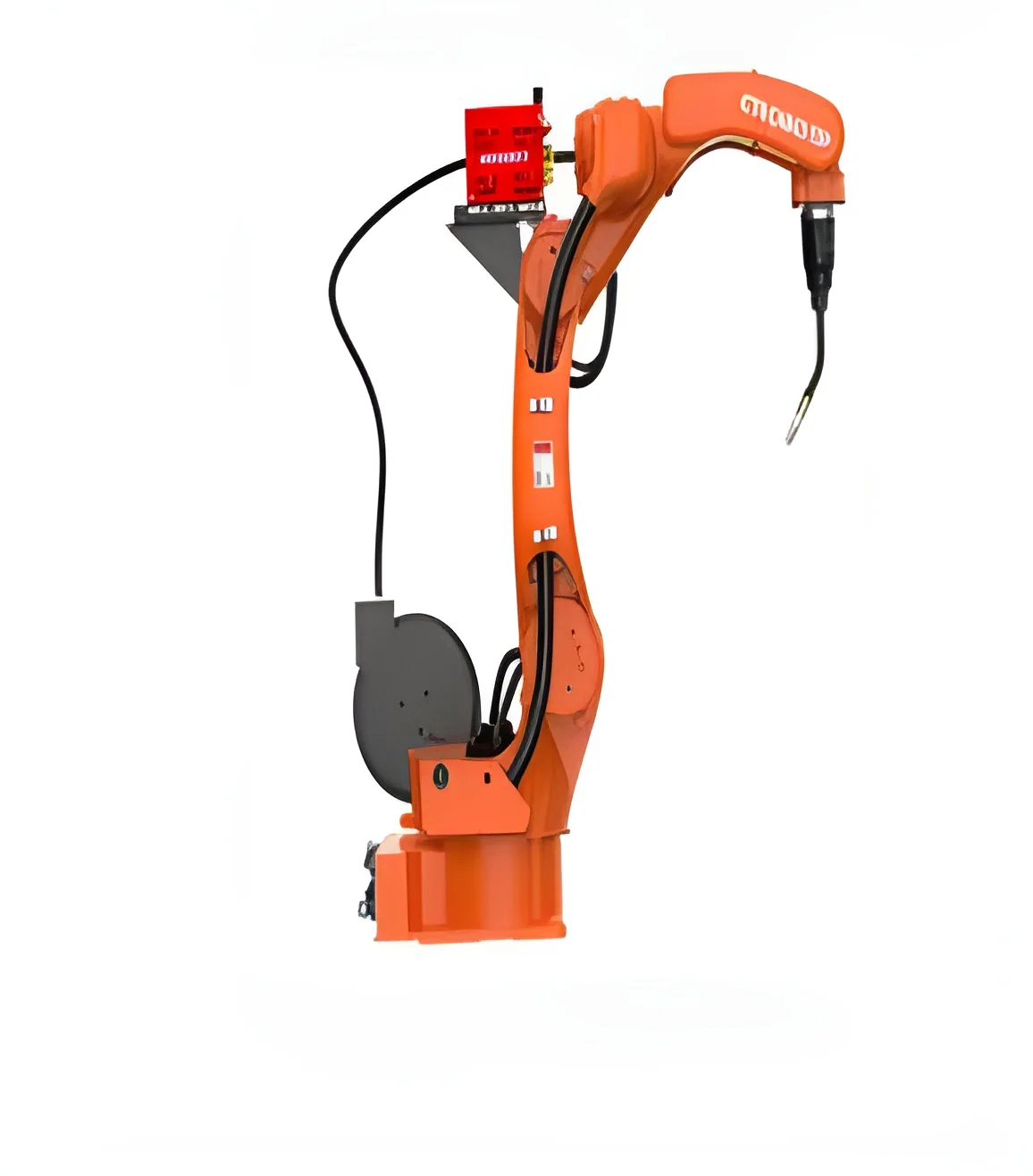
What are Robotic Welding Arms?
Robotic welding arms are automated systems designed to perform welding tasks with high precision and efficiency. These arms are equipped with advanced technology that allows them to execute various welding processes, including MIG, TIG, and spot welding. By utilizing robotic welding arms, manufacturers can achieve consistent quality, reduce human error, and enhance production speed. The arms can be programmed to follow specific welding paths and adapt to different materials, making them versatile tools in the manufacturing sector.
These robotic systems are primarily used in industries such as automotive, aerospace, construction, and heavy machinery. In the automotive industry, for instance, robotic welding arms are employed to assemble vehicle frames and body parts, ensuring structural integrity and reducing assembly times. The use of these robots not only improves productivity but also allows companies to meet increasing demand without sacrificing quality. As industries continue to embrace automation, the market for robotic welding arms is expected to grow significantly.
The relevance of robotic welding arms in the industrial landscape cannot be overstated. With the push towards automation and smart manufacturing, businesses are investing in these technologies to remain competitive. The increasing complexity of products and the need for high-quality standards are driving the adoption of robotic welding solutions across various sectors.
Key Features and Specifications
Robotic welding arms come with several features and specifications that enhance their performance and adaptability in various applications. These features are designed to cater to the diverse needs of industries looking to improve their welding processes.
Key specifications include:
1. Payload Capacity
- Indicates the maximum weight the robotic arm can handle.
- Typical ranges vary from 5 kg to over 200 kg, depending on the model.
2. Reach
- Refers to the maximum distance the arm can extend to perform welding tasks.
- Reach typically ranges from 600 mm to 3500 mm.
3. Degrees of Freedom
- Describes the number of axes the arm can move, allowing for complex movements.
- Common configurations include 6 to 7 degrees of freedom.
4. Welding Speed
- Measures how quickly the robot can perform welds.
- Speeds can range from 1 m/min to 10 m/min or more.
5. Positioning Accuracy
- Indicates how precisely the arm can position itself to perform a weld.
- Accuracy is often within ±0.1 mm.
6. Control System
- Refers to the software and hardware that manage the robotic arm.
- Systems may include programmable logic controllers (PLCs) or advanced robotics software.
7. Power Supply
- Details the energy requirements for the robotic arm.
- Most robotic arms operate on standard voltages between 220V and 480V.
8. Safety Features
- Includes emergency stop buttons, safety cages, and sensors to prevent accidents.
- Compliance with CE standards ensures safety during operation.
In summary, robotic welding arms are equipped with advanced specifications that facilitate their use in challenging industrial environments. These features contribute to their effectiveness in enhancing productivity and maintaining high-quality welding standards.
Common Applications and Use Cases
Robotic welding arms find applications across a wide range of industries. Their versatility and precision make them indispensable tools in modern manufacturing processes.
1. Automotive Industry: Robotic welding arms are commonly used in the assembly of car bodies, frames, and various components, ensuring high structural integrity and efficiency in production lines.
2. Aerospace Industry: In this sector, robotic welding is utilized for assembling critical components such as fuselage sections and engine parts, where precision and reliability are paramount.
3. Heavy Machinery Manufacturing: Robotic arms are employed to weld large machinery components, enhancing the speed and quality of the manufacturing process while reducing labor costs.
4. Shipbuilding: These robotic systems are used in the construction of ships, where they perform welding tasks in hard-to-reach areas, ensuring that high standards of quality and safety are met.
5. Construction Equipment: Robotic welding arms are utilized to fabricate various construction equipment, providing consistent quality and reducing production time.
6. Metal Fabrication: In metalworking shops, robotic arms streamline the welding of intricate metal parts, allowing for greater design flexibility and faster turnaround times.
7. Electronics: Robotic welding is increasingly used in the assembly of electronic devices, where precision welding is required for components such as circuit boards and casings.
Product Variants and Subcategories
Robotic welding arms come in various designs to meet specific industrial needs. This diversity allows businesses to choose the best solution for their unique applications.
Articulated Robotic Arms
These are the most common type of robotic welding arms, featuring multiple joints that allow for a wide range of motion. They are ideal for complex welding tasks and can navigate tight spaces effectively.
Collaborative Robots (Cobots)
Designed to work alongside humans, cobots are equipped with advanced safety features. They are ideal for small-scale operations where human oversight is necessary, enhancing flexibility and safety.
Compact Robotic Arms
These are smaller, lightweight models that are perfect for tight spaces and smaller workpieces. They offer high precision and are often used in industries such as electronics and small component manufacturing.
Benefits and Advantages
Robotic welding arms offer numerous advantages that can significantly enhance manufacturing processes. Their integration into production lines can lead to improved efficiency and quality.
Key benefits include:
1. Increased Productivity: Robotic arms can operate continuously without breaks, significantly boosting output and reducing cycle times.
2. Consistent Quality: These systems provide uniform welding results, minimizing defects and ensuring compliance with industry standards.
3. Cost Savings: By automating welding processes, companies can reduce labor costs and minimize material waste, leading to overall cost efficiency.
4. Enhanced Safety: Robotic arms reduce the risk of workplace injuries by taking over dangerous welding tasks, creating a safer work environment.
5. Flexibility: These robots can be easily reprogrammed for different tasks, allowing manufacturers to adapt quickly to changing production needs.
6. Reduced Lead Times: Faster welding processes lead to shorter production cycles, enabling companies to meet deadlines more effectively.
Buying Guide for B2B Buyers
When sourcing robotic welding arms, potential buyers should consider several important factors to ensure they make informed purchasing decisions.
1. Quality Assessment: Evaluate the quality of the robotic arms by reviewing manufacturer certifications, product testing, and customer feedback to ensure reliability and durability.
2. Supplier Verification: Vet suppliers by checking their reputation, industry experience, and customer references. This helps ensure you are dealing with a trustworthy and experienced provider.
3. Pricing and MOQ: Understand the pricing structure and minimum order quantities. Comparing quotes from multiple suppliers can help you find the best deal that fits your budget.
4. Delivery and Lead Times: Consider the logistics involved in acquiring the robotic arms. Ensure the supplier can meet your delivery timelines and has a reliable shipping process.
5. Compliance Requirements: Check for compliance with relevant industry standards and regulations. This includes safety certifications and quality assurance protocols that may be necessary for your operations.
Compliance and Certifications
Robotic welding arms are subject to various industry standards and certifications to ensure safety and quality in manufacturing processes. Adherence to ISO 9001 is crucial, as it outlines quality management principles that help organizations consistently meet customer requirements. Compliance with HACCP and GDP standards further emphasizes the importance of maintaining product safety and quality in production.
The CE certification is also significant for robotic welding arms, as it indicates compliance with European health, safety, and environmental protection standards. This certification reassures buyers about the reliability and safety of the equipment they are purchasing.
Safety and testing requirements are essential in the robotics industry. Manufacturers must conduct rigorous testing to ensure that the robotic arms operate safely under various conditions. Additionally, regional compliance considerations are increasingly important as more companies expand their operations globally. Being aware of local regulations can help avoid costly fines and ensure smooth operations across different markets.
Why Source Robotic Welding Arms from Pepagora?
Pepagora provides a trusted platform for sourcing robotic welding arms, offering several key advantages for B2B buyers. With a verified supplier network, Pepagora ensures that all suppliers meet rigorous standards for quality and reliability. This verification process helps buyers make informed decisions, reducing the risk of selecting subpar products.
The streamlined RFQ process on Pepagora allows buyers to quickly receive quotations from multiple suppliers, facilitating competitive pricing and better negotiation opportunities. This efficiency saves time and helps buyers find the best solutions for their needs.
Pepagora also offers trade assurance and support, providing buyers with protection throughout the purchasing process. This assurance builds confidence in transactions, allowing businesses to focus on their core operations without worrying about potential risks.
Finally, Pepagora's regional coverage extends across India, the GCC, and Southeast Asia, ensuring that buyers have access to a wide range of suppliers and products. This extensive reach makes it easier for businesses to find the right robotic welding arms to meet their specific needs and enhance their manufacturing capabilities.

 IN
IN