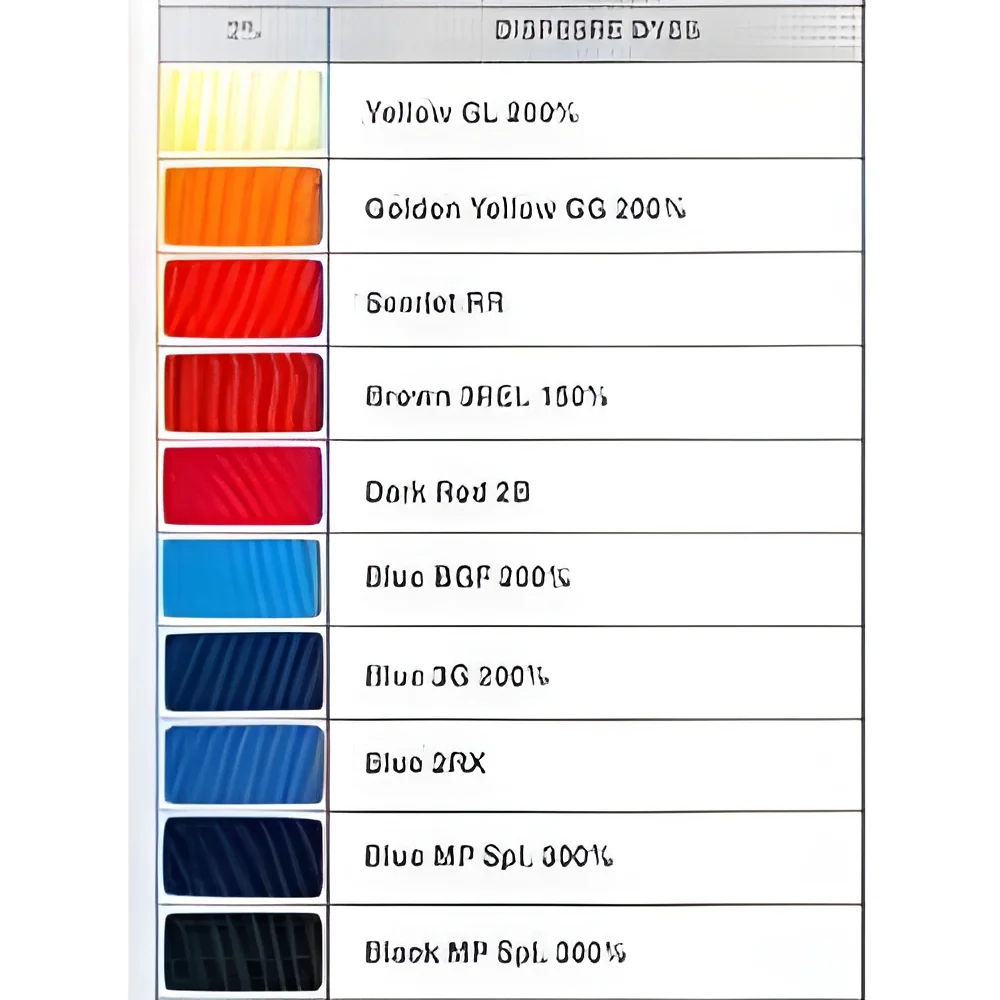
What are Disperse Dyes?
Disperse dyes are a class of dyes that are primarily used for coloring synthetic fibers, such as polyester, nylon, and acetate. These dyes are characterized by their fine particle size, which allows them to disperse evenly in a solution. This feature makes them ideal for dyeing processes that require high temperatures and pressures. Disperse dyes are known for their vibrant colors and excellent lightfastness, making them a preferred choice in the textile industry.
These dyes find extensive applications in various business sectors, particularly in the textile and apparel industries. They are mainly utilized for dyeing fabrics and producing finished garments that require vibrant and durable colors. Additionally, disperse dyes are used in various applications like printing, coating, and other processes that involve synthetic materials. The relevance of disperse dyes in the market is significant, as they cater to the growing demand for high-performance textiles that meet modern consumer expectations.
Key Features and Specifications
Disperse dyes come with several key features that make them suitable for industrial applications. Understanding these specifications is crucial for businesses looking to incorporate these dyes into their production processes.
Key specifications include:
1. Color Fastness
- High resistance to fading under light exposure and washing.
- Typically rated from 1 to 8, with 8 being the highest level of fastness.
2. Temperature Stability
- Effective at high dyeing temperatures, usually between 130°C to 200°C.
- Maintains color integrity even under extreme conditions.
3. Solubility
- Dispersible in water but not soluble, forming stable suspensions.
- Ensures even application on fibers during the dyeing process.
4. Particle Size
- Fine particle size range, often between 0.5 to 1 micron.
- Allows for better penetration into synthetic fibers.
5. pH Stability
- Compatible with a wide range of pH levels, typically between 4 to 9.
- Ensures color consistency across different dyeing conditions.
6. Application Method
- Suitable for various application methods, including exhaustion, continuous dyeing, and printing.
- Provides flexibility for manufacturers in their production workflows.
7. Environmental Compliance
- Many disperse dyes comply with eco-friendly regulations.
- Reduces the environmental impact in industrial applications.
In summary, understanding these features helps businesses select the right disperse dyes to meet their specific production needs.
Common Applications and Use Cases
Disperse dyes serve various industries, making them versatile for a wide range of applications.
1. Textile Industry: Disperse dyes are predominantly used for dyeing polyester and other synthetic fabrics. Their vibrant colors and high durability make them ideal for fashion and sportswear.
2. Automotive Industry: Used for coloring synthetic upholstery and interior components, ensuring aesthetic appeal and resistance to fading.
3. Furniture Industry: Employed in dyeing synthetic textiles used in upholstery and draperies, providing rich colors and long-lasting finishes.
4. Printing Industry: Disperse dyes are frequently used in digital printing processes for synthetic fabrics, allowing for high-definition graphics and designs.
5. Sports Equipment: Used to color synthetic materials in sports gear and equipment, ensuring bright and lasting colors that withstand wear and tear.
6. Home Textiles: Commonly used for dyeing curtains, cushions, and bedding made from synthetic fibers, enhancing home décor.
7. Industrial Applications: Utilized in coating synthetic materials and products, providing both color and protective features.
Product Variants and Subcategories
Disperse dyes are available in various forms and formulations, providing flexibility for different applications.
Standard Disperse Dyes: These are conventional dyes used for a wide range of synthetic fibers. They offer excellent color intensity and stability, making them suitable for general applications.
High-Temperature Disperse Dyes: Designed for dyeing processes that require elevated temperatures. They maintain color integrity and fastness even under extreme conditions.
Low Energy Disperse Dyes: Formulated for use in dyeing processes that require less energy consumption. They are efficient and eco-friendly, ideal for sustainable manufacturing practices.
Benefits and Advantages
Disperse dyes offer numerous advantages for businesses in various industries.
1. High Color Vibrancy: They provide bright and intense colors that enhance the aesthetic appeal of fabrics and products.
2. Excellent Fastness Properties: Disperse dyes have superior light and wash fastness, ensuring longevity and durability in finished products.
3. Versatile Application: Suitable for various dyeing processes, including exhaust dyeing and printing, allowing flexibility in production.
4. Eco-Friendly Options: Many disperse dyes are available in eco-friendly formulations, reducing environmental impact and meeting regulatory standards.
5. Cost-Effectiveness: They offer good coverage and require less dye material, making them a cost-effective choice for manufacturers.
6. Compatibility with Synthetic Fibers: Disperse dyes are specifically designed for synthetic materials, ensuring optimal dyeing results.
Buying Guide for B2B Buyers
When sourcing disperse dyes, businesses should consider several critical factors to ensure they choose the right products for their needs.
1. Quality Assessment: Evaluate the quality of disperse dyes based on color fastness ratings, particle size, and solubility. High-quality dyes ensure better results in production.
2. Supplier Verification: Vet suppliers to ensure they meet industry standards and provide reliable products. Look for certifications and customer reviews.
3. Pricing and MOQ: Understand the pricing structure and minimum order quantities (MOQ) to align with budget constraints and production needs.
4. Delivery and Lead Times: Assess logistics capabilities of suppliers to ensure timely delivery and minimize production delays.
5. Compliance Requirements: Ensure that the selected disperse dyes meet relevant safety and environmental regulations to comply with industry standards.
Compliance and Certifications
Compliance and certifications are crucial elements for businesses sourcing disperse dyes. These dyes must adhere to relevant quality standards, including ISO 9001 for quality management systems, ensuring consistent quality in production.
Industry certifications such as CE indicate that the products meet European health, safety, and environmental protection standards. This is particularly important for businesses exporting to regions with stringent regulations.
Additionally, safety and testing requirements must be met to ensure that disperse dyes do not pose risks during handling and application. Regional compliance considerations should also be evaluated, as regulations can vary significantly across different markets.
Why Source Disperse Dyes from Pepagora?
Pepagora provides a trusted platform for sourcing disperse dyes, offering several key advantages for businesses.
Verified Supplier Network: Pepagora ensures that all suppliers in its network are thoroughly vetted and meet high standards of quality and compliance. This gives buyers confidence in their sourcing decisions.
Streamlined RFQ Process: The Request for Quotation (RFQ) system simplifies the procurement process, allowing businesses to easily request and compare quotes from various suppliers.
Trade Assurance and Support: Pepagora offers buyer protection through trade assurance programs, ensuring that businesses receive quality products and support throughout their procurement journey.
Regional Coverage: With a strong presence in India, the GCC, and Southeast Asia, Pepagora provides extensive geographic coverage, making it easier for businesses to find reliable suppliers in their region.

 IN
IN