Key Features and Specifications
Xylene (Mixed, Ortho, Para) boasts several important features and specifications that make it suitable for various industrial applications. Understanding these specifications is crucial for businesses looking to incorporate xylene into their processes.
Key specifications include:
1. Purity Levels
- Typically available in high purity grades
- Purity often exceeds 99%
2. Boiling Point
- Mixed xylene has a boiling point range of approximately 138 to 144 degrees Celsius
- Ortho and para isomers have specific boiling points around 144 degrees Celsius
3. Density
- Density ranges from 0.86 to 0.88 g/cm³
- Important for calculations in formulation and application
4. Solubility
- Soluble in organic solvents
- Limited solubility in water, making it ideal for solvent-based applications
5. Flash Point
- Flash point varies between 24 to 27 degrees Celsius
- Important for handling and storage safety
6. Viscosity
- Viscosity levels are low, enhancing its effectiveness as a solvent
7. Chemical Stability
- Generally stable under normal conditions
- Reacts with strong oxidizing agents
8. Environmental Impact
- Must be managed according to environmental regulations due to its potential volatility
In summary, xylene's diverse specifications make it a valuable component in various manufacturing processes, ensuring its continued relevance in multiple industries.
Common Applications and Use Cases
Xylene (Mixed, Ortho, Para) is widely utilized across multiple industries due to its solvent properties and chemical versatility.
1. Paints and Coatings: Xylene is a key solvent in the formulation of paints and coatings, enhancing application properties such as flow and drying time.
2. Adhesives: The compound is commonly used in the production of adhesives, providing strong bonding capabilities.
3. Chemical Production: Xylene serves as an essential feedstock for the production of chemicals like terephthalic acid, which is used in plastic manufacturing.
4. Textile Industry: It is employed in dyeing and finishing processes within the textile sector, benefiting color uptake and overall quality.
5. Pharmaceuticals: Xylene finds applications in the pharmaceutical industry as a solvent in drug formulation and synthesis.
6. Printing Inks: The compound is used in the manufacturing of printing inks, where it aids in pigment dispersion and film formation.
7. Laboratory Use: Xylene is also relevant in laboratory settings, particularly in histology for tissue processing and embedding.
Product Variants and Subcategories
Xylene is available in various forms to meet the needs of different applications and industries. Each variant has specific features and applications that cater to unique requirements.
Mixed Xylene
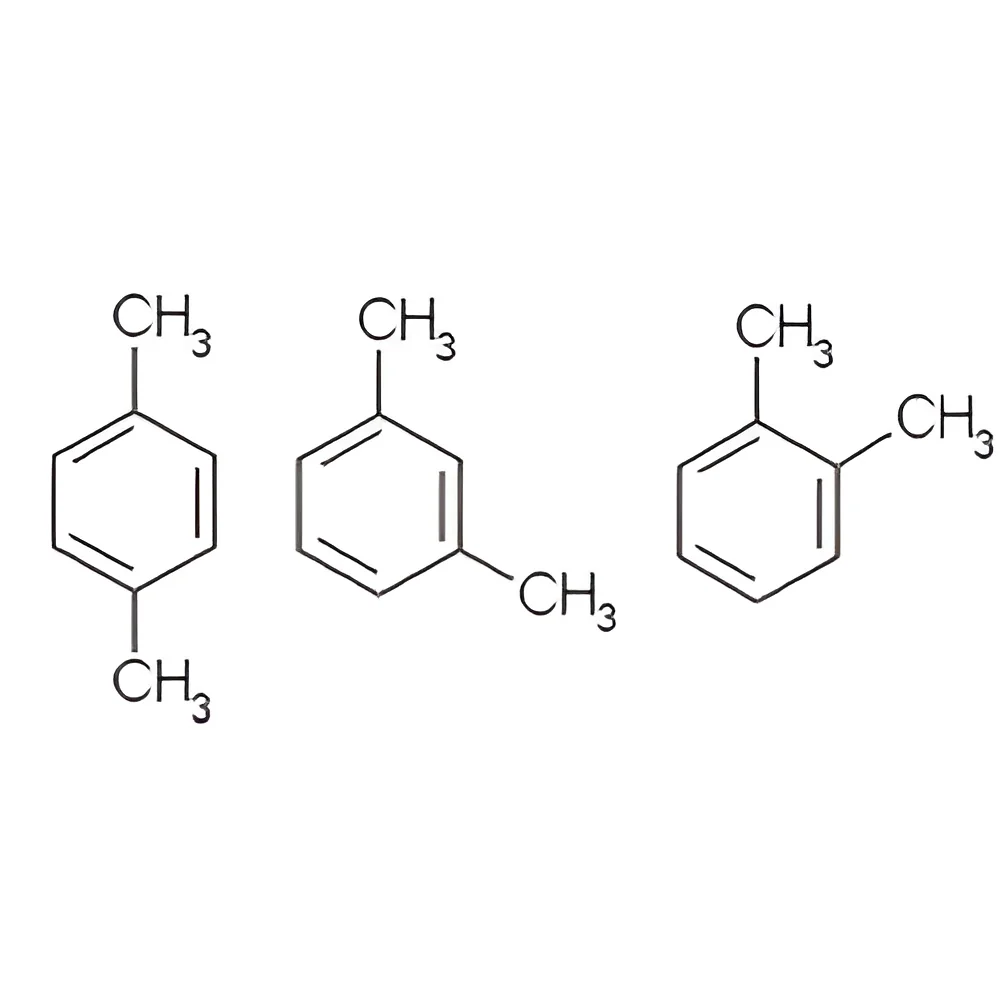
Mixed xylene is a blend of ortho, meta, and para isomers. It is commonly used in industrial applications as a solvent due to its effective solvency power. This variant is widely utilized in the paint and coatings industry as well as in the production of adhesives.
Ortho-Xylene
Ortho-xylene is predominantly used as an intermediate in the production of phthalic anhydride, which is essential for plasticizers and resins. Its unique chemical structure allows it to serve specific applications in chemical manufacturing.
Para-Xylene
Para-xylene is primarily used in the production of purified terephthalic acid, a key component in the manufacture of polyester fibers and films. Its high purity and specific properties make it ideal for high-performance applications in textiles and packaging.
Benefits and Advantages
Utilizing Xylene (Mixed, Ortho, Para) offers several advantages for industries requiring effective solvents and chemical intermediates.
1. High Solvency Power: Xylene provides excellent solvency for various resins and coatings, improving application performance.
2. Versatile Applications: The different isomers allow for a wide range of applications across multiple industries, enhancing product utility.
3. Chemical Intermediate: Xylene serves as a crucial building block for numerous chemicals, facilitating efficient production processes.
4. Ease of Handling: Being a liquid at room temperature, xylene is easy to transport and store, simplifying logistics.
5. Low Viscosity: Its low viscosity enhances mixing and application in formulations, ensuring uniformity and effectiveness.
6. Cost-Effectiveness: Xylene is generally available at competitive prices, making it an economical choice for businesses.
Buying Guide for B2B Buyers
When sourcing Xylene (Mixed, Ortho, Para), it is essential for B2B buyers to consider several key factors to ensure quality and reliability.
1. Quality Assessment: Buyers should evaluate the purity and specifications of xylene to ensure it meets their application requirements. Conducting tests and seeking certifications can help in this assessment.
2. Supplier Verification: It is crucial to vet suppliers based on their reputation, production capabilities, and compliance with industry standards. This step helps in establishing a reliable supply chain.
3. Pricing and MOQ: Understanding the market pricing and minimum order quantities (MOQ) is essential for budgeting and procurement planning. Buyers should compare quotes from multiple suppliers.
4. Delivery and Lead Times: Ensure that suppliers can meet delivery schedules and lead times, which are critical for maintaining production timelines.
5. Compliance Requirements: Buyers must be aware of relevant regulatory requirements and certifications, such as CE compliance, to ensure safe handling and use of xylene in their operations.
Compliance and Certifications
Xylene (Mixed, Ortho, Para) is subject to various compliance and certification requirements to ensure safety and quality in industrial applications. Adhering to relevant quality standards, such as ISO 9001, is crucial for maintaining product consistency and reliability.
Industry certifications, such as CE marking, indicate that the product meets European safety standards. This is particularly important for companies operating in regulated markets. Furthermore, safety and testing requirements must be thoroughly considered, as xylene can pose health and environmental risks if not handled correctly.
Regional compliance considerations are also vital. Different regions may have specific regulations governing the transport, storage, and use of xylene. Companies must ensure that their suppliers comply with these regional standards to avoid legal issues and ensure safety.
Why Source Xylene (Mixed, Ortho, Para) from Pepagora?
Pepagora provides a trusted platform for sourcing Xylene (Mixed, Ortho, Para) with several key advantages that enhance the procurement process.
Verified Supplier Network: Pepagora prides itself on a rigorous supplier verification process, ensuring that all listed suppliers meet high standards of quality and reliability. This gives buyers confidence in their sourcing decisions.
Streamlined RFQ Process: The platform offers a streamlined request for quotation (RFQ) process, enabling buyers to obtain competitive quotes efficiently. This helps in making informed purchasing decisions and securing the best prices.
Trade Assurance and Support: Pepagora provides trade assurance, offering buyers protection throughout the transaction process. Their support team is available to assist with any inquiries or issues that may arise.
Regional Coverage: With a strong presence in India, the GCC, and Southeast Asia, Pepagora offers extensive geographic reach. This allows buyers to connect with local suppliers while accessing a broader market for their sourcing needs.

 IN
IN
 India
India