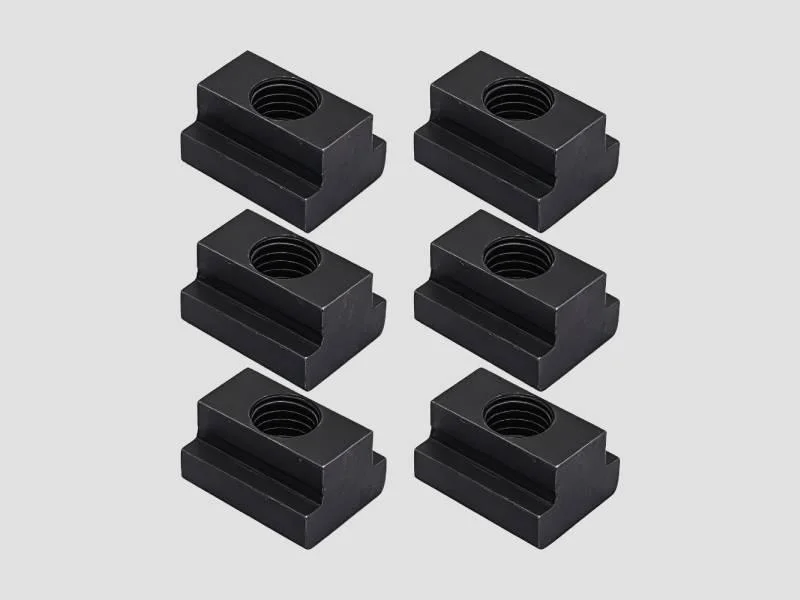
𝗪𝗵𝗮𝘁 𝗮𝗿𝗲 𝗧-𝗡𝘂𝘁𝘀?
T-Nuts, also known as tee nuts or blind nuts, are a type of fastener used primarily in woodworking and metalworking applications. They are designed to provide a secure and reliable threaded insert for materials that are too thin to hold a screw or bolt directly. T-Nuts consist of a cylindrical body with a flange on one end and external threads on the cylindrical portion, allowing them to be inserted into pre-drilled holes. The flange prevents the nut from turning when a screw is tightened, making them essential for creating strong joints in various assemblies.
These fasteners are widely used in furniture manufacturing, cabinetry, and other construction applications where durable connections are required. T-Nuts are particularly advantageous in situations where components need to be disassembled and reassembled multiple times. Their ability to create strong threaded connections makes them valuable in industries such as automotive, aerospace, and electronics, where precision and reliability are paramount.
As the demand for efficient and reliable fastening solutions continues to rise, T-Nuts play a crucial role in many industrial processes. The versatility and ease of use of T-Nuts make them integral to modern manufacturing and assembly practices, catering to a broad spectrum of applications across various sectors.
𝗞𝗲𝘆 𝗙𝗲𝗮𝘁𝘂𝗿𝗲𝘀 𝗮𝗻𝗱 𝗦𝗽𝗲𝗰𝗶𝗳𝗶𝗰𝗮𝘁𝗶𝗼𝗻𝘀
T-Nuts come with several key features that enhance their performance and usability in different applications. When selecting T-Nuts, it is essential to consider their specifications to ensure they meet the specific requirements of your project.
Key specifications include:
1. Thread Size
- Common sizes range from #4 to #10 for standard applications.
- Metric sizes can vary, including M4, M6, and M8.
2. Flange Diameter
- Typically ranges from 10mm to 20mm, depending on the size of the T-Nut.
- The flange helps distribute load and prevents pull-through.
3. Body Length
- Standard lengths vary from 10mm to 30mm.
- Longer bodies may be required for thicker materials.
4. Material
- Common materials include steel, stainless steel, and brass.
- Material choice affects corrosion resistance and load capacity.
5. Coating
- T-Nuts may come with various coatings such as zinc plating or black oxide.
- Coatings enhance durability and resistance to environmental factors.
6. Load Capacity
- Load ratings can vary based on size and material.
- It is essential to match load capacity to application requirements.
7. Installation Method
- T-Nuts can be installed using simple hand tools or automated equipment.
- Ease of installation can affect production efficiency.
8. Compliance Standards
- T-Nuts may be manufactured according to industry standards such as CE.
- Compliance ensures quality and safety in use.
In conclusion, understanding the key features and specifications of T-Nuts is vital for selecting the right fasteners for your applications. Proper selection ensures durability, reliability, and performance in various industrial settings.
𝗖𝗼𝗺𝗺𝗼𝗻 𝗔𝗽𝗽𝗹𝗶𝗰𝗮𝘁𝗶𝗼𝗻𝘀 𝗮𝗻𝗱 𝗨𝘀𝗲 𝗖𝗮𝘀𝗲𝘀
T-Nuts serve a wide array of industries and applications, making them a versatile choice for many manufacturing and assembly needs.
1. Furniture Manufacturing: T-Nuts are commonly used in assembling wooden furniture, providing secure connections for legs, frames, and tabletops.
2. Automotive Industry: They are utilized in vehicle assembly, particularly in attaching interior components and securing body panels.
3. Electronics: T-Nuts are often found in electronic housings, where they provide threaded inserts for mounting circuit boards and other components.
4. Aerospace: The precision and strength of T-Nuts make them suitable for use in aircraft assembly, where safety and reliability are critical.
5. Construction: T-Nuts are used in various structural applications, including wall panels and pre-fabricated structures, to create strong joints.
6. Robotics: In robotics, T-Nuts are essential for securing components in custom-built machines and frameworks.
7. DIY Projects: T-Nuts are popular among hobbyists and builders for creating custom furniture and mechanical projects.
Overall, T-Nuts are integral to multiple industries, providing reliable fastening solutions for a diverse range of applications.
𝗣𝗿𝗼𝗱𝘂𝗰𝘁 𝗩𝗮𝗿𝗶𝗮𝗻𝘁𝘀 𝗮𝗻𝗱 𝗦𝘂𝗯𝗰𝗮𝘁𝗲𝗴𝗼𝗿𝗶𝗲𝘀
While there are no specific subcategories available for T-Nuts, they do come in various configurations and designs to suit different needs.
Standard T-Nuts: These are the most common type, featuring a cylindrical body and a flat flange. They are widely used in furniture and general assembly applications.
Insert T-Nuts: Designed for use in metal applications, insert T-Nuts have a more robust construction to handle higher load capacities. They are often used in automotive and industrial settings.
Locking T-Nuts: These variants include additional features to prevent loosening due to vibrations. They are ideal for applications in automotive and aerospace industries where safety is paramount.
Low-Profile T-Nuts: These are designed for use in applications where space is limited. Their compact design allows for more flexible assembly options.
Flanged T-Nuts: These T-Nuts have a larger flange that provides greater surface area for load distribution. They are commonly used in heavy-duty applications.
𝗕𝗲𝗻𝗲𝗳𝗶𝘁𝘀 𝗮𝗻𝗱 𝗔𝗱𝘃𝗮𝗻𝘁𝗮𝗴𝗲𝘀
T-Nuts offer several advantages that make them a preferred choice for various fastening applications.
Key benefits include:
1. Strong Connection: T-Nuts create a robust threaded connection that can handle significant loads, ensuring structural integrity.
2. Easy Installation: They can be quickly and easily installed using standard tools, reducing labor time and costs.
3. Reusability: T-Nuts allow for disassembly and reassembly, making them ideal for projects that require frequent modifications.
4. Versatility: Suitable for a range of materials, including wood and metal, T-Nuts can be used in diverse applications across multiple industries.
5. Cost-Effective: T-Nuts are generally affordable and can contribute to overall cost savings in assembly processes.
6. Space Efficiency: Their design allows for effective use of space in tight assemblies, facilitating innovative design solutions.
In summary, the benefits and advantages of T-Nuts make them a valuable component in many manufacturing and assembly processes, enhancing both performance and efficiency.
𝗕𝘂𝘆𝗶𝗻𝗴 𝗚𝘂𝗶𝗱𝗲 𝗳𝗼𝗿 𝗕𝟮𝗕 𝗕𝘂𝘆𝗲𝗿𝘀
When sourcing T-Nuts, it is important for buyers to consider several key factors to ensure they select the right products for their needs.
1. Quality Assessment: Buyers should examine the manufacturing quality of T-Nuts, looking for certifications and compliance with industry standards. This ensures reliability and performance.
2. Supplier Verification: It is crucial to vet suppliers by checking their reputation, customer reviews, and delivery capabilities. Reliable suppliers can significantly impact the quality of the product received.
3. Pricing and MOQ: Understanding the pricing structure and minimum order quantities (MOQ) is essential for budget planning and ensuring cost-effectiveness.
4. Delivery and Lead Times: Assessing the supplier's logistics and lead times helps in project planning and ensures timely delivery of components.
5. Compliance Requirements: Buyers should be aware of any regulatory compliance requirements that may affect their projects, including safety and environmental considerations.
In conclusion, a thoughtful approach to sourcing T-Nuts can lead to successful project outcomes and long-term partnerships with suppliers.
𝗖𝗼𝗺𝗽𝗹𝗶𝗮𝗻𝗰𝗲 𝗮𝗻𝗱 𝗖𝗲𝗿𝘁𝗶𝗳𝗶𝗰𝗮𝘁𝗶𝗼𝗻𝘀
T-Nuts are subject to various industry standards and certifications that ensure their quality and safety. One of the most recognized standards is ISO 9001, which outlines criteria for a quality management system. Compliance with this standard signifies that manufacturers maintain high-quality processes and consistent product delivery.
Additionally, T-Nuts may carry the CE mark, indicating that they meet European Union safety and performance standards. This certification is particularly important for products sold in European markets, ensuring they comply with essential requirements.
Safety and testing requirements are also crucial for T-Nuts, especially in industries such as automotive and aerospace. These products must undergo rigorous testing to assess their load-bearing capabilities and resistance to environmental factors.
Regional compliance considerations may vary, with different countries having specific regulations regarding fasteners. Buyers should ensure their chosen T-Nuts conform to local standards to avoid compliance issues.
𝗪𝗵𝘆 𝗦𝗼𝘂𝗿𝗰𝗲 𝗧-𝗡𝘂𝘁𝘀 𝗳𝗿𝗼𝗺 𝗣𝗲𝗽𝗮𝗴𝗼𝗿𝗮?
Pepagora offers a trusted platform for sourcing T-Nuts, providing several key advantages to buyers.
Verified Supplier Network: Pepagora takes pride in its extensive network of verified suppliers. Each supplier undergoes a thorough vetting process, ensuring that buyers receive high-quality products from reliable sources.
Streamlined RFQ Process: The platform features a streamlined Request for Quotation (RFQ) process, allowing buyers to easily compare prices and specifications from multiple suppliers. This efficiency helps in making informed purchasing decisions.
Trade Assurance and Support: Pepagora prioritizes buyer protection through trade assurance policies. This ensures that transactions are secure and that buyers receive the products as promised, enhancing overall trust in the platform.
Regional Coverage: With a strong presence in India, the GCC, and Southeast Asia, Pepagora offers extensive regional coverage. This allows buyers to connect with local suppliers, reducing shipping times and costs while supporting regional economies.
In summary, sourcing T-Nuts from Pepagora provides buyers with a reliable and efficient solution, ensuring they meet their fastening needs with confidence.

 IN
IN






 India
India