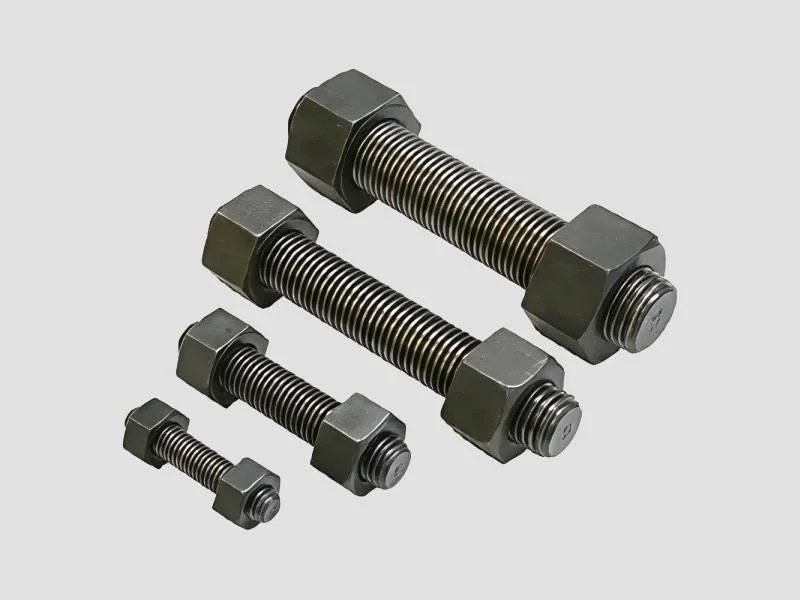
𝗪𝗵𝗮𝘁 𝗮𝗿𝗲 𝗦𝘁𝘂𝗱 𝗕𝗼𝗹𝘁𝘀?
Stud bolts are a type of fastener characterized by a long, cylindrical body with threads on both ends, designed for high-strength applications. They are typically used in conjunction with nuts and are essential in securing two or more components together. Unlike standard bolts, which have a head on one end, stud bolts provide flexibility in installation, as they can be inserted into pre-drilled holes and tightened with nuts from either end. This design makes them ideal for various industrial applications where space constraints or high load requirements exist.
Stud bolts find primary uses across multiple sectors, including construction, manufacturing, and energy production. They are commonly used in the assembly of heavy machinery, structural steelwork, and piping systems. Their durability and strength make them suitable for extreme conditions, such as high-pressure systems and high-temperature environments. Given their critical role in ensuring the integrity of structures and machinery, stud bolts are a vital component in many industries, contributing to safety and operational efficiency.
In the current market, the demand for stud bolts is driven by ongoing infrastructure development, energy projects, and industrial growth. As businesses seek reliable and durable fastening solutions, the relevance of stud bolts continues to grow. This demand is particularly strong in regions experiencing rapid industrialization and construction activity, emphasizing the importance of high-quality fasteners in these sectors.
𝗞𝗲𝘆 𝗙𝗲𝗮𝘁𝘂𝗿𝗲𝘀 𝗮𝗻𝗱 𝗦𝗽𝗲𝗰𝗶𝗳𝗶𝗰𝗮𝘁𝗶𝗼𝗻𝘀
Stud bolts come with various features and specifications tailored to meet specific application requirements. Understanding these specifications helps businesses choose the right product for their needs.
Key specifications include:
1. Material Composition
- Common materials include carbon steel, stainless steel, and alloy steel.
- Each material offers different strength, corrosion resistance, and temperature tolerance.
2. Thread Standards
- Available in various thread types such as UNC, UNF, and metric.
- Thread dimensions can vary based on application requirements.
3. Length Options
- Stud bolts are available in various lengths, typically ranging from a few inches to several feet.
- Custom lengths may be available based on specific project needs.
4. Diameter Sizes
- Common diameters range from 1/4 inch to 2 inches.
- Larger sizes can be customized for heavy-duty applications.
5. Coating and Finishing
- Options include zinc plating, hot-dip galvanizing, and other protective coatings.
- Coatings enhance corrosion resistance and durability.
6. Load Ratings
- Load capacities depend on the material and dimensions of the stud bolts.
- Proper load ratings are crucial for safety and performance in applications.
7. Compliance Standards
- Products may comply with ASTM, ISO, or other relevant standards.
- Ensuring compliance guarantees quality and reliability.
In summary, the diverse features and specifications of stud bolts make them a versatile choice for various industrial applications, helping businesses ensure structural integrity and operational efficiency.
𝗖𝗼𝗺𝗺𝗼𝗻 𝗔𝗽𝗽𝗹𝗶𝗰𝗮𝘁𝗶𝗼𝗻𝘀 𝗮𝗻𝗱 𝗨𝘀𝗲 𝗖𝗮𝘀𝗲𝘀
Stud bolts are integral components in numerous industries, providing reliable fastening solutions for critical applications.
1. Construction: In construction projects, stud bolts are used to secure steel beams and structural elements, ensuring stability and safety in buildings and bridges.
2. Oil and Gas: In the oil and gas industry, stud bolts are essential for connecting pipelines and equipment in high-pressure environments, where reliability is paramount.
3. Manufacturing: Manufacturing plants utilize stud bolts to assemble machinery and equipment, where strong, durable fasteners are necessary for operational efficiency.
4. Power Generation: Stud bolts play a vital role in power generation facilities, securing turbines and other critical components under high-stress conditions.
5. Automotive: In the automotive industry, stud bolts are used in engine assemblies and chassis connections, contributing to vehicle strength and performance.
6. Marine: The marine industry relies on stud bolts for securing components on ships and offshore platforms, where resistance to corrosion and extreme conditions is crucial.
7. Aerospace: Stud bolts are used in aircraft assembly and maintenance, where precision and high strength are essential for safety and performance.
𝗣𝗿𝗼𝗱𝘂𝗰𝘁 𝗩𝗮𝗿𝗶𝗮𝗻𝘁𝘀 𝗮𝗻𝗱 𝗦𝘂𝗯𝗰𝗮𝘁𝗲𝗴𝗼𝗿𝗶𝗲𝘀
While specific variants of stud bolts may not be available, the product diversity within the category allows for various configurations to meet specific needs.
Standard Stud Bolts
These are the most commonly used type, featuring a uniform diameter and length. They are suitable for general applications across multiple industries.
Heavy-Duty Stud Bolts
Designed for extreme conditions, heavy-duty stud bolts offer increased strength and durability. They are ideal for applications in heavy machinery, construction, and energy sectors.
Custom Stud Bolts
For specialized applications, custom stud bolts can be manufactured to specific dimensions and material requirements. This flexibility allows businesses to meet unique project specifications effectively.
𝗕𝗲𝗻𝗲𝗳𝗶𝘁𝘀 𝗮𝗻𝗱 𝗔𝗱𝘃𝗮𝗻𝘁𝗮𝗴𝗲𝘀
Stud bolts offer several advantages that make them a preferred choice for industrial applications.
1. High Strength: Stud bolts provide superior tensile strength, making them suitable for high-stress applications where reliability is critical.
2. Flexibility in Installation: The design of stud bolts allows for easy installation in confined spaces, enabling efficient assembly without the need for extensive tools.
3. Corrosion Resistance: Many stud bolts come with protective coatings that enhance their resistance to corrosion, making them suitable for harsh environments.
4. Customization Options: Businesses can obtain stud bolts in various sizes and materials, allowing for tailored solutions that meet specific project requirements.
5. Enhanced Load Distribution: The design of stud bolts allows for even load distribution, reducing the risk of failure under heavy loads.
6. Cost-Effectiveness: Stud bolts offer a reliable fastening solution that can reduce maintenance costs and downtime in industrial applications.
𝗕𝘂𝘆𝗶𝗻𝗴 𝗚𝘂𝗶𝗱𝗲 𝗳𝗼𝗿 𝗕𝟮𝗕 𝗕𝘂𝘆𝗲𝗿𝘀
When sourcing stud bolts, B2B buyers should consider several critical factors to ensure they select the right product for their needs.
1. Quality Assessment: Evaluate the quality of the stud bolts by reviewing material certifications and conducting physical inspections. High-quality materials ensure durability and performance.
2. Supplier Verification: Vet suppliers by checking their reputation, certifications, and customer reviews. A reliable supplier is essential for consistent product quality.
3. Pricing and MOQ: Analyze pricing structures and minimum order quantities. Understanding these factors helps in budgeting and ensures the availability of products when needed.
4. Delivery and Lead Times: Consider logistics and lead times for delivery. Timely availability is crucial for keeping projects on schedule.
5. Compliance Requirements: Ensure that the stud bolts comply with relevant industry standards and regulations. This compliance is vital for safety and operational integrity.
𝗖𝗼𝗺𝗽𝗹𝗶𝗮𝗻𝗰𝗲 𝗮𝗻𝗱 𝗖𝗲𝗿𝘁𝗶𝗳𝗶𝗰𝗮𝘁𝗶𝗼𝗻𝘀
Compliance and certification are critical aspects of stud bolts that ensure they meet industry standards and safety requirements. Relevant quality standards such as ISO 9001 help guarantee that manufacturing processes are consistent and that products meet specified quality benchmarks. Additionally, certifications like CE indicate that the products adhere to European safety, health, and environmental protection standards.
Safety and testing requirements are also paramount. Stud bolts must undergo rigorous testing to verify their strength and reliability in various applications. This testing ensures that they can withstand extreme conditions without failure.
Furthermore, regional compliance considerations may vary. Buyers should be aware of local regulations and standards applicable in their area to ensure that the products they source are compliant.
𝗪𝗵𝘆 𝗦𝗼𝘂𝗿𝗰𝗲 𝗦𝘁𝘂𝗱 𝗕𝗼𝗹𝘁𝘀 𝗳𝗿𝗼𝗺 𝗣𝗲𝗽𝗮𝗴𝗼𝗿𝗮?
Pepagora provides a trusted platform for sourcing stud bolts, offering numerous advantages for B2B buyers seeking reliable fastening solutions.
The verified supplier network at Pepagora ensures that buyers connect with reputable manufacturers and suppliers. Each supplier is vetted for quality and reliability, minimizing the risk of sourcing subpar products.
The streamlined RFQ process allows buyers to request quotes easily and efficiently. This system helps in comparing prices and specifications across multiple suppliers, facilitating informed purchasing decisions.
Additionally, Pepagora provides trade assurance and support to buyers. This protection ensures that transactions are secure, and buyers are supported throughout the procurement process.
With regional coverage extending across India, the GCC, and Southeast Asia, Pepagora enables businesses to access a wide range of stud bolt products tailored to their specific needs, regardless of their geographical location. This extensive reach helps streamline sourcing and logistics, making it easier for businesses to obtain the components they require.

 IN
IN

 India
India