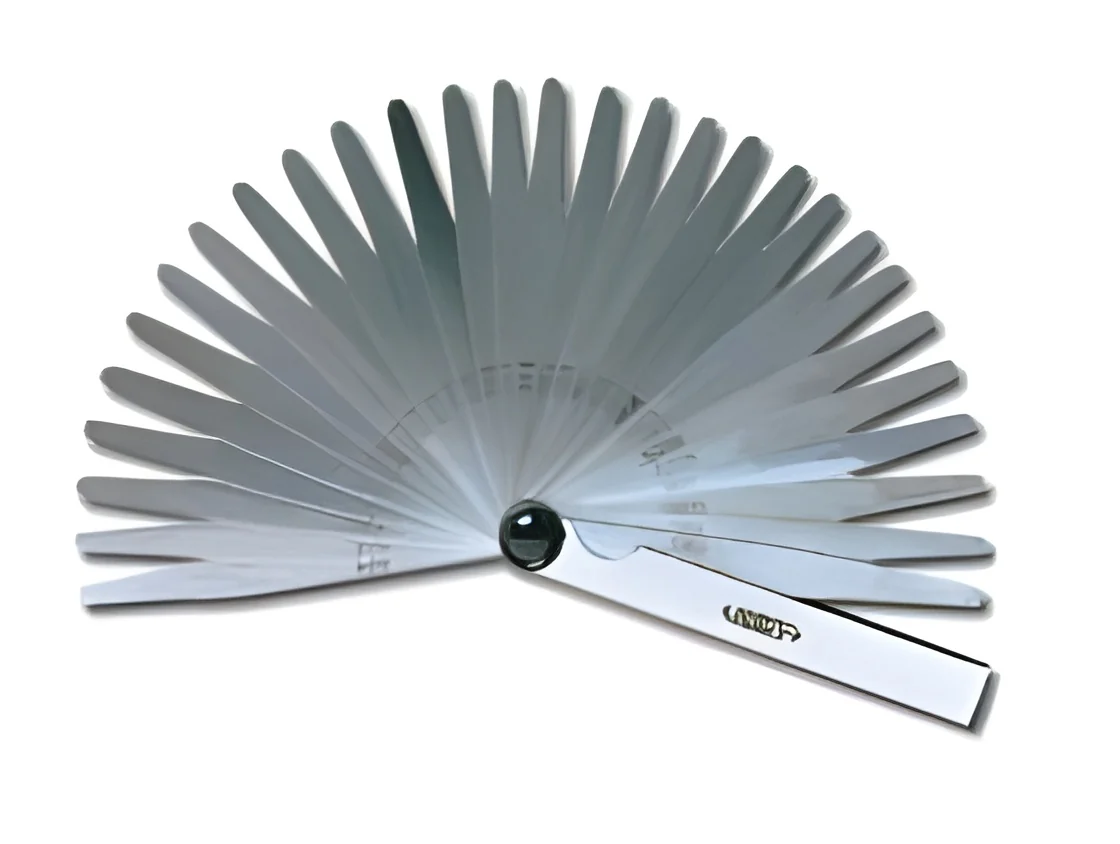
What are Feeler Gauges?
Feeler gauges are precision tools used to measure gaps or clearances between objects. They consist of a series of thin, flat metal blades of varying thicknesses, typically made from stainless steel. Each blade is marked with its corresponding thickness, allowing users to determine the size of the gap or clearance with high accuracy. These tools can be used in various applications, such as automotive maintenance, machining, and assembly processes.
Feeler gauges are essential in industries where precise measurements are critical. They help ensure that components fit together correctly and function as intended. For example, in automotive assembly, feeler gauges can be used to measure the clearance between engine parts and in machining to check tolerances. Their versatility makes them indispensable in quality control and engineering processes, emphasizing the importance of accuracy in manufacturing and assembly.
Key Features and Specifications
Feeler gauges offer several key features that enhance their usability and precision. The blades are typically made from high-quality stainless steel, which provides durability and resistance to wear. Most feeler gauges come with a convenient holder that allows for easy access and organization of the blades. This design minimizes the risk of losing individual pieces and ensures that users can quickly find the required thickness.
Key specifications include:
1. Blade Thickness
- Range: Typically from 0.001 inches to 0.050 inches
- Accuracy: Often within ±0.0005 inches
2. Blade Length
- Standard length: Approximately 4 to 6 inches
- Allows for easy measurement in confined spaces
3. Material
- Commonly stainless steel for durability
- Some variants may be made from brass or plastic for specific applications
4. Number of Blades
- Usually ranges from 10 to 32 blades in a set
- Provides a comprehensive range of thickness options
5. Calibration
- Some models come pre-calibrated for accuracy
- Users should verify calibration regularly for precision
6. Storage Options
- Available with metal holders or plastic cases
- Facilitates organized storage and easy transport
7. Temperature Resistance
- Suitable for a wide range of temperatures
- Ensures consistent performance in different environments
8. Finish
- Typically polished for smooth measurement
- Reduces friction when inserted into gaps
Feeler gauges are vital tools in various industries, making their specifications critical for ensuring accurate measurements.
Common Applications and Use Cases
Feeler gauges serve a diverse range of industries that require precise measurements of gaps and clearances.
1. Automotive: In automotive applications, feeler gauges help technicians check valve clearances and gaps in engine components. They ensure that parts fit properly, enhancing vehicle performance and longevity.
2. Manufacturing: In manufacturing settings, feeler gauges are used to verify tolerances of machined parts. They play a crucial role in quality control processes, ensuring that products meet specifications.
3. Aerospace: In the aerospace industry, feeler gauges help measure clearances in critical components, ensuring safety and reliability in aircraft operations. Precise measurements are essential for adhering to strict regulatory standards.
4. Electronics: Technicians use feeler gauges to measure gaps in electronic components, ensuring proper fit and function in devices. This application is especially important in circuit board assembly.
5. Construction: In construction, feeler gauges can assist in measuring gaps in structural elements, ensuring that components meet design specifications for safety and performance.
6. Toolmaking: Toolmakers utilize feeler gauges to assess clearances in tooling and fixtures, contributing to the accuracy of the manufacturing process.
7. HVAC: In HVAC systems, feeler gauges can help measure clearances in ductwork and other components, ensuring efficient airflow and system performance.
Product Variants and Subcategories
Feeler gauges come in various forms to cater to specific needs and applications.
Standard Feeler Gauge
This variant consists of a series of metal blades varying in thickness. It is widely used in automotive and manufacturing industries for checking clearances and tolerances.
Digital Feeler Gauge
This advanced version features a digital readout for enhanced accuracy. It is suitable for precision applications in electronics and aerospace industries, providing quick and easy measurements.
Specialty Feeler Gauge
These gauges are designed for specific applications, such as measuring gaps in delicate components or in confined spaces. They may feature thinner blades or unique shapes to accommodate various measurement needs.
Benefits and Advantages
Feeler gauges offer numerous benefits that enhance their usability across industries.
1. Precision Measurement: Feeler gauges provide accurate measurements of gaps and clearances, essential for quality control in manufacturing and assembly.
2. Versatile Applications: They can be used in a wide range of industries, including automotive, aerospace, and electronics, making them a valuable tool for various professionals.
3. Durable Construction: Made from high-quality materials like stainless steel, feeler gauges are built to last. They withstand wear and tear, ensuring long-term use.
4. Easy to Use: With a straightforward design, feeler gauges are easy to operate, allowing users to take measurements quickly and efficiently.
5. Compact and Portable: Most feeler gauge sets are compact and come with holders, making them easy to transport and store, which is advantageous for fieldwork.
6. Cost-Effective: Feeler gauges are relatively inexpensive tools that provide significant value by ensuring precise measurements and reducing costly errors in production.
Buying Guide for B2B Buyers
When sourcing feeler gauges, it is essential for B2B buyers to consider several factors to ensure quality and reliability.
1. Quality Assessment: Look for feeler gauges made from high-quality materials like stainless steel. Check for precision and durability to ensure they meet industry standards.
2. Supplier Verification: Vet suppliers by reviewing their reputation and customer feedback. Ensure they have a history of providing reliable products and services.
3. Pricing and MOQ: Compare prices across different suppliers. Be aware of minimum order quantities (MOQ) to ensure they align with your purchasing needs.
4. Delivery and Lead Times: Inquire about lead times for delivery. Timely availability is crucial to maintain workflow and production schedules.
5. Compliance Requirements: Ensure that the feeler gauges meet any relevant industry standards or certifications, such as CE certification, to comply with safety and regulatory guidelines.
Compliance and Certifications
Feeler gauges must adhere to several quality and safety standards to ensure their reliability in various applications.
ISO 9001 is a widely recognized standard for quality management systems. Suppliers of feeler gauges should ideally be certified to this standard, which indicates their commitment to quality and continuous improvement.
CE certification is also important for feeler gauges, especially in markets that require compliance with European safety standards. This certification ensures that the products meet essential health, safety, and environmental protection requirements.
In addition, feeler gauges may need to comply with specific industry standards depending on their application. For example, aerospace applications may have stricter testing and safety requirements.
Regional compliance considerations should also be taken into account, as different regions may have varying regulations governing the use and manufacturing of measuring tools.
Why Source Feeler Gauges from Pepagora?
Pepagora provides a trusted platform for sourcing feeler gauges, offering several key advantages to buyers in the B2B market.
Verified Supplier Network: Pepagora connects buyers with a network of verified suppliers, ensuring that the products meet quality standards. This verification process helps mitigate risks associated with sourcing.
Streamlined RFQ Process: The platform features a user-friendly request for quotation (RFQ) process, allowing buyers to easily compare offers from multiple suppliers. This efficiency saves time and helps in making informed purchasing decisions.
Trade Assurance and Support: Buyers can benefit from trade assurance policies that protect their transactions. This support provides peace of mind and encourages confidence in sourcing decisions.
Regional Coverage: Pepagora's services extend across India, the GCC, and Southeast Asia, making it easier for businesses in these regions to find reliable suppliers for their feeler gauge needs. This broad geographic reach supports diverse industrial applications.

 IN
IN