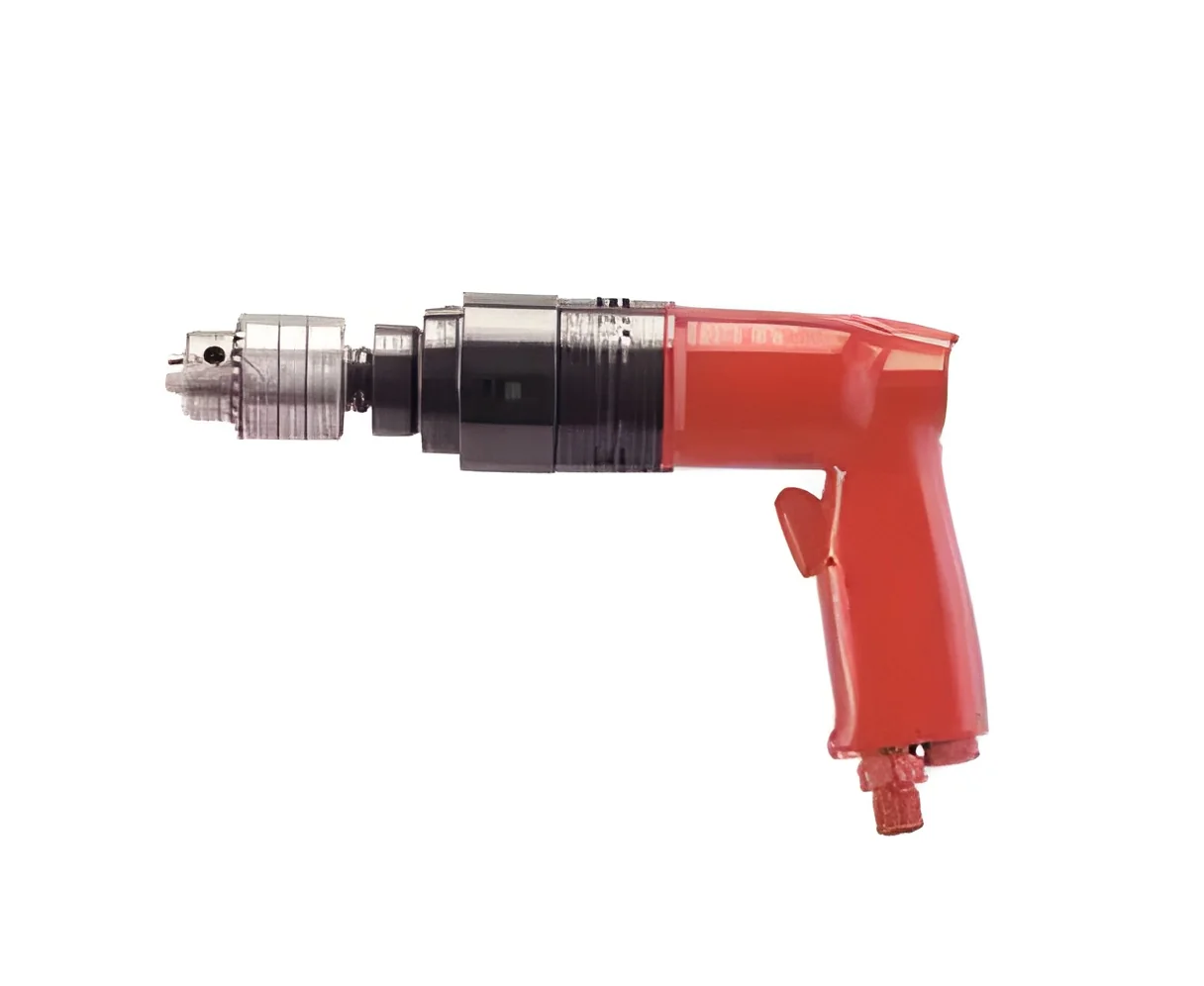
What are Pneumatic Drills?
Pneumatic drills are tools powered by compressed air, designed to perform a variety of drilling tasks across various industrial applications. These drills leverage air pressure to generate rotational force, making them highly effective for drilling into hard materials like metal, wood, and concrete. Their lightweight design and high power-to-weight ratio make them ideal for both stationary and handheld use.
Pneumatic drills are commonly used in industries such as construction, manufacturing, automotive, and aerospace. In construction, they are ideal for creating holes in concrete or steel structures. In manufacturing, they facilitate the assembly of precision parts and components. The versatility of pneumatic drills is enhanced by their ability to operate in environments where electric tools cannot be used due to safety concerns related to sparks or moisture.
The market for pneumatic drills continues to grow, driven by advancements in technology and demand for efficient, durable tools. As industries evolve and seek more sustainable solutions, pneumatic drills present a compelling option due to their energy efficiency and lower operational costs compared to electric counterparts.
Key Features and Specifications
Pneumatic drills come with a variety of features and specifications that enhance their performance and usability. Understanding these specifications is essential for selecting the right tool for your needs.
Key specifications include:
1. Power Rating
- Typically measured in horsepower (HP)
- Common ranges from 0.5 HP to 5 HP
2. Air Consumption
- Measured in cubic feet per minute (CFM)
- Average ranges between 3 CFM and 30 CFM
3. Speed
- Measured in revolutions per minute (RPM)
- Ranges from 500 RPM to 3000 RPM depending on the model
4. Chuck Size
- Standard chuck sizes range from 1/4 inch to 1 inch
- Determines the maximum drill bit diameter
5. Weight
- Generally lightweight, ranging from 2 lbs to 6 lbs
- Improves maneuverability and reduces user fatigue
6. Noise Level
- Measured in decibels (dB)
- Typical ranges from 80 dB to 100 dB
7. Operating Pressure
- Measured in pounds per square inch (PSI)
- Common operational ranges from 70 PSI to 120 PSI
8. Material Construction
- Often made from durable aluminum or composite materials
- Enhances tool longevity and resistance to wear
In summary, selecting the right pneumatic drill involves understanding these specifications to ensure optimal performance for specific applications.
Common Applications and Use Cases
Pneumatic drills serve various industries, providing essential functionality in multiple applications.
1. Construction: Pneumatic drills are widely used for drilling holes in concrete and steel, essential for anchoring structures and installing fixtures.
2. Manufacturing: In manufacturing settings, these drills are crucial for assembling components, allowing for precise drilling in metal and plastic parts.
3. Automotive: Pneumatic drills play a significant role in the automotive industry, assisting in the assembly of vehicles by drilling and fastening parts together efficiently.
4. Aerospace: Used for drilling in aircraft manufacturing, these tools meet stringent requirements for precision and reliability in lightweight materials.
5. Marine: Pneumatic drills are applied in shipbuilding for creating holes in various materials, including fiberglass and metals.
6. Oil and Gas: In the oil and gas industry, they are utilized for maintenance and repairs of drilling rigs and equipment.
7. HVAC: Pneumatic drills are essential in HVAC installations for drilling holes necessary for ductwork and piping.
Product Variants and Subcategories
Pneumatic drills come in various types, each tailored for specific applications and user needs.
Pistol Grip Pneumatic Drill
This variant features a comfortable pistol grip design, allowing for easy handling in tight spaces. It is ideal for light to moderate drilling tasks and is commonly used in assembly lines.
Hammer Pneumatic Drill
Designed for heavy-duty tasks, the hammer pneumatic drill combines rotary and hammering action. It is perfect for drilling into hard materials such as concrete and masonry.
Right Angle Pneumatic Drill
This variant offers a compact design for drilling in confined areas. It is commonly used in plumbing and electrical installations where space is limited.
Inline Pneumatic Drill
This design is suitable for continuous drilling tasks, providing a straight and powerful drilling action. It is often used in manufacturing for repetitive tasks.
Benefits and Advantages
Pneumatic drills offer several key benefits that make them favorable choices for industrial applications.
1. High Power-to-Weight Ratio: Pneumatic drills deliver high performance without excessive weight, reducing operator fatigue during prolonged use.
2. Versatility: These drills can be used for various applications across multiple industries, making them a valuable tool in any workshop.
3. Durability: Constructed from robust materials, pneumatic drills are built to withstand harsh working conditions, ensuring long service life.
4. Safety: Operating on compressed air reduces the risk of electrical hazards, making pneumatic drills safer for use in wet or explosive environments.
5. Efficiency: Pneumatic drills operate quickly and effectively, allowing for higher productivity and faster project completion.
6. Low Maintenance: With fewer moving parts compared to electric drills, pneumatic drills typically require less maintenance, saving time and costs.
Buying Guide for B2B Buyers
When sourcing pneumatic drills, it is crucial to consider several factors to ensure the right purchase.
1. Quality Assessment: Evaluate the quality of pneumatic drills by reviewing manufacturer certifications and customer feedback. Look for drills that comply with industry standards for durability and performance.
2. Supplier Verification: Vet suppliers thoroughly to ensure they have a reliable track record. Check for reviews, references, and certifications that demonstrate their credibility.
3. Pricing and MOQ: Understand the pricing structure and minimum order quantities (MOQ) of suppliers. Compare prices to ensure you are getting a competitive rate while factoring in quality and service.
4. Delivery and Lead Times: Consider the logistics involved, including shipping options and lead times. Ensure that suppliers can meet your delivery requirements to avoid project delays.
5. Compliance Requirements: Familiarize yourself with relevant compliance and safety standards applicable to pneumatic drills in your industry. This may include certifications such as CE.
Compliance and Certifications
Pneumatic drills must adhere to several quality standards and certifications to ensure safe and effective operation. ISO 9001 is a widely recognized standard that focuses on quality management systems, ensuring that manufacturers maintain high-quality production processes.
In addition, many pneumatic drills carry the CE mark, indicating compliance with European safety, health, and environmental protection standards. This certification assures buyers that the drills meet strict regulatory requirements.
Safety and testing requirements are also critical. Pneumatic drills should undergo rigorous testing to confirm their performance under various conditions. Regional compliance considerations may vary, so it is essential to be aware of local regulations governing the use of pneumatic tools.
Why Source Pneumatic Drills from Pepagora?
Pepagora provides a trusted platform for sourcing pneumatic drills, offering several key advantages for B2B buyers.
Verified Supplier Network: Pepagora features a comprehensive network of verified suppliers, ensuring that buyers can source reliable products from reputable manufacturers. This network helps mitigate risks associated with purchasing from unknown vendors.
Streamlined RFQ Process: The request for quotation (RFQ) process on Pepagora is efficient and user-friendly. Buyers can easily compare multiple suppliers and receive tailored quotations that meet their specific needs.
Trade Assurance and Support: Pepagora offers trade assurance programs that protect buyers throughout the purchasing process. This support ensures that buyers receive the products they ordered and that any disputes are resolved amicably.
Regional Coverage: With a strong presence in regions such as India, the GCC, and Southeast Asia, Pepagora ensures that buyers have access to pneumatic drills regardless of their geographical location. This broad reach simplifies the sourcing process for businesses operating in diverse markets.

 IN
IN