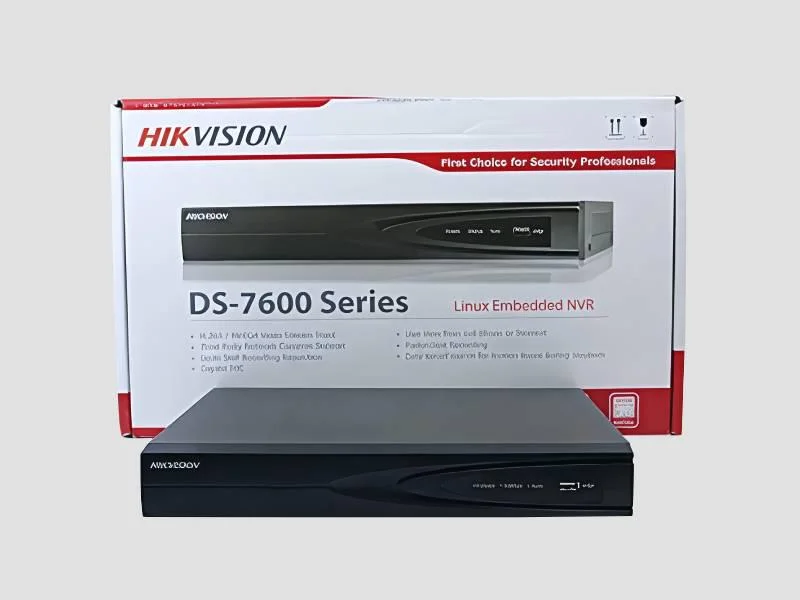
Key Features and Specifications
Network Video Recorders come with a range of features and specifications that enhance their performance and usability. These specifications help businesses understand which NVR is best suited for their specific needs.
Key specifications include:
1. Video Input Channels
- The number of channels determines how many cameras can be connected.
- Common ranges include 4, 8, 16, and 32 channels.
2. Video Compression
- Compression technology reduces storage space without compromising quality.
- Common formats are H.264, H.265, and MJPEG.
3. Storage Capacity
- Indicates the amount of video data that can be stored.
- Ranges from 1TB to several petabytes depending on the model.
4. Recording Resolution
- Refers to the clarity of the recorded video.
- Standard resolutions include 720p, 1080p, and 4K.
5. Network Connectivity
- NVRs typically support Ethernet and Wi-Fi connections.
- Compatibility with various protocols such as ONVIF is essential for integration.
6. Remote Access
- Allows users to view live and recorded footage from remote locations.
- Usually accessible via web browsers and mobile applications.
7. Power over Ethernet (PoE)
- Some NVRs support PoE, simplifying installation by eliminating the need for separate power cables.
8. Backup Options
- Many models offer cloud storage or external drive backup capabilities for redundancy.
In summary, understanding these specifications helps businesses select the ideal NVR model that meets their operational requirements while ensuring optimal performance.
Common Applications and Use Cases
Network Video Recorders serve various industries due to their versatility and effectiveness in video management.
1. Retail: NVRs are widely used in retail environments for loss prevention, monitoring customer behavior, and enhancing security measures. They enable store managers to analyze foot traffic and optimize layout design.
2. Education: Schools and universities utilize NVRs for campus security, monitoring access points, and ensuring the safety of students and staff. This technology helps in managing surveillance across multiple buildings.
3. Healthcare: In healthcare facilities, NVRs assist in monitoring patient areas, securing sensitive areas, and ensuring compliance with safety regulations. They play a critical role in protecting patients and staff.
4. Transportation: NVRs are essential in public transportation systems for monitoring passenger safety and traffic management. They are used in buses, trains, and transit stations to enhance security measures.
5. Manufacturing: In manufacturing environments, NVRs help monitor production lines and ensure safety compliance. They can be used to analyze workflow and detect safety hazards.
6. Hospitality: Hotels and resorts use NVRs for security surveillance and guest safety. They help in monitoring common areas and ensuring a secure environment for visitors.
7. Banking: NVRs are critical in banking for monitoring ATMs and branch security. They assist in preventing fraud and ensuring the safety of customers and staff.
Product Variants and Subcategories
Network Video Recorders come in various configurations, catering to different business needs and environments. While specific subcategories may not be available, several variants offer distinct features.
Entry-Level NVR
This variant is designed for small businesses or individual locations. It typically supports a limited number of channels and provides essential features for basic surveillance needs.
Mid-Range NVR
Mid-range models offer more channels and enhanced features such as higher resolution recording and advanced analytics. They are suitable for medium-sized businesses with multiple surveillance needs.
Enterprise NVR
Enterprise NVRs are built for large organizations requiring extensive surveillance capabilities. They support numerous channels, high storage capacities, and advanced features such as AI analytics and remote management.
Benefits and Advantages
Network Video Recorders provide numerous benefits that enhance security and operational efficiency for businesses.
1. Enhanced Security: NVRs offer real-time monitoring and recording capabilities, significantly improving security measures for any organization.
2. Scalability: As businesses grow, NVR systems can be easily expanded to accommodate more cameras without needing extensive rewiring.
3. Remote Access: Users can monitor footage from anywhere, providing flexibility and peace of mind for business owners.
4. Cost-Effective Storage: With advanced compression technologies, NVRs optimize storage costs while maintaining high-quality video.
5. Integration Capabilities: NVRs can be integrated with various security systems and software, allowing for a comprehensive security solution.
6. Data Analytics: Many NVRs come equipped with analytics features, enabling businesses to gain insights from video data for better decision-making.
Buying Guide for B2B Buyers
When sourcing Network Video Recorders, several factors should be considered to ensure the right choice is made.
1. Quality Assessment: Evaluate the build quality and performance of the NVR. Look for models that meet industry standards for reliability and durability.
2. Supplier Verification: It is crucial to vet suppliers by checking their credentials, customer reviews, and after-sales support. A reliable supplier can make a significant difference in your purchasing experience.
3. Pricing and MOQ: Understand the pricing structure and minimum order quantities. Consider bulk purchasing options to reduce costs.
4. Delivery and Lead Times: Confirm the expected delivery times and ensure that they align with your project schedules. Timely delivery is critical for implementing security systems.
5. Compliance Requirements: Ensure that the NVR complies with relevant regulations and standards specific to your industry. This may include safety certifications and data protection regulations.
Compliance and Certifications
Network Video Recorders must adhere to various quality standards and certifications to ensure their reliability and safety. ISO 9001, a standard that outlines quality management systems, is relevant for manufacturers of NVRs. Compliance with this standard indicates a commitment to quality and continuous improvement.
Additionally, NVRs may hold certifications such as CE, which signifies compliance with European safety standards. This certification assures buyers that the product meets essential health and safety requirements.
Safety and testing requirements are crucial in ensuring that the NVR operates effectively without posing risks to users or the environment. Manufacturers should conduct thorough testing and provide documentation demonstrating compliance with applicable standards.
Regional compliance considerations are also essential, as regulations may vary by location. Buyers should be aware of local requirements and ensure that their chosen NVR meets these standards.
Why Source Network Video Recorders (NVR) from Pepagora?
Pepagora provides a trusted platform for sourcing Network Video Recorders with several key advantages that appeal to B2B buyers.
Verified Supplier Network: Pepagora boasts a network of verified suppliers, ensuring that buyers are connected with reputable manufacturers. This verification process minimizes risks associated with sourcing products.
Streamlined RFQ Process: The platform offers a user-friendly Request for Quotation (RFQ) system, allowing buyers to easily request quotes from multiple suppliers. This streamlines the purchasing process and helps buyers find the best deals.
Trade Assurance and Support: Pepagora prioritizes buyer protection through its trade assurance program, providing peace of mind during transactions. Comprehensive support is available to address any concerns or inquiries.
Regional Coverage: With a focus on markets in India, GCC, and Southeast Asia, Pepagora offers extensive regional coverage. This makes it easier for businesses in these areas to access quality NVRs tailored to their specific needs.

 IN
IN