IN
IN₹
Apparel & Fashion
Description
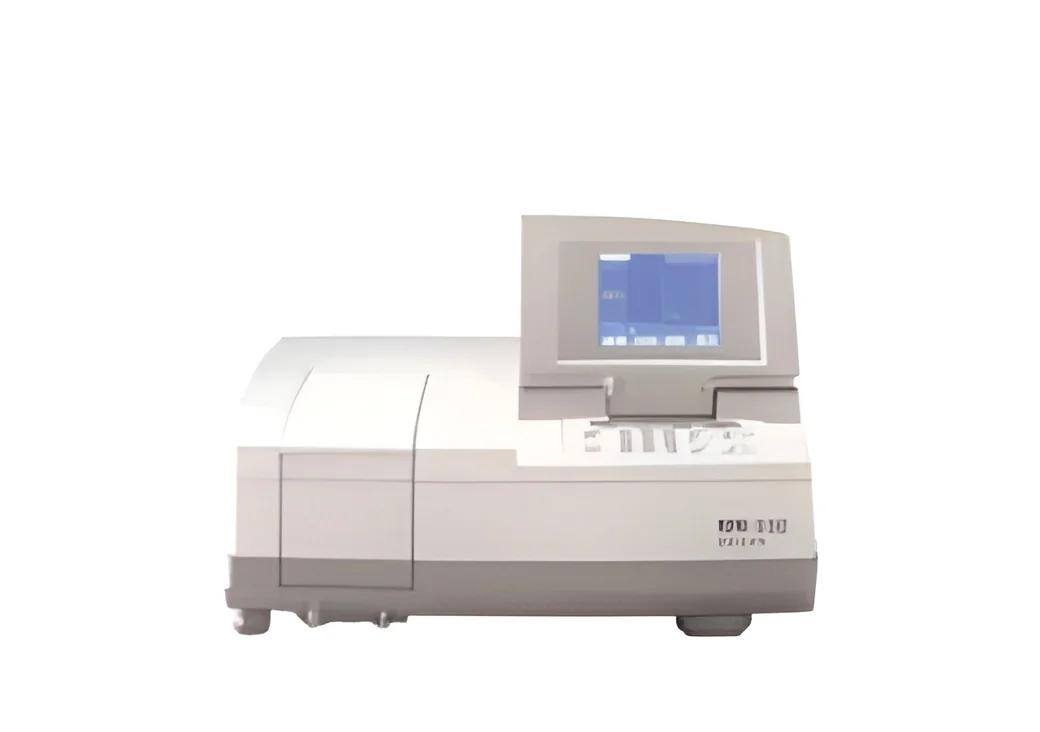
UV-Visible Spectrophotometers are precision analytical instruments designed to measure how much light a sample absorbs across the ultraviolet and visible light spectrum, typically from 190 to 1100 nm. This measurement of absorbance or transmittance provides critical data for both quantitative analysis, such as determining the concentration of a solute, and qualitative analysis, like identifying substances based on their spectral fingerprint. Modern instruments combine robust optical systems with intuitive software, enabling rapid scanning, high-resolution data acquisition, and simplified operation. This makes them an indispensable cornerstone in any setting requiring reliable, repeatable spectroscopic data, from academic research to high-throughput industrial labs.

These spectrophotometers serve as vital assets in a wide range of industries. In pharmaceuticals, they are used for drug development, assay validation, and rigorous quality control of raw materials and finished products. En...
UV-Visible Spectrophotometers are precision analytical instruments designed to measure how much light a sample absorbs across the ultraviolet and visible light spectrum, typically from 190 to 1100 nm. This measurement of absorbance or transmittance provides critical data for both quantitative analysis, such as determining the concentration of a solute, and qualitative analysis, like identifying substances based on their spectral fingerprint. Modern instruments combine robust optical systems with intuitive software, enabling rapid scanning, high-resolution data acquisition, and simplified operation. This makes them an indispensable cornerstone in any setting requiring reliable, repeatable spectroscopic data, from academic research to high-throughput industrial labs.

These spectrophotometers serve as vital assets in a wide range of industries. In pharmaceuticals, they are used for drug development, assay validation, and rigorous quality control of raw materials and finished products. Environmental agencies rely on them for monitoring water quality and analyzing soil contaminants. The food and beverage industry utilizes them for safety testing, quality assurance, and compliance with health standards. Furthermore, they are essential in chemical manufacturing for process control and in academic institutions for teaching and advanced research in chemistry, biochemistry, and material science, demonstrating their universal utility.

The business value of a UV-Visible Spectrophotometer lies in its contribution to operational reliability, regulatory compliance, and product integrity. Investing in a high-quality instrument translates to accurate data that reduces waste, prevents costly errors, and ensures products meet specifications. Their reliability under continuous use minimizes downtime, while their precision supports defensible results for audits and certifications. This combination of accuracy, durability, and ease of use provides a strong return on investment by safeguarding quality, enhancing research credibility, and streamlining analytical workflows for sustained operational excellence.

Key Features:
- Measures absorbance and transmittance across the UV-Visible spectrum (typically 190-1100 nm).
- High-resolution optical system for precise and repeatable wavelength accuracy.
- User-friendly software interface for instrument control, data analysis, and method storage.
- Robust construction and stable design for reliable performance in daily laboratory use.
- Fast scanning capabilities and a range of compatible accessories for versatile sample handling.

Benefits:
- Delivers accurate, reliable quantitative data essential for concentration determination and quality control.
- Streamlines analytical workflows with intuitive operation and rapid results, boosting lab efficiency.
- Supports compliance with industry standards and regulations through defensible analytical results.
- Reduces operational risk by providing consistent performance that minimizes re-testing and errors.
- Offers a versatile platform suitable for diverse applications from research to routine industrial analysis.
Specifications
| Additional Information | |
|---|---|
| Country of Origin | India |
Application
UV-Visible Spectrophotometers are fundamental tools for precise quantitative analysis across diverse scientific and industrial fields. They enable researchers and quality control professionals to accurately determine the concentration of substances in a solution, assess purity, and identify chemical compounds based on their unique light absorption profiles. This capability is critical for ensuring product consistency, meeting regulatory standards, and advancing material research with reliable, data-driven insights.
These instruments are deployed in environments where accuracy and repeatability are non-negotiable. From verifying the active ingredient in a pharmaceutical batch to monitoring pollutants in water, spectrophotometers provide the essential data needed for informed decision-making. Their application streamlines workflows in R&D labs, production facilities, and testing centers, supporting everything from new product development to routine compliance checks with trusted analytical performance.
- Pharmaceutical quality control for verifying drug concentration and formulation purity.
- Environmental monitoring to detect and quantify pollutants in water and soil samples.
- Food and beverage analysis to ensure safety, assess nutritional content, and check for contaminants.
- Biochemical research for quantifying proteins, nucleic acids (DNA/RNA), and enzyme activity.
- Material science and chemical manufacturing for characterizing compounds and ensuring batch-to-batch consistency.
Trade Details
| Available Stock | In Stock |
| Sample Availability | No |
Payment Terms
| Payment Terms |
|
Company Profile
SUNJAY BIOTECH SOLUTIONS PVT. LTD., Maharashtra
 Maharashtra, India
Maharashtra, IndiaManufacturer•Distributor / Wholesaler
Factory Details
Factory SizeBelow 1000 sqm
UV-Visible Spectrophotometers
UV-Visible Spectrophotometers from trusted manufacturers deliver precise light absorption measurement for quantitative analysis, chemical characterization, and stringent quality control in laboratory and industrial settings.
Min. Order Quantity: 1
Shipping
Shipping fee and delivery date to be negotiated. Contact supplier now for more details.
SUNJAY BIOTECH SOLUTIONS PVT. LTD.
 Maharashtra, India
Maharashtra, IndiaManufacturer