IN
INundefined
Description
Industrial Automation PLC Systems serve as the foundation for modern industrial control, providing reliable digital automation for machinery and processes. These programmable logic...
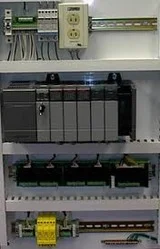
Industrial Automation PLC Systems serve as the foundation for modern industrial control, providing reliable digital automation for machinery and processes. These programmable logic controllers function as specialized industrial computers designed specifically for automating equipment operations, assembly lines, and complex manufacturing sequences. Unlike standard computing systems, PLCs are engineered to withstand challenging industrial conditions with extended temperature tolerance, vibration resistance, and electrical noise immunity. They execute control logic through programmable memory, storing instructions for sequencing, timing, counting, and arithmetic operations to control industrial equipment with precision and reliability.

These automation solutions play critical roles across multiple industrial sectors including manufacturing, automotive production, food processing, pharmaceutical manufacturing, and infrastructure management. Manufacturing plants deploy PLCs for assembly line control, robotic system coordination, and material handling equipment automation. The automotive industry relies on them for production automation and quality assurance systems. Packaging industries utilize PLCs for filling, capping, labeling, and packaging machinery operations. Infrastructure sectors implement these systems for building management, water treatment facilities, and energy distribution control, demonstrating their adaptability across various operational environments and technical requirements.

Organizations select Industrial Automation PLC Systems for their proven reliability, reduced operational downtime, and significant long-term cost savings. These systems deliver exceptional return on investment through enhanced production efficiency, minimized manual intervention, and reduced operational errors. Their rugged construction ensures continuous performance in demanding industrial conditions, while modular designs facilitate straightforward expansion and modification as operational needs evolve. The programming flexibility enables customization for specific application requirements, making PLC systems adaptable to unique operational challenges while maintaining consistent control accuracy and process reliability.

Key Features:
- Digital control architecture for precise process automation
- Industrial-grade construction for harsh environment operation
- Modular expandability with multiple I/O configurations
- Programmable memory for custom control logic implementation
- Multiple industrial communication protocol support

Benefits:
- Enhanced production efficiency and operational consistency
- Reduced manual intervention and operational errors
- Long-term cost savings through reliable performance
- Easy system expansion and modification capabilities
- Adaptable to unique operational requirements and challenges
Specifications
| Additional Information | |
|---|---|
| Country of Origin | India |
| Customisable | No |
Application
Industrial Automation PLC Systems deliver precise digital control for machinery operations and complex assembly line automation. These robust controllers manage electromechanical processes with high reliability, ensuring consistent performance in demanding manufacturing environments. They replace traditional relay systems with programmable flexibility, reducing wiring complexity while improving control accuracy across diverse industrial applications.

These automation systems integrate seamlessly into existing infrastructure, supporting various input/output modules and communication protocols. Industries utilize PLCs for real-time monitoring, sequential control, and safety interlocking functions. The modular architecture allows adaptation to specific operational requirements, making them suitable for both small-scale automation and large-scale industrial control systems requiring precision and durability.
- Automated assembly line control in manufacturing facilities
- Machinery operation monitoring for automotive production
- Process control systems for water treatment plants
- Packaging machinery sequencing and efficiency optimization
- Material handling system automation in warehouses
Trade Details
| Available Stock | In stock |
| Sample Availability | No |
Payment Terms
| Payment Terms |
|
Company Profile
Best Systems And Services, Tamil Nadu
 Tamil Nadu, India
Tamil Nadu, IndiaIndustrial Equipment & Machinery•ManufacturerDistributor / Wholesaler
Factory Details
Factory SizeBelow 1000 sqm
Annual Production Capacity0
Industrial Automation PLC Systems For Machinery Control And Monitoring
Industrial Automation PLC Systems provide reliable digital control for machinery automation and monitoring across manufacturing, packaging, and infrastructure industries with precision and durability.
Min. Order Quantity: 1 units
Shipping
Shipping fee and delivery date to be negotiated. Contact supplier now for more details.
Best Systems And Services Tamil Nadu, India
Tamil Nadu, IndiaIndustrial Equipment & MachineryManufacturer