IN
INundefined
Similar Products
Description
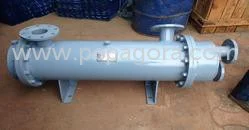
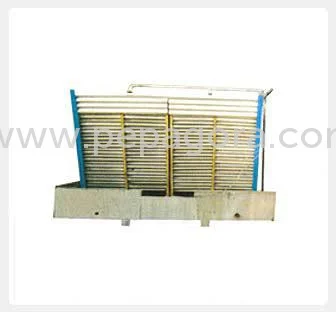
Industrial Shell and Tube Heat Exchangers are engineered for efficient and reliable heat transfer between two fluids while maintaining complete separation. These units feature a sh...
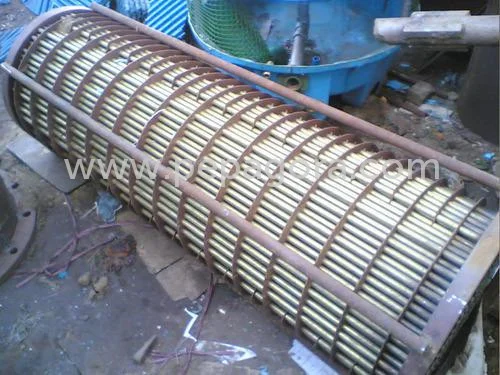
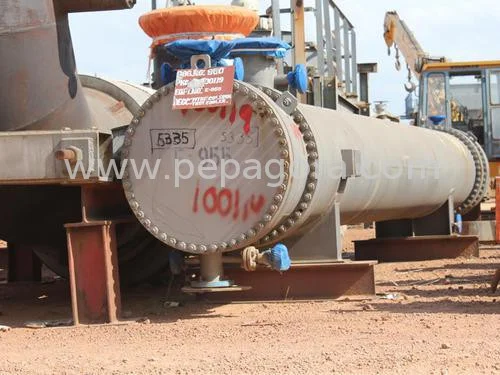
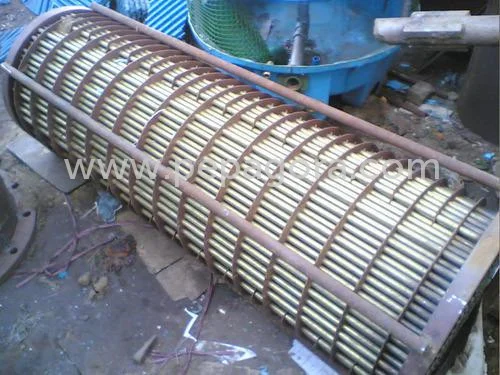
Industrial Shell and Tube Heat Exchangers are engineered for efficient and reliable heat transfer between two fluids while maintaining complete separation. These units feature a shell housing a bundle of tubes, allowing one fluid to flow through the tubes and another around them, ensuring optimal thermal exchange with minimal energy loss. Available in fixed and floating types, they address diverse operational demands. Fixed tube sheet models offer a rigid, leak-proof structure suited for high-pressure applications, while floating head designs provide flexibility for thermal expansion and easier maintenance. Built with durability, they withstand extreme temperatures and corrosive conditions, delivering consistent performance in rigorous industrial settings.

These heat exchangers are integral across multiple heavy industries due to their versatility and robust performance. In chemical processing, they enable precise temperature regulation during reactions without fluid mixing. Power plants utilize them for steam condensation and feedwater heating to improve efficiency. The oil and gas sector relies on them for crude oil heating, hydrocarbon cooling, and gas processing operations. HVAC systems in large commercial complexes employ them for efficient heating and cooling cycles. Additionally, pharmaceuticals, food and beverage, and marine engineering depend on their reliable thermal management for critical processes, ensuring operational continuity and product integrity.

The business value of shell and tube heat exchangers lies in their reliability, longevity, and cost-effectiveness. They minimize operational downtime through sturdy construction and maintenance-friendly features, especially in floating head designs. Their energy-efficient design reduces utility expenses, while standard configurations meet broad process needs. These exchangers enhance operational safety by preventing fluid cross-contamination and managing high pressures securely. Investing in these heat exchangers leads to long-term savings, improved process stability, and adherence to industry standards, making them a prudent choice for buyers seeking dependable thermal solutions.

Key Features:
- Fixed and floating tube sheet designs to suit various operational requirements.
- Durable construction materials resistant to corrosion and high pressures.
- Removable tube bundle in floating types for straightforward cleaning and upkeep.
- Standard sizes and configurations to fit common process setups.
- Efficient heat transfer design that lowers energy use and operational costs.

Benefits:
- Reliable performance with minimal downtime in demanding environments.
- Long service life due to robust materials and construction.
- Easy maintenance access reduces servicing time and costs.
- Versatile application across multiple industries and processes.
- Energy-efficient operation leading to reduced utility expenses.
Specifications
| Additional Information | |
|---|---|
| Country of Origin | India |
| Customisable | No |
Application
Shell and tube heat exchangers provide dependable thermal management in industries requiring precise temperature control and efficient heat transfer between separate fluids. The fixed tube sheet design ensures absolute fluid separation, making it ideal for high-pressure environments and processes where contamination must be avoided. Its robust construction handles extreme temperatures and corrosive media, supporting continuous operation in demanding conditions like chemical processing and power generation.

The floating head design accommodates thermal expansion and simplifies maintenance with removable tube bundles for cleaning and inspection. This adaptability suits industries with frequent operational changes or fluids prone to fouling. Its serviceability and reliability make it a preferred solution for oil refineries, HVAC installations, and pharmaceutical production, where downtime reduction and consistent performance are critical.
- Chemical plants for heating or cooling reactive fluids without cross-contamination.
- Power generation facilities to condense steam and enhance turbine efficiency.
- Oil refineries for crude oil heating and hydrocarbon product cooling stages.
- HVAC systems in large commercial buildings for energy-efficient temperature control.
- Pharmaceutical manufacturing to maintain sterile conditions during temperature-sensitive processes.
Trade Details
| Available Stock | In stock |
| Sample Availability | No |
Payment Terms
| Payment Terms |
|
Company Profile

United Cooling Systems, Tamil Nadu
 Tamil Nadu, India
Tamil Nadu, IndiaAutomotive & Transport•ManufacturerDistributor / WholesalerImporter / Exporter
Factory Details
Factory SizeBelow 1000 sqm
Annual Production Capacity0
Industrial Shell And Tube Heat Exchanger Fixed Floating Types
Industrial Shell and Tube Heat Exchanger in fixed and floating types delivers reliable thermal transfer for industrial processes, preventing fluid mixing and ensuring efficient heat exchange across diverse applications.
Min. Order Quantity: 1 units
Shipping
Shipping fee and delivery date to be negotiated. Contact supplier now for more details.
United Cooling Systems Tamil Nadu, India
Tamil Nadu, IndiaAutomotive & TransportManufacturer