IN
IN₹
Apparel & Fashion
Description
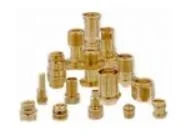
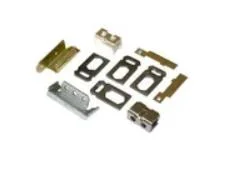
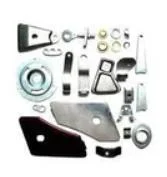
Precision pressed components are manufactured using advanced press tooling and controlled stamping processes to achieve exceptional dimensional accuracy and consistent quality. Through techniques including blanking, piercing, bending, forming, embossing, and progressive stamping, these components meet complex geometric requirements while maintaining tight tolerances. Strict control over dimensions, burr formation, and surface finish ensures each part performs reliably in its intended application, supporting smooth integration into downstream processes such as welding, coating, and final assembly.

These components find extensive use across automotive manufacturing for brackets and mounting hardware, electrical industries for connectors and enclosures, industrial machinery for structural supports, and appliance production for internal mechanisms. They serve as critical elements in products where precision directly impacts performance, safety, and longevity. Manufacturers in these sector...
Precision pressed components are manufactured using advanced press tooling and controlled stamping processes to achieve exceptional dimensional accuracy and consistent quality. Through techniques including blanking, piercing, bending, forming, embossing, and progressive stamping, these components meet complex geometric requirements while maintaining tight tolerances. Strict control over dimensions, burr formation, and surface finish ensures each part performs reliably in its intended application, supporting smooth integration into downstream processes such as welding, coating, and final assembly.

These components find extensive use across automotive manufacturing for brackets and mounting hardware, electrical industries for connectors and enclosures, industrial machinery for structural supports, and appliance production for internal mechanisms. They serve as critical elements in products where precision directly impacts performance, safety, and longevity. Manufacturers in these sectors depend on consistent part quality to maintain production schedules, reduce assembly complications, and deliver finished goods that meet stringent specifications.

The business value of precision pressed components lies in their reliability and suitability for high-volume production environments. Their repeatable performance minimizes production delays, reduces waste from defective parts, and lowers overall manufacturing costs. By ensuring dimensional consistency across large production runs, these components help maintain product quality standards while supporting efficient scaling of operations. Their dependable nature builds trust in supply chains, making them preferred solutions for manufacturers seeking stable, long-term component sourcing.

Key Features:
- Manufactured using advanced press tooling and controlled stamping processes for consistent results.
- Achieves tight tolerances and accurate dimensions through precision engineering techniques.
- Includes capabilities for blanking, piercing, bending, forming, embossing, and progressive stamping.
- Strict control over dimensions, burr formation, and surface finish for reliable performance.
- Supports high-volume production requirements with repeatable quality across large batches.

Benefits:
- Ensures reliable fitment and smooth integration into downstream assembly processes.
- Reduces production delays and minimizes waste through consistent part quality.
- Lowers overall manufacturing costs by decreasing rework and assembly complications.
- Supports efficient scaling of operations with predictable performance in automated systems.
- Builds supply chain trust through dependable, long-term component sourcing solutions.
Specifications
| Additional Information | |
|---|---|
| Country of Origin | India |
Application
Precision pressed components serve as essential building blocks across multiple manufacturing sectors, providing reliable parts that integrate seamlessly into larger assemblies. Their dimensional accuracy ensures proper fitment and function in demanding applications where consistency is non-negotiable.
These components support efficient production workflows by reducing assembly time and minimizing rework. Manufacturers rely on them for predictable performance in automated systems and complex product configurations, enabling streamlined operations and consistent output quality.
Real-world applications:
- Automotive assemblies requiring precise brackets, clips, retainers, and mounting hardware for vehicle systems.
- Electrical and electronics manufacturing where tight dimensional control ensures proper component alignment and connectivity.
- Industrial machinery production for supports, covers, and specialized stampings that withstand operational stresses.
- Appliance manufacturing for internal and external pressed parts that maintain consistent fit and finish.
- High-volume consumer product assemblies where repeatability and part interchangeability are critical for production efficiency.
Trade Details
| Available Stock | In Stock |
| Sample Availability | No |
Payment Terms
| Payment Terms |
|
| Payment Methods |
|
Company Profile
DURGA ENGINEERS, Tamil Nadu
 Tamil Nadu, India
Tamil Nadu, IndiaRaw Materials & Chemicals•Manufacturer•Distributor / Wholesaler
Factory Details
Factory SizeBelow 1000 sqm
Precision Pressed Components For Automotive Electronics Industrial Manufacturing
Precision Pressed Components deliver accurate dimensions and consistent quality through advanced press tooling and controlled stamping processes, ideal for high-volume production requiring tight tolerances and repeatable performance.
Min. Order Quantity: 1 piece
Shipping
Shipping fee and delivery date to be negotiated. Contact supplier now for more details.
DURGA ENGINEERS
 Tamil Nadu, India
Tamil Nadu, IndiaRaw Materials & ChemicalsManufacturer