IN
IN₹
Description
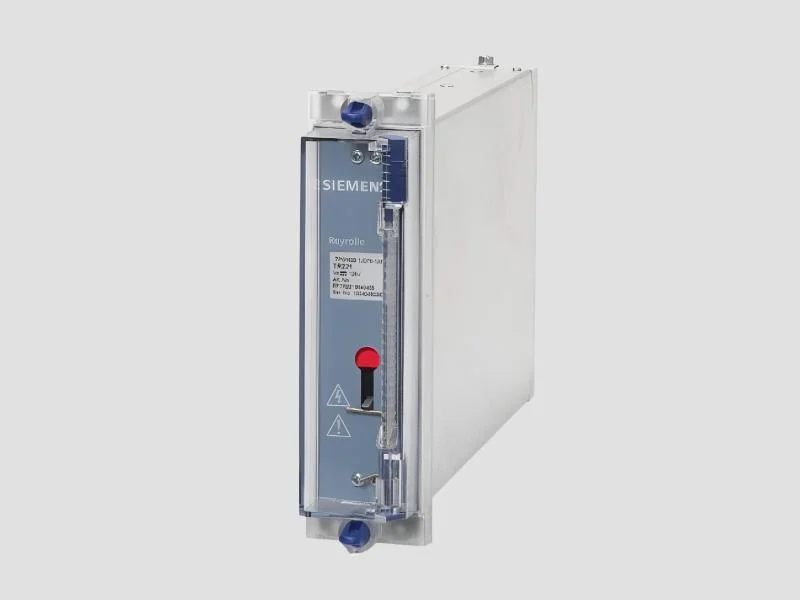
The Master Trip Relay represents the pinnacle of electrical protection technology, serving as the decisive component that translates fault detection signals into immediate protective action. This specialized relay functions as the central command unit in protection schemes, receiving inputs from various protective devices such as overcurrent relays, differential relays, and distance protection units. When abnormal conditions are detected, the Master Trip Relay initiates the tripping of circuit breakers within milliseconds, isolating faulty sections and preventing damage propagation throughout the power system. Its robust construction ensures reliable operation even in harsh electrical environments with electromagnetic interference and voltage transients, while its modular design facilitates easy testing and maintenance without disrupting overall system protection. Across industries, the Master Trip Relay finds essential application in electrical infrastructure where system reliability ...
The Master Trip Relay represents the pinnacle of electrical protection technology, serving as the decisive component that translates fault detection signals into immediate protective action. This specialized relay functions as the central command unit in protection schemes, receiving inputs from various protective devices such as overcurrent relays, differential relays, and distance protection units. When abnormal conditions are detected, the Master Trip Relay initiates the tripping of circuit breakers within milliseconds, isolating faulty sections and preventing damage propagation throughout the power system. Its robust construction ensures reliable operation even in harsh electrical environments with electromagnetic interference and voltage transients, while its modular design facilitates easy testing and maintenance without disrupting overall system protection.

Across industries, the Master Trip Relay finds essential application in electrical infrastructure where system reliability is non-negotiable. In utility substations, it coordinates protection between transmission lines, transformers, and busbars, ensuring selective tripping that minimizes outage impact. Power generation facilities rely on these relays to protect expensive equipment like generators and step-up transformers from internal faults and external disturbances. Industrial plants with critical processes utilize Master Trip Relays to safeguard motors, drives, and production equipment, preventing costly downtime and equipment damage. The relay's adaptability makes it suitable for both conventional fossil fuel plants and modern renewable energy installations, providing consistent protection regardless of power source characteristics.

The business value of implementing a Master Trip Relay extends far beyond basic protection functionality, delivering tangible returns through enhanced system reliability and reduced operational risks. By ensuring fast, coordinated fault clearance, these relays minimize equipment damage and repair costs while preventing cascading failures that could lead to widespread outages. Their high reliability translates to reduced maintenance requirements and longer service intervals, lowering total cost of ownership over the equipment lifecycle. For system operators, the confidence in protection system performance enables more efficient utilization of existing infrastructure and supports compliance with grid code requirements and safety standards. The relay's proven track record in diverse applications provides assurance that critical assets are protected against electrical faults, supporting business continuity and operational excellence.

Key Features:
- High-speed operation with minimal response time for immediate fault isolation
- Multiple output contacts capable of tripping several circuit breakers simultaneously
- Robust construction designed for reliable performance in harsh electrical environments
- Panel-mounted design for easy installation, testing, and maintenance access
- Fail-safe operation ensuring protective action even during auxiliary supply failure

Benefits:
- Enhanced system safety through coordinated protection and fast fault clearance
- Reduced equipment damage and repair costs by preventing fault propagation
- Improved operational reliability with consistent performance under varying conditions
- Simplified maintenance with accessible design and straightforward testing procedures
- Flexible integration into diverse protection schemes and system architectures
Specifications
| Additional Information | |
|---|---|
| SKU | SER-MTR-01 |
| Country of Origin | India |
| Customisable | No |
Application
The Master Trip Relay serves as the critical final link in electrical protection schemes, receiving signals from various protective devices and executing immediate circuit breaker tripping during fault conditions. Its centralized operation ensures coordinated protection across complex power systems, making it indispensable for maintaining operational continuity and preventing catastrophic equipment failures.
Engineered for demanding environments, this relay integrates seamlessly into both new installations and existing infrastructure upgrades. Its versatile design accommodates diverse protection logic requirements while providing reliable performance under extreme electrical and environmental conditions. The relay's fail-safe operation and multiple contact configurations offer flexibility for different system architectures and protection philosophies.
Real-world applications:
- Electrical substations for transmission and distribution network protection during short circuits and overloads
- Power generation plants to safeguard generators, transformers, and auxiliary equipment from electrical faults
- Industrial manufacturing facilities with critical processes requiring uninterrupted power supply and equipment protection
- Commercial buildings and data centers where power reliability is essential for business continuity
- Renewable energy installations including solar farms and wind power plants for grid connection protection
Trade Details
| Available Stock | In Stock |
| Sample Availability | No |
Payment Terms
| Payment Terms |
|
| Payment Methods |
|
Shipping & Logistics
| Shipping Internationally | - | |
| Methods | -- | |
| IncoTerms | -- | |
| Port of Dispatch | Chennai Port | |
| Packaging Type | -- | |
| Units per Package | -- | |
| Barcode / HSN / GTIN / UPC | -- | |
| Dispatch Lead time | -- |
Company Profile

Spark Engineering, Tamil Nadu
 Tamil Nadu, India
Tamil Nadu, IndiaManufacturer•Retailer
Turn Over
₹1 Crore – ₹5 Crore
Factory Details
Factory Size1000-5000 sqm
Annual Production Capacity0 a:1:{i:0;s:4:"Sets";}
SKU: SER-MTR-01
Master Trip Relay For Substations And Industrial Power Systems Protection
Master Trip Relay is a high-reliability protection relay from leading manufacturers, designed for substations and industrial power systems to initiate fast circuit breaker tripping during faults, ensuring system safety with robust construction and multiple output contacts.
Min. Order Quantity: 1 Unit
Shipping
Shipping fee and delivery date to be negotiated. Contact supplier now for more details.
Spark Engineering Tamil Nadu, India
Tamil Nadu, IndiaManufacturerRetailer