IN
₹
Apparel & Fashion
Description
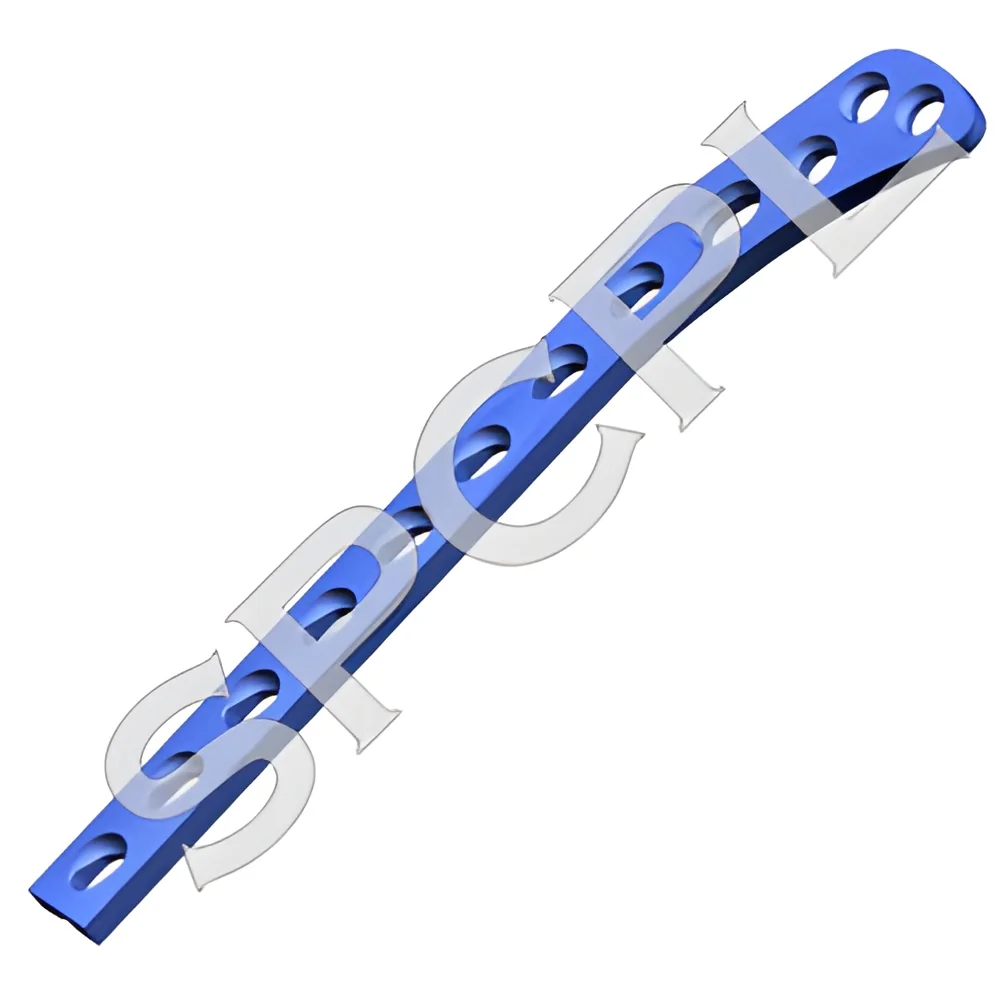
The Low Contact Dynamic Compression Plate (LC-DCP) Broad represents advanced orthopedic implant technology specifically engineered for femoral shaft fracture management. Manufactured from medical-grade stainless steel or titanium, these plates feature an innovative low-contact design that reduces plate-to-bone surface area, preserving periosteal blood flow and minimizing cortical necrosis risk. The dynamic compression mechanism facilitates axial compression at fracture sites, promoting primary bone healing through rigid internal fixation. With hole configurations ranging from 4 to 18 holes, surgeons maintain exceptional flexibility in addressing diverse fracture patterns and patient anatomies. Each plate undergoes rigorous quality control testing to ensure precise dimensional accuracy, surface finish, and mechanical properties that comply with international medical device standards.

Orthopedic departments, trauma centers, and surgical hospitals worldwide depend on LC-DCP Broad plates ...
The Low Contact Dynamic Compression Plate (LC-DCP) Broad represents advanced orthopedic implant technology specifically engineered for femoral shaft fracture management. Manufactured from medical-grade stainless steel or titanium, these plates feature an innovative low-contact design that reduces plate-to-bone surface area, preserving periosteal blood flow and minimizing cortical necrosis risk. The dynamic compression mechanism facilitates axial compression at fracture sites, promoting primary bone healing through rigid internal fixation. With hole configurations ranging from 4 to 18 holes, surgeons maintain exceptional flexibility in addressing diverse fracture patterns and patient anatomies. Each plate undergoes rigorous quality control testing to ensure precise dimensional accuracy, surface finish, and mechanical properties that comply with international medical device standards.

Orthopedic departments, trauma centers, and surgical hospitals worldwide depend on LC-DCP Broad plates for managing complex femoral fractures. These implants prove particularly valuable in emergency trauma surgery where immediate stability is crucial for polytrauma patients. The medical-grade stainless steel version provides excellent strength and corrosion resistance for general applications, while titanium plates offer superior biocompatibility and reduced artifact interference in postoperative imaging. Veterinary orthopedic specialists also utilize these plates for large animal fracture repair, demonstrating their versatility across different medical fields. The broad design specifically addresses the biomechanical requirements of the femur, which bears significant weight-bearing loads and demands exceptionally stable fixation for successful healing outcomes.

Healthcare providers benefit from reliable supply partnerships that ensure consistent product availability for surgical teams. These plates deliver exceptional value through reduced complication rates, minimized revision surgery needs, and improved patient recovery timelines. The manufacturing process incorporates advanced CNC machining and surface treatment technologies that guarantee precise screw hole alignment and smooth plate contours, reducing soft tissue irritation. Each plate undergoes strict metallurgical testing for fatigue strength, corrosion resistance, and biocompatibility certification. The availability of both stainless steel and titanium materials provides cost-effective options for different healthcare budget requirements while maintaining clinical efficacy and performance standards.

Key Features:
- Medical-grade stainless steel or titanium construction meeting ISO 5832 standards
- Low-contact design minimizes bone vascular compromise and reduces necrosis risk
- Dynamic compression holes enable axial compression for primary bone healing
- Broad plate design optimized for femoral shaft anatomy and load distribution
- Available in 4-18 hole configurations to accommodate various fracture patterns

Benefits:
- Preserves bone blood supply through reduced plate-to-bone contact area
- Promotes faster healing with dynamic compression technology
- Provides stable fixation for high-stress femoral applications
- Reduces complication rates and revision surgery requirements
- Offers material options to suit different clinical needs and budgets
Specifications
| Additional Information | |
|---|---|
| Country of Origin | India |
Application
The Low Contact Dynamic Compression Plate Broad provides stable fixation for complex femur shaft fractures in orthopedic trauma surgery. Its low-contact design minimizes disruption to bone blood supply while delivering superior compression for faster healing. This essential surgical implant meets the demands of high-stress femoral applications where anatomical precision and long-term stability are critical for successful patient recovery.
Medical facilities and orthopedic departments rely on these plates for both emergency trauma cases and planned surgical procedures. The broad plate design effectively distributes mechanical load across fracture sites, accommodating patients with varying bone quality and density. Available in multiple hole configurations from 4 to 18 holes, surgeons can select optimal sizing for each specific case, ensuring tailored treatment approaches for improved clinical outcomes.
- Open reduction and internal fixation of femoral shaft fractures in trauma centers
- Revision surgery for previously failed fracture fixation procedures
- Orthopedic reconstruction following severe accidents and complex injuries
- Surgical management of pathological fractures in oncology patients
- Comprehensive fracture care for multi-trauma patients requiring stable internal fixation
Trade Details
| Available Stock | In Stock |
| Sample Availability | No |
Payment Terms
| Payment Terms |
|
Company Profile

Bharucha Associates, Gujarat
 Gujarat, India
Health & Personal Care•Distributor / Wholesaler•Retailer•Importer / Exporter
Factory Details
Factory SizeBelow 1000 sqm
Annual Production Capacity0
Orthopedic Trauma Surgery Low Contact Dynamic Compression Plate Broad Femur Shaft Fracture Repair
Orthopedic Trauma Surgery Low Contact Dynamic Compression Plate Broad for femur shaft fracture repair. Available in stainless steel or titanium with 4-18 hole configurations. Trusted by hospitals and orthopedic specialists worldwide for reliable fracture fixation and accelerated healing outcomes.
Min. Order Quantity: 1 unit
Shipping
Shipping fee and delivery date to be negotiated. Contact supplier now for more details.
Bharucha Associates
 Gujarat, India
Health & Personal CareDistributor / Wholesaler