IN
IN₹
Apparel & Fashion
Description
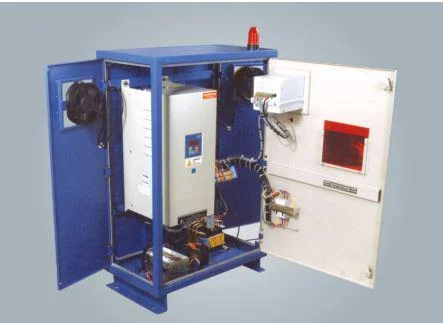
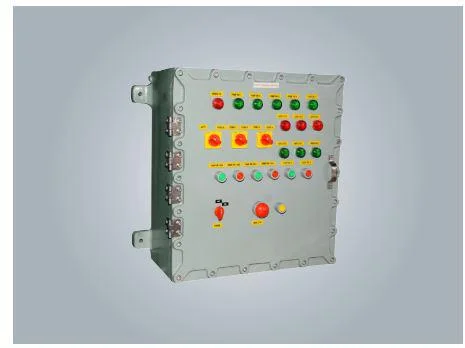
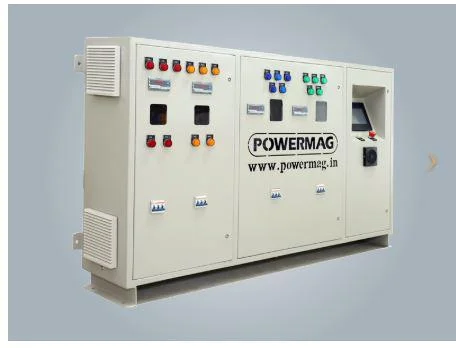
Industrial Automation Control Panels represent sophisticated solutions for managing complex industrial processes through integrated control systems. These panels combine Variable Frequency Drives (VFDs), Programmable Logic Controllers (PLCs), Human-Machine Interfaces (HMIs), and Motor Control Centers (M.C.C) into cohesive units that provide precise command over industrial equipment. Constructed with premium branded components and housed in durable mild steel or stainless steel enclosures, each panel includes essential features like hot air exhaust systems to maintain optimal operating temperatures. The design focuses on reliability and efficiency, ensuring that industrial operations run smoothly with minimal downtime and maximum control precision.

Across various industrial sectors, these control panels find extensive application in environments demanding consistent performance and automation. Manufacturing facilities utilize them for production line control, while process industries i...
Industrial Automation Control Panels represent sophisticated solutions for managing complex industrial processes through integrated control systems. These panels combine Variable Frequency Drives (VFDs), Programmable Logic Controllers (PLCs), Human-Machine Interfaces (HMIs), and Motor Control Centers (M.C.C) into cohesive units that provide precise command over industrial equipment. Constructed with premium branded components and housed in durable mild steel or stainless steel enclosures, each panel includes essential features like hot air exhaust systems to maintain optimal operating temperatures. The design focuses on reliability and efficiency, ensuring that industrial operations run smoothly with minimal downtime and maximum control precision.

Across various industrial sectors, these control panels find extensive application in environments demanding consistent performance and automation. Manufacturing facilities utilize them for production line control, while process industries implement them for batch processing and quality management. They serve critical functions in material handling systems, water treatment plants, and energy management applications. The versatility of these panels allows them to adapt to specific industry requirements, whether controlling conveyor speeds in packaging operations, managing pump sequences in chemical processing, or overseeing temperature regulation in food production facilities. Their robust construction makes them suitable for challenging environments where dust, moisture, or temperature extremes might compromise lesser equipment.

The business value of these industrial automation control panels lies in their ability to enhance operational efficiency while reducing long-term maintenance costs. By integrating multiple control functions into single, well-organized units, they minimize installation complexity and simplify troubleshooting procedures. The use of branded components ensures compatibility with existing systems and provides access to manufacturer support when needed. Reliability is built into every aspect, from the selection of high-quality electrical components to the strategic placement of ventilation systems that prevent overheating. These panels deliver consistent performance that translates to fewer production interruptions, lower energy consumption through optimized motor control, and improved safety through proper electrical isolation and emergency stop functionalities.

Key Features:
- Integration of VFD, PLC, HMI, and M.C.C components in unified control systems
- Construction using durable mild steel or stainless steel enclosures for protection
- Hot air exhaust arrangements to maintain optimal operating temperatures
- Utilization of branded automation components for consistent performance
- Modular design allowing for specific configuration based on application requirements

Benefits:
- Enhanced operational efficiency through precise motor speed control and automation
- Reduced energy consumption via optimized VFD operation and power management
- Improved system reliability with quality components and proper thermal management
- Simplified maintenance through organized wiring and accessible components
- Increased safety with proper electrical isolation and emergency control features
Specifications
| Additional Information | |
|---|---|
| Country of Origin | India |
Application
These industrial automation control panels serve as the central nervous system for modern manufacturing facilities, precisely managing motor operations through VFDs and PLCs while providing intuitive human-machine interfaces for operators. The robust construction with MS/SS enclosures and proper ventilation ensures continuous operation in demanding industrial environments where temperature fluctuations and particulate matter are common challenges.
From small-scale production lines to large industrial complexes, these control panels adapt to diverse operational requirements through their modular design. The integration of M.C.C components alongside VFD and PLC systems creates comprehensive solutions that handle everything from basic motor starting to complex automated sequences, making them indispensable for industries seeking to optimize their production processes and reduce manual intervention.
Real-world applications:
- Manufacturing plants using VFD-controlled motors for precise speed regulation in conveyor systems and production machinery
- Process industries implementing PLC-based automation for consistent batch processing and quality control
- Water treatment facilities utilizing M.C.C panels for reliable pump control and power distribution
- Material handling operations employing HMI interfaces for operator control of automated storage and retrieval systems
- Industrial facilities requiring integrated control solutions for HVAC systems, compressors, and auxiliary equipment
Trade Details
| Available Stock | In Stock |
| Sample Availability | No |
Payment Terms
| Payment Terms |
|
| Payment Methods |
|
Company Profile

Powermag Control Systems Pvt Ltd, Tamil Nadu
 Tamil Nadu, India
Tamil Nadu, IndiaElectronics & Electrical•Distributor / Wholesaler•Retailer
Factory Details
Factory SizeBelow 1000 sqm
Industrial Automation Control Panels for VFD PLC HMI M.C.C Applications
Industrial Automation Control Panels for VFD, PLC, HMI, and M.C.C applications deliver reliable motor control and process automation using branded components in durable MS/SS enclosures with hot air exhaust systems.
Min. Order Quantity: 1 piece
Shipping
Shipping fee and delivery date to be negotiated. Contact supplier now for more details.
Powermag Control Systems Pvt Ltd
 Tamil Nadu, India
Tamil Nadu, IndiaElectronics & ElectricalDistributor / Wholesaler