Manufacturing Industry
Textile & Process Industry
Commercial Buildings & Facilities
Steel, Cement & Heavy Engineering
Industrial Power & Electrical Distribution

 IN
IN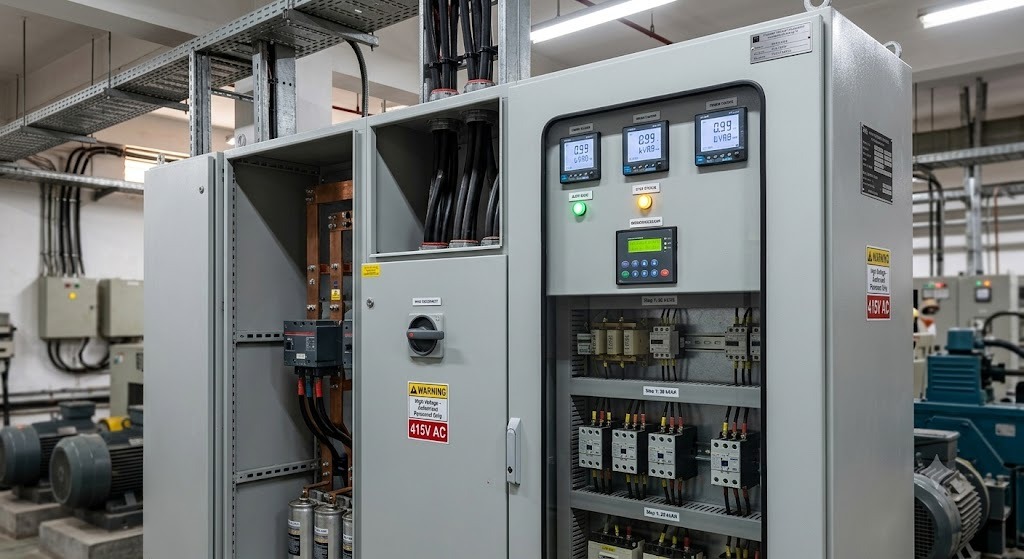
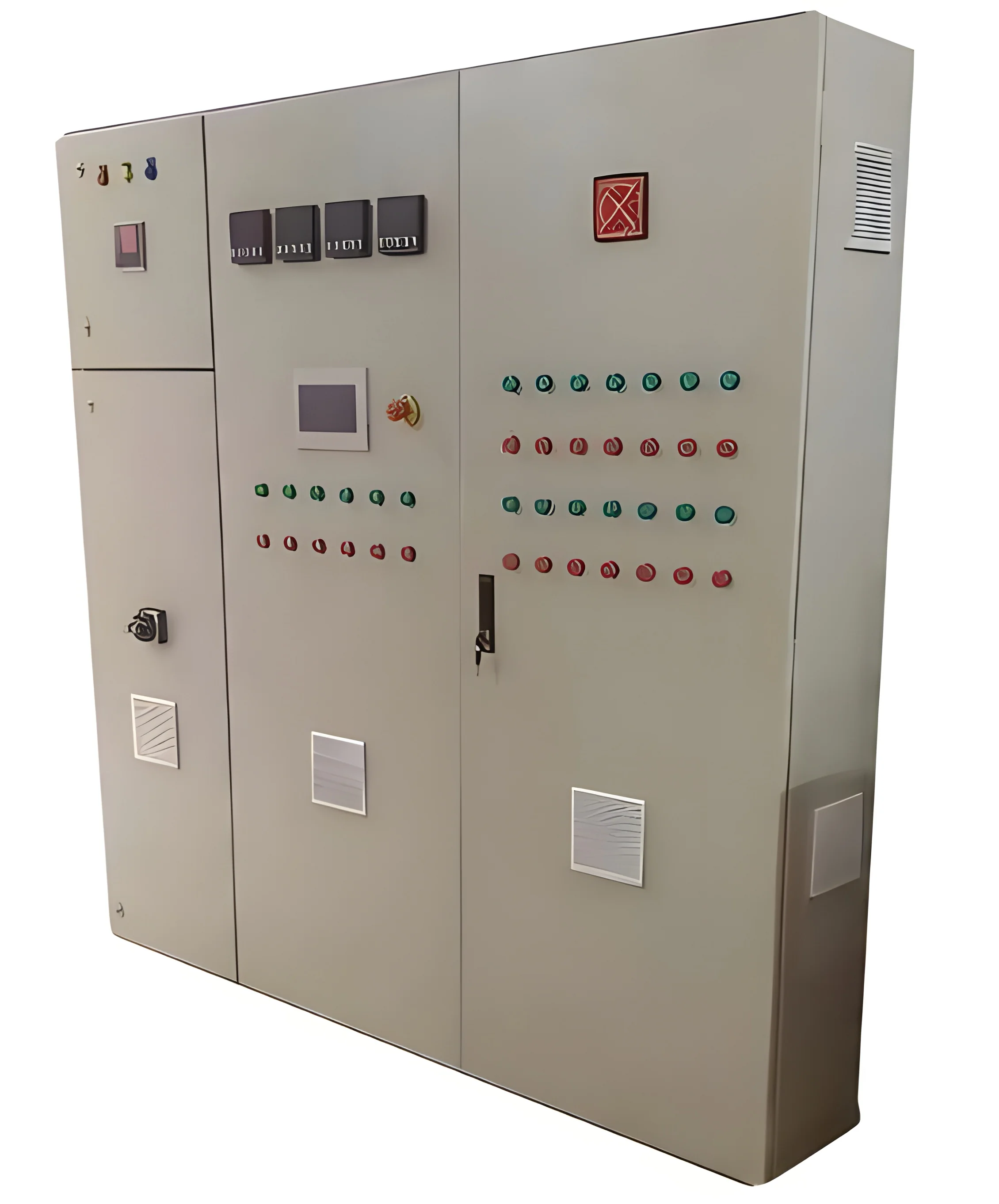
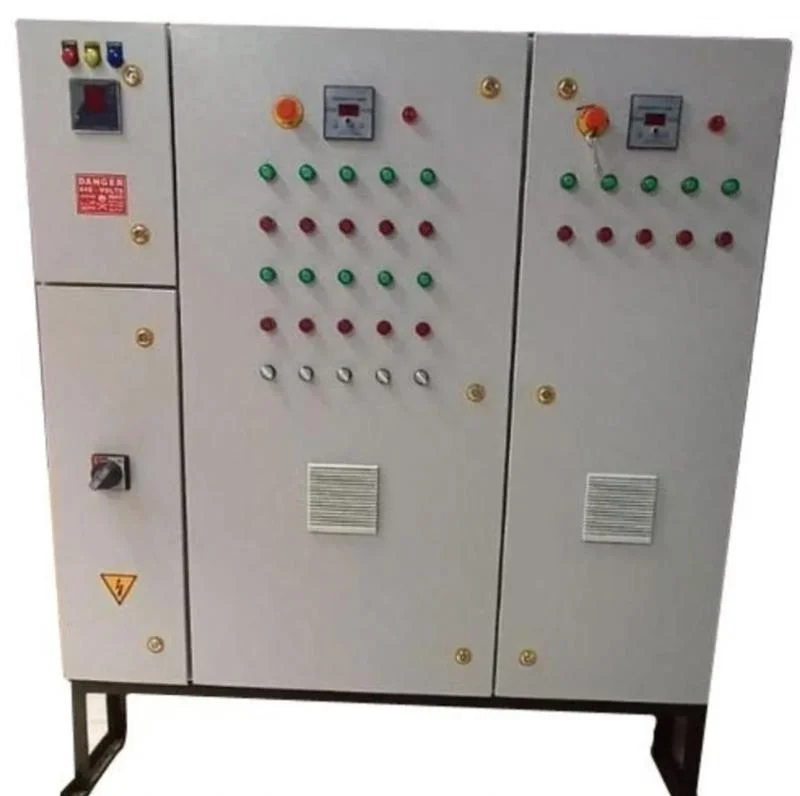
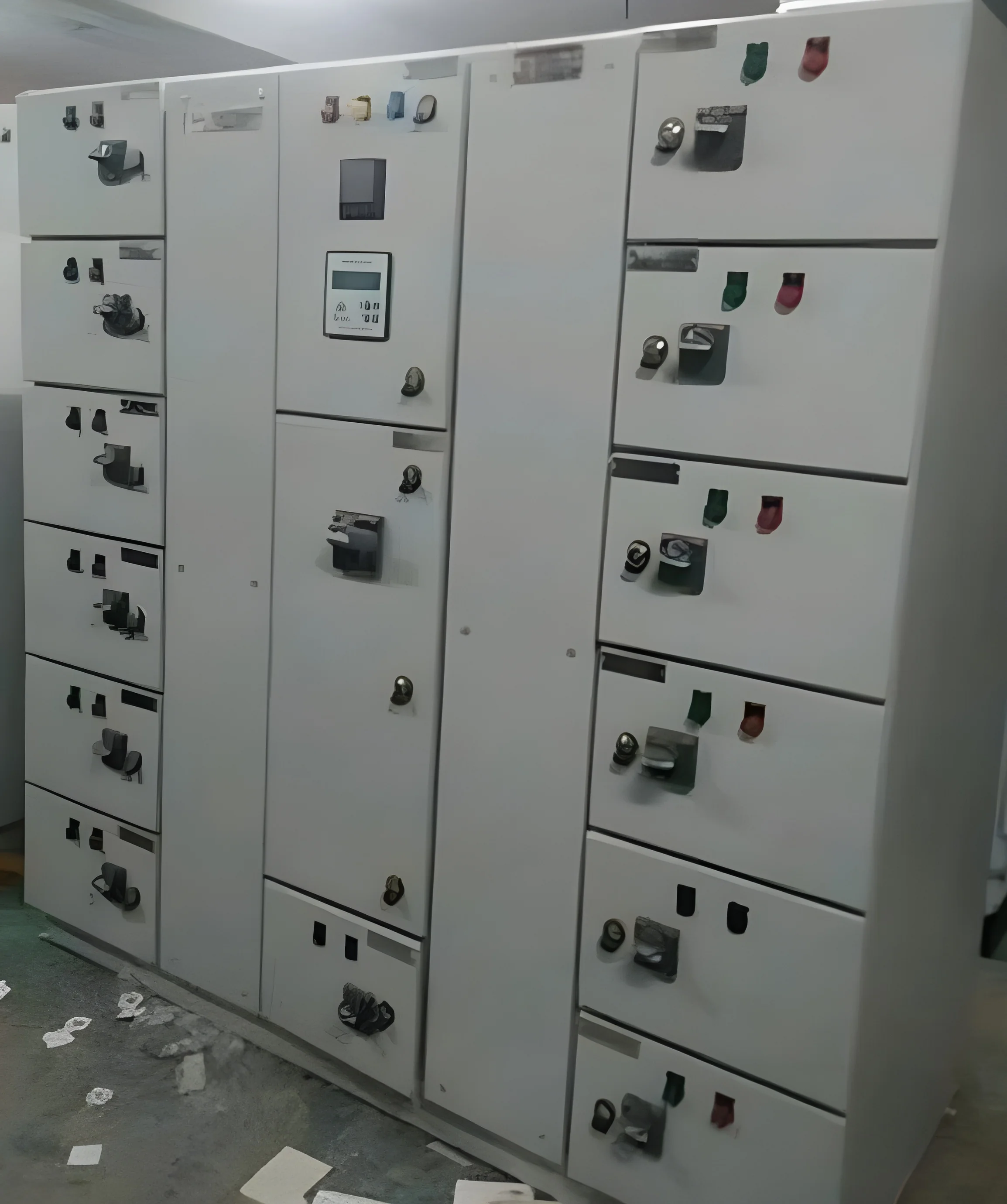
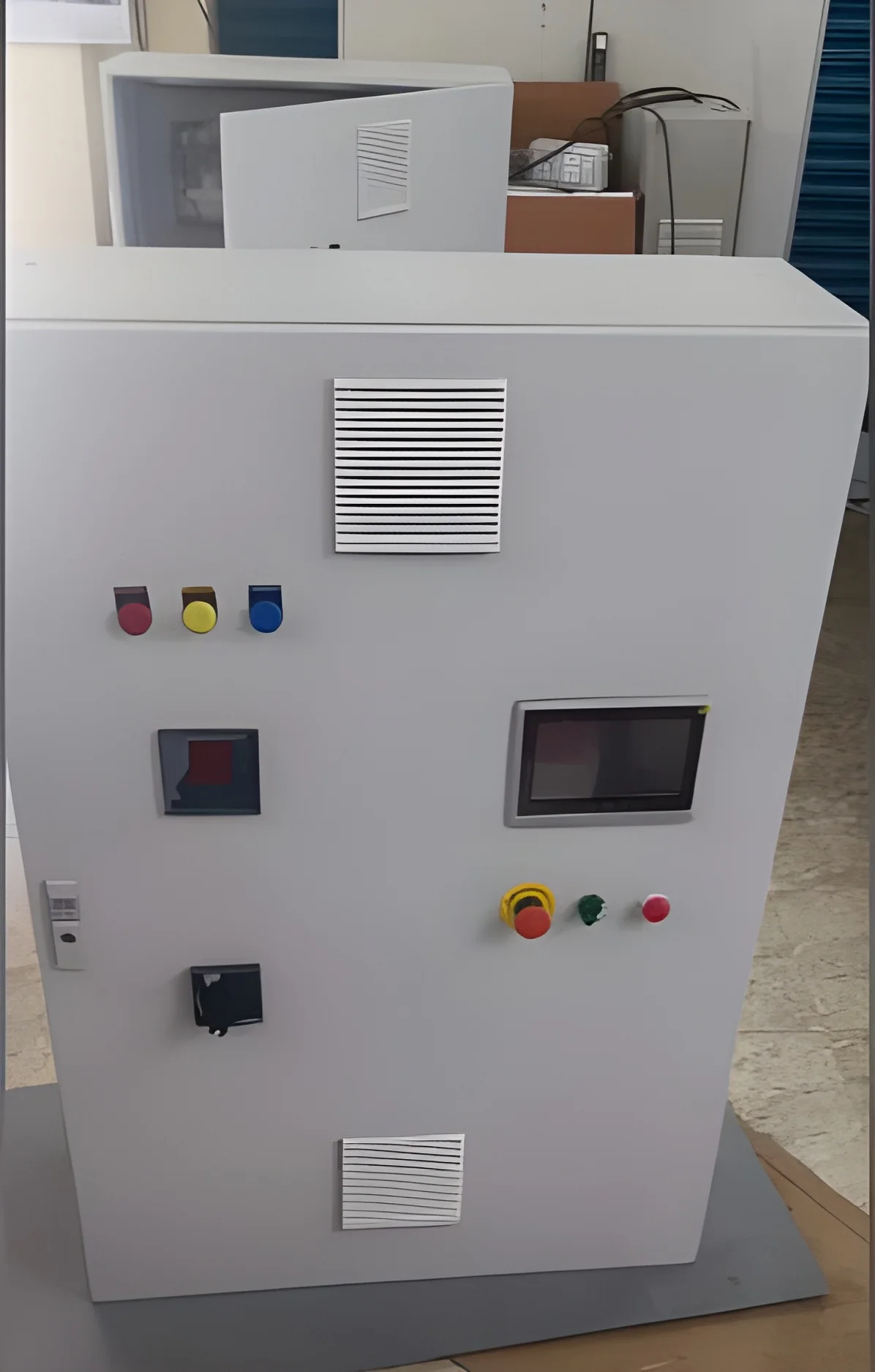
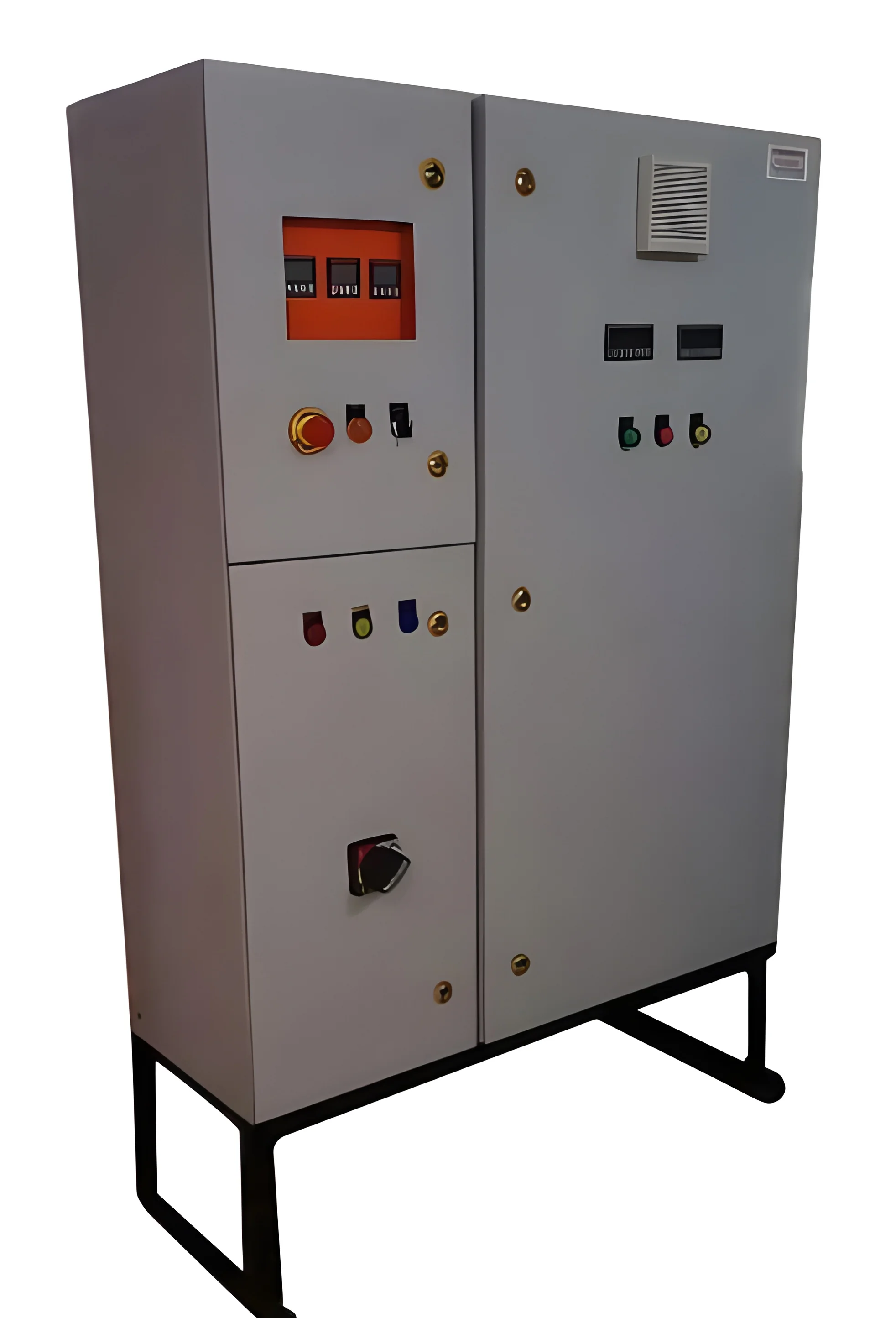
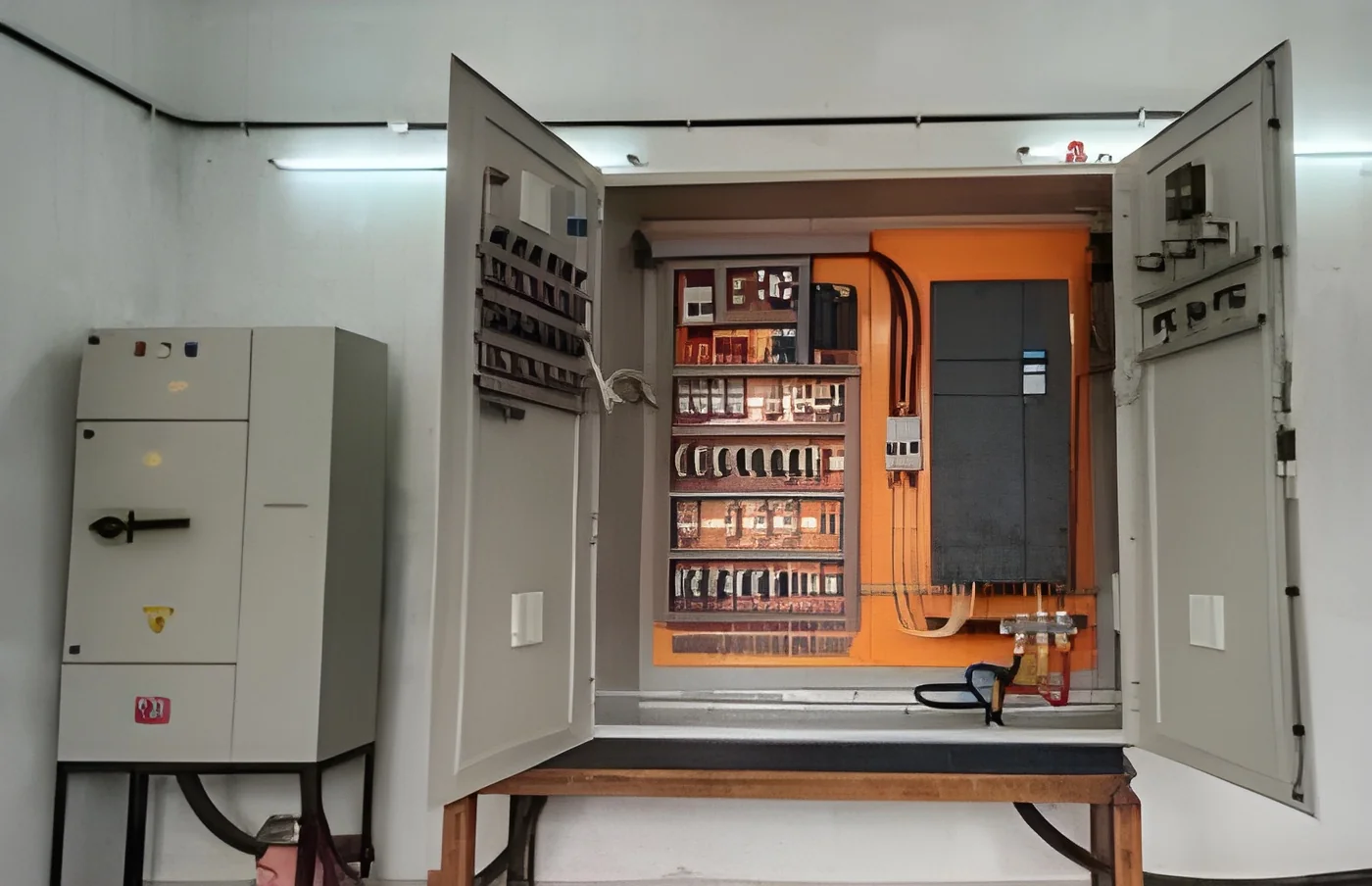
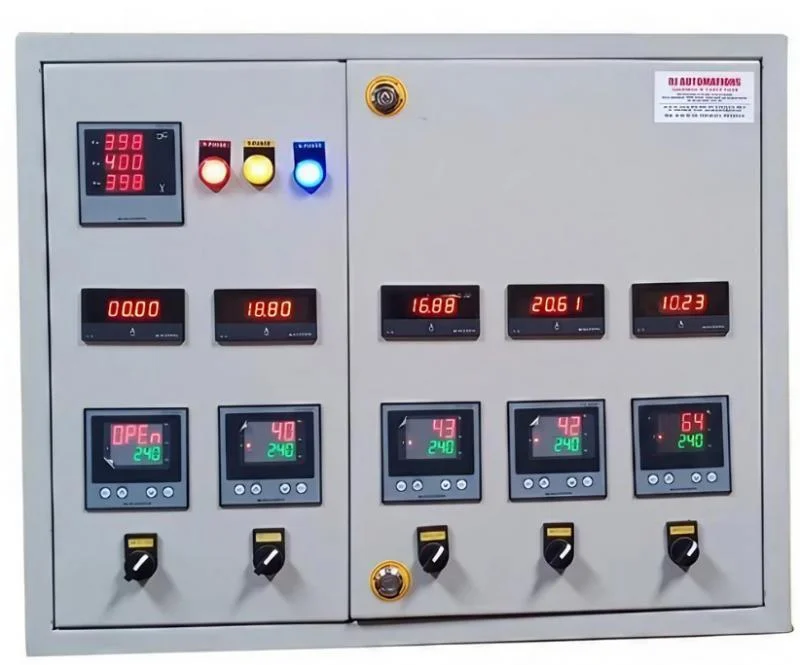
The APFC panel functions via a microprocessor controller that processes voltage and current feedback from line Current Transformers (CTs) to compute real-time reactive power (kVAR) requirements. It systematically connects or disconnects capacitor stages using electromagnetic contactors or fast-acting thyristors to offset lagging currents from motors and transformers. Integrated detuned reactors mitigate harmonic resonance and safeguard capacitors from premature degradation. Compartmentalized CRCA sheet-steel enclosures, equipped with forced-air cooling and thermal cut-offs, preserve internal component stability during high ambient operations. Overall, it lowers power operational overheads while prolonging the working life of heavy processing machinery.
| Key Attributes | |
|---|---|
| Operating Voltage | 380V / 415V / 440V 3-Phase AC (50/60 Hz) |
| Capacity Range | 20 kVAR to 1250 kVAR |
| Controller Type | Microprocessor Digital APFC Relay (6 to 16 Steps) |
| Target Power Factor | Adjustable 0.95 Lagging to 0.99 Leading |
| Switching Mechanism | Heavy-Duty Contactors or Thyristor Modules |
| Capacitor Type | Heavy-Duty MPP / APP / Gas-Filled Capacitors |
| Capacitor Bank | Multi-Step Power Capacitor Bank* |
| Monitoring | Power Factor, Voltage, Current & Electrical Parameters* |
| Key Features | Automatic PF Correction, Load-Based Switching & Protection |
| Product Type | Automatic Power Factor Correction (APFC) Control Panel |
| Additional Information | |
|---|---|
| Country of Origin | India |
Manufacturing Industry
Textile & Process Industry
Commercial Buildings & Facilities
Steel, Cement & Heavy Engineering
Industrial Power & Electrical Distribution
| Available Stock | In Stock |
| Sample Availability | No |
| Payment Terms |
|
| Port of Dispatch | Coimbatore, Tamil Nadu, India |


 Tamil Nadu, India
It automatically switches capacitor banks on and off to maintain a high power factor close to unity under changing electrical loads.
Contactor switching suits steady or slowly changing loads, while thyristor switching provides ultra-fast, wear-free engagement for rapidly fluctuating industrial loads.
Detuned reactors prevent harmonic resonance created by non-linear loads (such as VFDs and rectifiers) from damaging the capacitor banks.
Modern microprocessor controllers automatically disconnect capacitor stages when loads decrease to prevent leading power factor conditions and overvoltage.
Maintenance involves inspecting capacitors for swelling or oil leakage, checking contactor contacts, cleaning dust filters, and verifying CT/PT wiring tightness.
Shipping fee and delivery date to be negotiated. Contact supplier now for more details.

 Tamil Nadu, India