IN
IN₹
Apparel & Fashion
Description
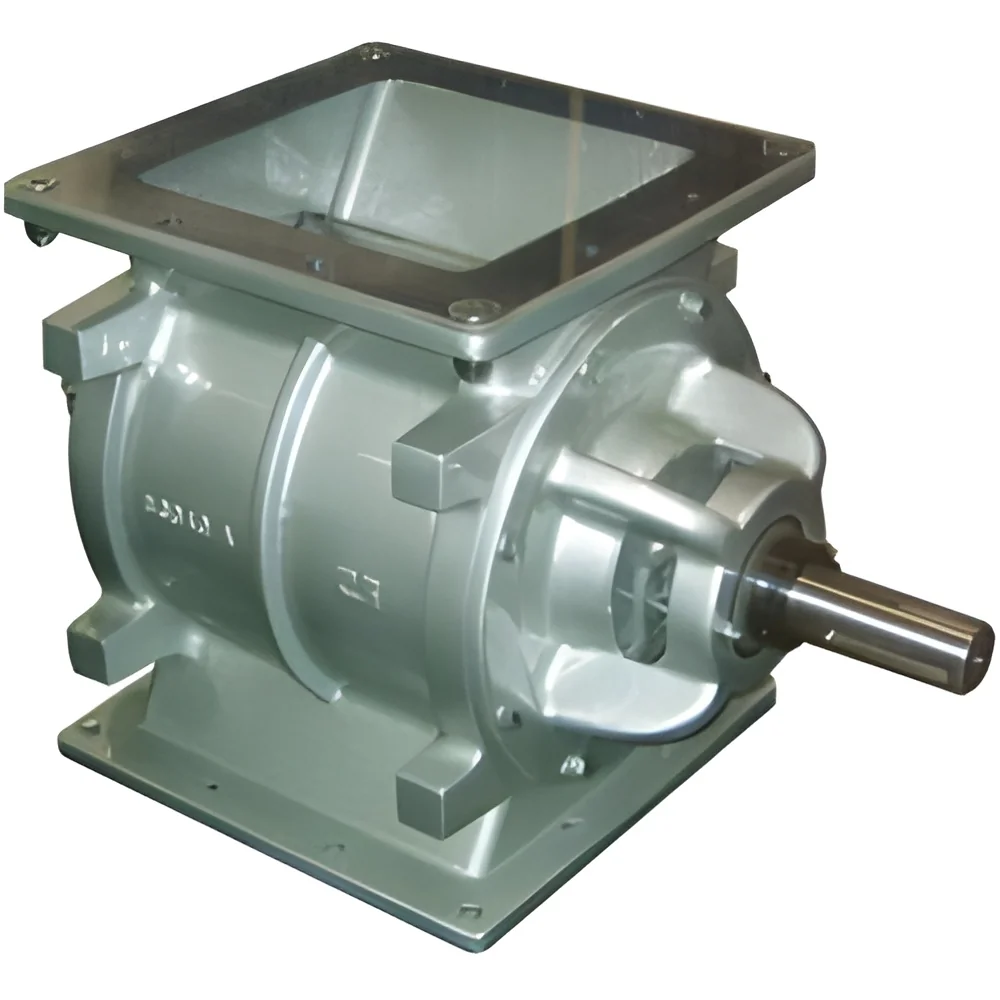
The Industrial Rotary Air Lock Valve is engineered for precision and durability in demanding bulk material handling applications. Designed specifically for pneumatic conveying systems, it provides accurate volumetric feeding of powdered and granular materials while maintaining critical pressure differentials. Its core function is to allow material to enter or exit a pressurized system with minimal air loss, ensuring operational efficiency. The valve features a rotating rotor with multiple vanes within a precision-machined housing, creating discrete pockets that meter material flow. This reliable mechanical operation is built to withstand abrasive materials and continuous use, forming a dependable seal that protects system integrity and prevents product loss.

This valve finds essential usage across a wide spectrum of industries where controlled material transfer is paramount. In food processing, it handles ingredients like flour, starch, and powdered flavors, often with specific finish...
The Industrial Rotary Air Lock Valve is engineered for precision and durability in demanding bulk material handling applications. Designed specifically for pneumatic conveying systems, it provides accurate volumetric feeding of powdered and granular materials while maintaining critical pressure differentials. Its core function is to allow material to enter or exit a pressurized system with minimal air loss, ensuring operational efficiency. The valve features a rotating rotor with multiple vanes within a precision-machined housing, creating discrete pockets that meter material flow. This reliable mechanical operation is built to withstand abrasive materials and continuous use, forming a dependable seal that protects system integrity and prevents product loss.

This valve finds essential usage across a wide spectrum of industries where controlled material transfer is paramount. In food processing, it handles ingredients like flour, starch, and powdered flavors, often with specific finishes for hygiene. Pharmaceutical manufacturers utilize it for the contained, precise feeding of sensitive powders under controlled conditions. The construction sector relies on it for conveying cement, fly ash, and silica fume. Chemical plants employ these valves for powders, catalysts, and resins, while plastics manufacturers use them to transfer pellets and compound powders. In each case, the valve is selected for its ability to handle the specific material characteristics and the required sanitary or industrial standards of the process.

The primary business value delivered by this Rotary Air Lock Valve is operational reliability, which translates directly into cost savings and production consistency. By minimizing air leakage and product loss, it reduces material waste and improves the overall efficiency of the conveying system. Its heavy-duty, abrasion-resistant construction ensures a long service life even with challenging materials, lowering total cost of ownership through reduced maintenance frequency and part replacement. This reliability prevents unplanned downtime, supporting continuous production schedules. The valve's design for easy access to internal components further reduces maintenance time and labor costs, ensuring quick return to service and protecting your bottom line.

Key Features:
- Precision-machined rotor and housing for tight clearances and minimal air leakage.
- Robust construction using abrasion-resistant materials suitable for demanding environments.
- Available in multiple standard sizes to match different system capacity and flow rate requirements.
- Engineered seal options designed to handle various material characteristics and operating temperatures.
- Designed for straightforward maintenance with accessible internal components for inspection and service.

Benefits:
- Ensures consistent material feed and system pressure for reliable pneumatic conveying operation.
- Reduces product loss and material waste through effective sealing, improving process yield.
- Delivers extended service life and durability, minimizing replacement costs and downtime.
- Supports efficient system performance, contributing to overall energy savings in material handling.
- Simplifies maintenance procedures, reducing labor time and costs for ongoing system upkeep.
Specifications
| Additional Information | |
|---|---|
| Country of Origin | India |
Application
The Industrial Rotary Air Lock Valve serves as a critical component in pneumatic conveying systems, functioning as both a feeder and an airlock. It allows powdered or granular materials to pass between different pressure zones while preventing air leakage, ensuring consistent material flow and maintaining system efficiency. This reliability is essential for continuous industrial processes where downtime directly impacts productivity.
These robust valves are engineered for demanding environments across diverse sectors that handle bulk materials. Their design accommodates various material characteristics, from fine powders to small pellets, making them suitable for applications where contamination control, precise feeding, and system integrity are non-negotiable. The valve's performance directly influences the overall effectiveness of the material handling system.
- Cement and fly ash handling in construction material production and power plants.
- Precise feeding of flour, sugar, spices, and other powdered ingredients in food processing facilities.
- Controlled transfer of active pharmaceutical ingredients (APIs) and excipients in manufacturing.
- Pellet and powder conveyance in plastic compounding and injection molding operations.
- Handling of various chemical powders, pigments, and granular catalysts in chemical processing.
Trade Details
| Available Stock | In Stock |
| Sample Availability | No |
Payment Terms
| Payment Terms |
|
Company Profile
Abr Enviro Systems, Madhya Pradesh
 Madhya Pradesh, India
Madhya Pradesh, IndiaIndustrial Equipment & Machinery•Manufacturer•Distributor / Wholesaler•Importer / Exporter
Factory Details
Factory SizeBelow 1000 sqm
Annual Production Capacity0
Industrial Rotary Air Lock Valve For Pneumatic Conveying Systems
Industrial Rotary Air Lock Valve for precise volumetric feeding of powdered materials in pneumatic conveying systems. Ensures reliable performance with minimal leakage for bulk handling needs across multiple industries.
Min. Order Quantity: 1 unit
Shipping
Shipping fee and delivery date to be negotiated. Contact supplier now for more details.
Abr Enviro Systems
 Madhya Pradesh, India
Madhya Pradesh, IndiaIndustrial Equipment & MachineryManufacturer