IN
IN₹
Description
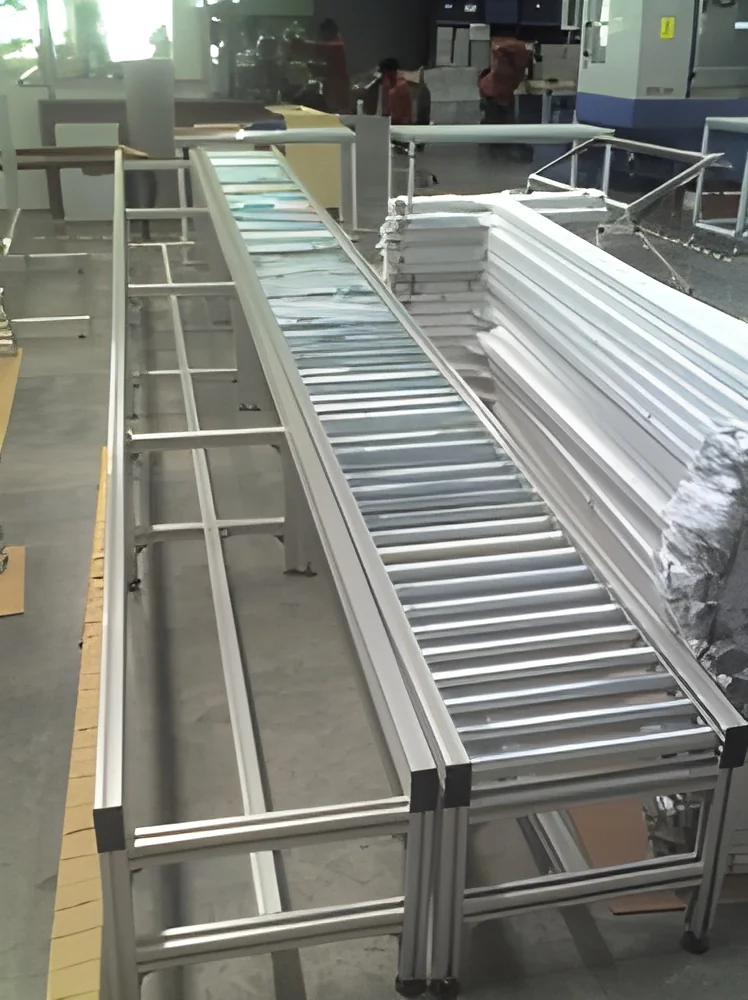
Heavy-duty roller conveyors represent essential industrial equipment designed for efficient material transportation of bulky and heavy items. These systems utilize multiple cylindrical rollers mounted on a sturdy frame, creating a smooth surface that facilitates movement through gravity or powered mechanisms. The fundamental engineering ensures low-friction transportation of diverse loads, from individual packages to full pallets, across various distances within operational facilities. Their operation significantly reduces manual handling requirements while dramatically improving workflow speed and operational safety. Available in configurations including gravity, powered, and accumulation types, these conveyors can be precisely tailored to specific spatial constraints and material handling challenges, offering versatile solutions for demanding industrial environments.

Multiple industries depend on heavy-duty roller conveyors as critical components of their material handling infrastru...
Heavy-duty roller conveyors represent essential industrial equipment designed for efficient material transportation of bulky and heavy items. These systems utilize multiple cylindrical rollers mounted on a sturdy frame, creating a smooth surface that facilitates movement through gravity or powered mechanisms. The fundamental engineering ensures low-friction transportation of diverse loads, from individual packages to full pallets, across various distances within operational facilities. Their operation significantly reduces manual handling requirements while dramatically improving workflow speed and operational safety. Available in configurations including gravity, powered, and accumulation types, these conveyors can be precisely tailored to specific spatial constraints and material handling challenges, offering versatile solutions for demanding industrial environments.

Multiple industries depend on heavy-duty roller conveyors as critical components of their material handling infrastructure. Manufacturing facilities implement these systems to transport raw materials, components, and finished products between production stages, assembly stations, and storage areas efficiently. Warehousing and distribution centers utilize roller conveyors for streamlined sorting, loading, and unloading operations, particularly in package handling and order fulfillment processes. The logistics sector relies on these systems for parcel sorting and transportation, while the automotive industry employs heavy-duty versions for moving vehicle parts and assemblies through production lines. Retail distribution networks, food processing plants, and e-commerce fulfillment centers also extensively use these conveyors to maintain high throughput rates while minimizing manual handling requirements and associated risks.

Investing in quality heavy-duty roller conveyors delivers substantial business value through enhanced operational efficiency, reduced labor costs, and improved workplace safety. These systems provide reliable performance with minimal maintenance requirements, ensuring consistent material flow and reducing operational downtime. The robust construction guarantees long-term durability even in demanding industrial environments, while the efficient operation reduces energy consumption compared to alternative material handling methods. The reliability translates to predictable operational costs and sustained productivity, making them a strategic long-term investment for operations seeking to optimize their material handling processes. Their design prioritizes both performance and safety, contributing to overall operational excellence.

Key Features:
- Heavy-duty construction using durable, industrial-grade materials for maximum longevity
- Multiple configuration options including gravity-fed and powered roller systems
- Customizable dimensions including length, width, and roller spacing to fit specific layouts
- Low-friction roller mechanism ensuring smooth, efficient material movement
- Reliable performance with minimal maintenance requirements for continuous operation

Benefits:
- Enhanced operational efficiency through streamlined material movement and reduced handling time
- Significant reduction in manual labor requirements and associated physical strain on workers
- Improved workplace safety by minimizing direct handling of heavy or bulky items
- Long-term durability and reliability ensuring consistent performance over extended periods
- Flexible integration with existing operational layouts and other material handling equipment
Specifications
| Additional Information | |
|---|---|
| Country of Origin | India |
Application
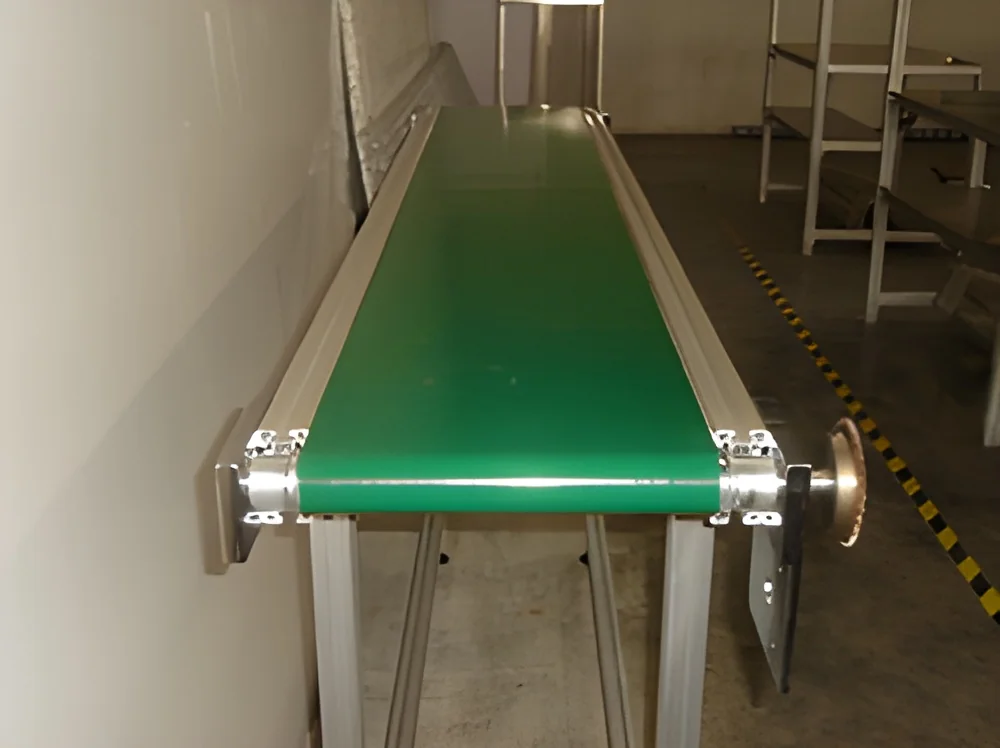
Heavy-duty roller conveyors provide the essential infrastructure for moving materials efficiently across industrial facilities. Their robust design handles substantial weight capacities while ensuring smooth, continuous operation with minimal intervention. These systems excel in environments where reliability and throughput are non-negotiable, from manufacturing floors to busy distribution hubs. The straightforward mechanism reduces physical strain on workers while maintaining consistent material flow, making operations safer and more productive.
These conveyor systems adapt seamlessly to various operational layouts and specific industry requirements. Whether configured as gravity-fed systems for cost-effective manual operations or as powered units for automated workflows, they integrate with other equipment like sorters and packaging stations. This flexibility supports both simple transfer tasks and complex, integrated production lines. Their modular nature allows for expansion or reconfiguration as operational needs evolve, providing long-term value and operational agility.
- Warehouse and distribution centers for transporting packaged goods to loading docks efficiently
- Manufacturing assembly lines for moving components between workstations smoothly
- Postal and parcel services for sorting and routing packages through facilities
- Food and beverage production for handling cases and containers in processing areas
- Automotive manufacturing plants for moving heavy parts along production lines
Trade Details
| Available Stock | In Stock |
| Sample Availability | No |
Payment Terms
| Payment Terms |
|
Company Profile
Control & Framing Systems, Karnataka
 Karnataka, India
Karnataka, IndiaHome & Lifestyle•Manufacturer•Distributor / Wholesaler•Importer / Exporter
Factory Details
Factory SizeBelow 1000 sqm
Annual Production Capacity0
Main Markets
Mid East
Eastern Asia
South Asia
Western Europe
Domestic
Heavy Duty Roller Conveyors For Efficient Material Handling
Heavy-duty roller conveyors for efficient material handling in warehouses, distribution centers, and manufacturing plants. Reliable systems for moving bulky items with minimal effort and maximum safety.
Min. Order Quantity: 1 unit
Shipping
Shipping fee and delivery date to be negotiated. Contact supplier now for more details.
Control & Framing Systems
 Karnataka, India
Karnataka, IndiaHome & LifestyleManufacturer