IN
IN₹
Apparel & Fashion
Loading subcategories...
View More
Description
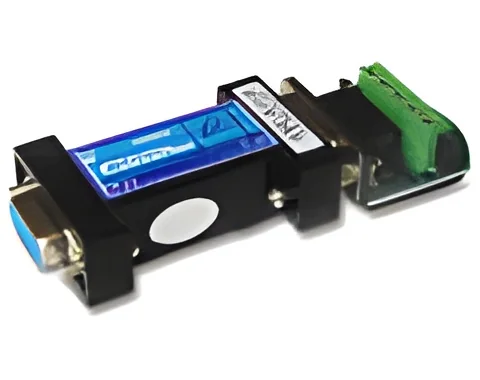
The Industrial RS232 to RS485 Converter with Optical Isolation represents advanced serial communication technology engineered for demanding industrial environments. This professional-grade converter features 2500V optical isolation that effectively protects connected equipment from transient surges, ground loops, and electrical disturbances that commonly disrupt data transmission in industrial settings. The innovative port-powered design eliminates the need for external power supplies or additional control signals, making installation straightforward while maintaining full operational capability. Operating at maximum baud rates of 38400bps and supporting distances up to 1200 meters at 9600bps, this converter ensures reliable data transfer across extensive industrial facilities and complex networks. With automatic data format sensing and self-adjusting capabilities, the device provides seamless compatibility with various equipment types without requiring manual configuration or technica...
The Industrial RS232 to RS485 Converter with Optical Isolation represents advanced serial communication technology engineered for demanding industrial environments. This professional-grade converter features 2500V optical isolation that effectively protects connected equipment from transient surges, ground loops, and electrical disturbances that commonly disrupt data transmission in industrial settings. The innovative port-powered design eliminates the need for external power supplies or additional control signals, making installation straightforward while maintaining full operational capability. Operating at maximum baud rates of 38400bps and supporting distances up to 1200 meters at 9600bps, this converter ensures reliable data transfer across extensive industrial facilities and complex networks. With automatic data format sensing and self-adjusting capabilities, the device provides seamless compatibility with various equipment types without requiring manual configuration or technical expertise.

This converter serves critical functions across multiple industries where robust and reliable serial communication is essential for operational success. Manufacturing facilities extensively utilize these devices to connect programmable logic controllers with remote sensors, motor controls, and production line equipment, ensuring smooth automation processes and real-time monitoring capabilities. The building management sector relies on them for integrating comprehensive systems including HVAC controls, security networks, fire alarm systems, and energy monitoring equipment across large commercial complexes and industrial facilities. Telecommunications infrastructure depends on these converters for maintaining signal integrity in base stations and network equipment rooms. Renewable energy installations use them to connect solar inverters, wind turbine controls, and battery storage systems to central monitoring stations. Transportation networks implement these converters in traffic control systems, railway signaling, and passenger information displays where reliability and continuous operation are absolutely critical for public safety and efficient service delivery.

The business value of this RS232 to RS485 converter lies in its exceptional reliability and significantly reduced total cost of ownership. Companies benefit from lower installation expenses due to the plug-and-play design that requires minimal technical expertise to implement successfully. The elimination of external power supplies reduces both initial equipment costs and ongoing energy consumption, contributing to operational efficiency and sustainability goals. Maintenance expenses are substantially minimized through the robust optical isolation that prevents damage from electrical disturbances, dramatically reducing system downtime and replacement costs while extending equipment lifespan. The converter's hot-pluggable capability allows for maintenance activities and system upgrades without shutting down entire operations, ensuring continuous performance that is critical for production environments and service delivery. These combined features deliver a communication solution that protects your infrastructure investment while ensuring uninterrupted data flow for your essential operational requirements and long-term business success.

Key Features:
- 2500V optical isolation providing superior protection against electrical surges and ground loops
- Port-powered operation requiring no external power supply for simplified installation
- Plug-and-play installation with hot-pluggable capability for maintenance flexibility
- Maximum baud rate of 38400bps with reliable 1200m range at 9600bps
- Automatic data format sensing and self-adjusting functionality for seamless compatibility

Benefits:
- Enhanced equipment protection against electrical disturbances and voltage spikes
- Reduced installation complexity and costs with no external power requirements
- Minimal maintenance needs and extended equipment lifespan through robust isolation
- Reliable long-distance data transmission ensuring system integrity
- Easy integration with existing systems without configuration adjustments
Specifications
| Additional Information | |
|---|---|
| Country of Origin | India |
| Customisable | No |
Application
This industrial-grade RS232 to RS485 converter extends serial communication networks across manufacturing plants, automation systems, and facility management infrastructure. Its port-powered design eliminates external power requirements while maintaining reliable data transmission over long distances up to 1200 meters, making it perfect for harsh electrical environments where signal integrity is critical for continuous operations and system reliability.
The converter's optical isolation technology provides superior protection against voltage spikes, ground loops, and electrical surges that commonly damage communication equipment. This robust protection ensures uninterrupted operation in industrial settings where electrical noise and transient voltages are frequent challenges, significantly reducing system downtime and maintenance costs while ensuring data accuracy across your entire network infrastructure.
- Factory automation systems connecting PLCs to remote sensors and motor control units
- Building management systems integrating HVAC controls, security networks, and energy monitoring
- Renewable energy installations connecting solar inverters and wind turbine control systems
- Transportation infrastructure for traffic signal control and passenger information displays
- Water treatment facilities linking SCADA systems with remote monitoring equipment
Trade Details
| Available Stock | In Stock |
| Sample Availability | No |
Payment Terms
| Payment Terms |
|
Company Profile

Adaptek Automation Technology, Tamil Nadu
 Tamil Nadu, India
Tamil Nadu, IndiaTrading Company•Distributor / Wholesaler•Retailer
Factory Details
Factory SizeBelow 1000 sqm
Annual Production Capacity0
Main Markets
Domestic
Industrial RS232 To RS485 Converter With Optical Isolation And Port Powered
Industrial RS232 to RS485 converter with 2500V optical isolation and port-powered operation. Protects devices from electrical surges, ideal for reliable data communication in automation, building management, and industrial control systems.
Min. Order Quantity: 1 unit
Shipping
Shipping fee and delivery date to be negotiated. Contact supplier now for more details.
Adaptek Automation Technology Tamil Nadu, India
Tamil Nadu, IndiaTrading CompanyDistributor / WholesalerRetailer