IN
₹
Description
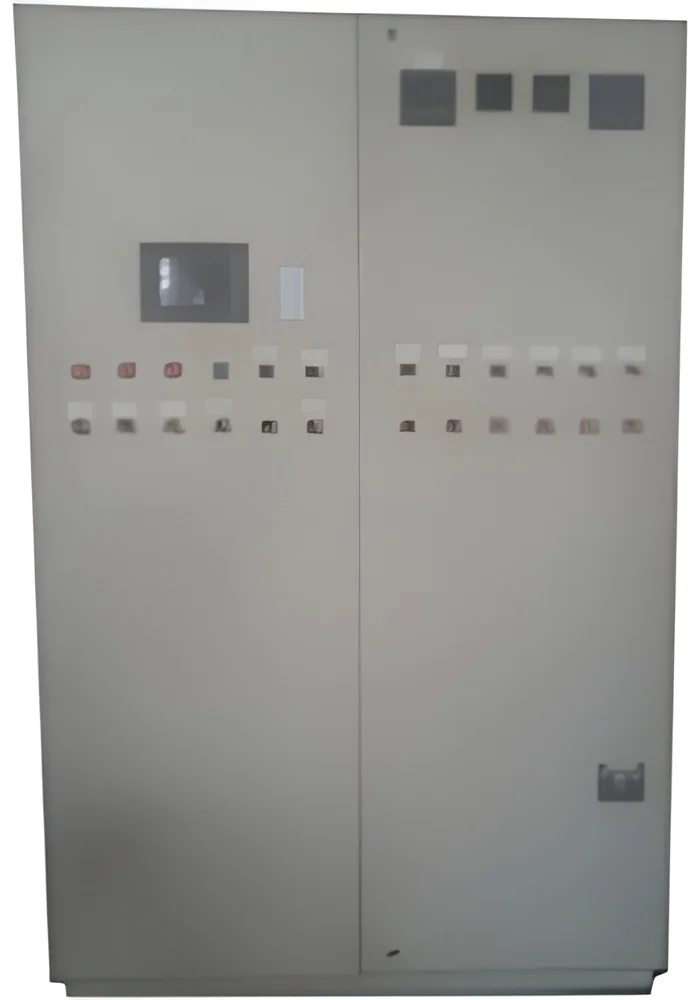
Industrial Automation PLC Control Panels represent advanced automation solutions engineered for precision control and reliable performance in demanding industrial environments. These panels utilize programmable logic controllers to automate complex machinery and processes, ensuring consistent output while significantly reducing manual intervention requirements. Built to meet international quality standards, they offer robust construction and seamless integration capabilities with existing industrial equipment. The panels are designed to coordinate multiple tasks simultaneously, handle complicated operational sequences, and provide comprehensive system management through sophisticated control algorithms. Their fault-resistant design ensures continuous operation even in challenging industrial conditions, making them an ideal choice for businesses seeking dependable automation solutions that deliver long-term value and operational consistency.

Multiple industries rely on these PLC contro...
Industrial Automation PLC Control Panels represent advanced automation solutions engineered for precision control and reliable performance in demanding industrial environments. These panels utilize programmable logic controllers to automate complex machinery and processes, ensuring consistent output while significantly reducing manual intervention requirements. Built to meet international quality standards, they offer robust construction and seamless integration capabilities with existing industrial equipment. The panels are designed to coordinate multiple tasks simultaneously, handle complicated operational sequences, and provide comprehensive system management through sophisticated control algorithms. Their fault-resistant design ensures continuous operation even in challenging industrial conditions, making them an ideal choice for businesses seeking dependable automation solutions that deliver long-term value and operational consistency.

Multiple industries rely on these PLC control panels for their critical automation needs due to their proven accuracy and operational efficiency. Manufacturing facilities utilize them for controlling assembly lines, robotic systems, and production machinery with exceptional repeatability and speed. Water treatment plants depend on these panels for monitoring purification processes, managing pump systems, and maintaining water quality standards. The pharmaceutical industry employs them for precise control in production lines where accuracy is paramount, while food processing sectors benefit from their ability to regulate packaging, conveyor systems, and temperature-controlled environments. Their versatility extends to chemical processing, energy management, and building automation systems, making them suitable for any sector requiring sophisticated automated control and monitoring capabilities.

The business value delivered by these PLC control panels is substantial, translating directly to improved operational efficiency, reduced downtime, and lower labor costs. Their reliability stems from high-quality components, rigorous testing protocols, and robust construction that ensures flawless performance over extended periods. These panels enhance workplace safety through integrated automatic checking systems and can operate efficiently in confined spaces, making them ideal for optimized facility layouts. Businesses gain significant competitive advantages through increased productivity, reduced operational errors, and improved product quality consistency. The panels provide excellent return on investment through energy efficiency, maintenance cost reduction, and enhanced production capacity, making them an economically sound choice for industrial automation requirements.

Key Features:
- Programmable logic controllers for precise automation and process control
- Robust construction with international standard components for durability
- Seamless integration with multiple sensors and actuators for comprehensive management
- Offline editing and simulation capabilities for hassle-free updates
- Customizable configurations to meet specific operational requirements

Benefits:
- Enhanced operational efficiency through precise automation control
- Reduced downtime with reliable performance in demanding conditions
- Lower labor costs by minimizing manual intervention requirements
- Improved safety through automatic system monitoring and checking
- Long-term value with durable construction and consistent performance
Specifications
| Additional Information | |
|---|---|
| Country of Origin | India |
Application
Industrial PLC control panels provide precise automation for machinery and complex processes across multiple sectors. They deliver reliable performance in manufacturing plants, water treatment facilities, and energy management systems, ensuring efficient operations with minimal downtime. Their robust design withstands demanding industrial environments while maintaining consistent output quality.
These automation panels serve critical functions in automotive, pharmaceutical, food processing, and chemical industries. They handle motor control, sensor monitoring, safety interlocking, and process regulation with exceptional accuracy. The panels integrate seamlessly with existing equipment while offering scalability for future expansion needs.
- Automating automotive assembly lines for improved production efficiency and error reduction
- Monitoring water purification processes in treatment plants to ensure safety standards
- Regulating packaging machinery and conveyor systems in food processing facilities
- Controlling temperature and pressure parameters in chemical manufacturing plants
- Managing motor control systems in industrial manufacturing for precise operation
Trade Details
| Available Stock | In Stock |
| Sample Availability | No |
Payment Terms
| Payment Terms |
|
Company Profile
Arushi Consultancy & Engineering Services, Punjab
 Punjab, India
Industrial Equipment & Machinery•Manufacturer•Importer / Exporter
Factory Details
Factory SizeBelow 1000 sqm
Annual Production Capacity0
Main Markets
Northern Europe
Mid East
Southern Europe
Africa
Industrial Automation PLC Control Panels Reliable Performance Customization
Industrial Automation PLC Control Panels deliver reliable performance and flawless outputs for manufacturing, water treatment, and process control applications. These customizable panels ensure precision automation with trusted global quality.
Min. Order Quantity: 1 unit
Shipping
Shipping fee and delivery date to be negotiated. Contact supplier now for more details.
Arushi Consultancy & Engineering Services
 Punjab, India
Industrial Equipment & MachineryManufacturer