IN
IN₹
Apparel & Fashion
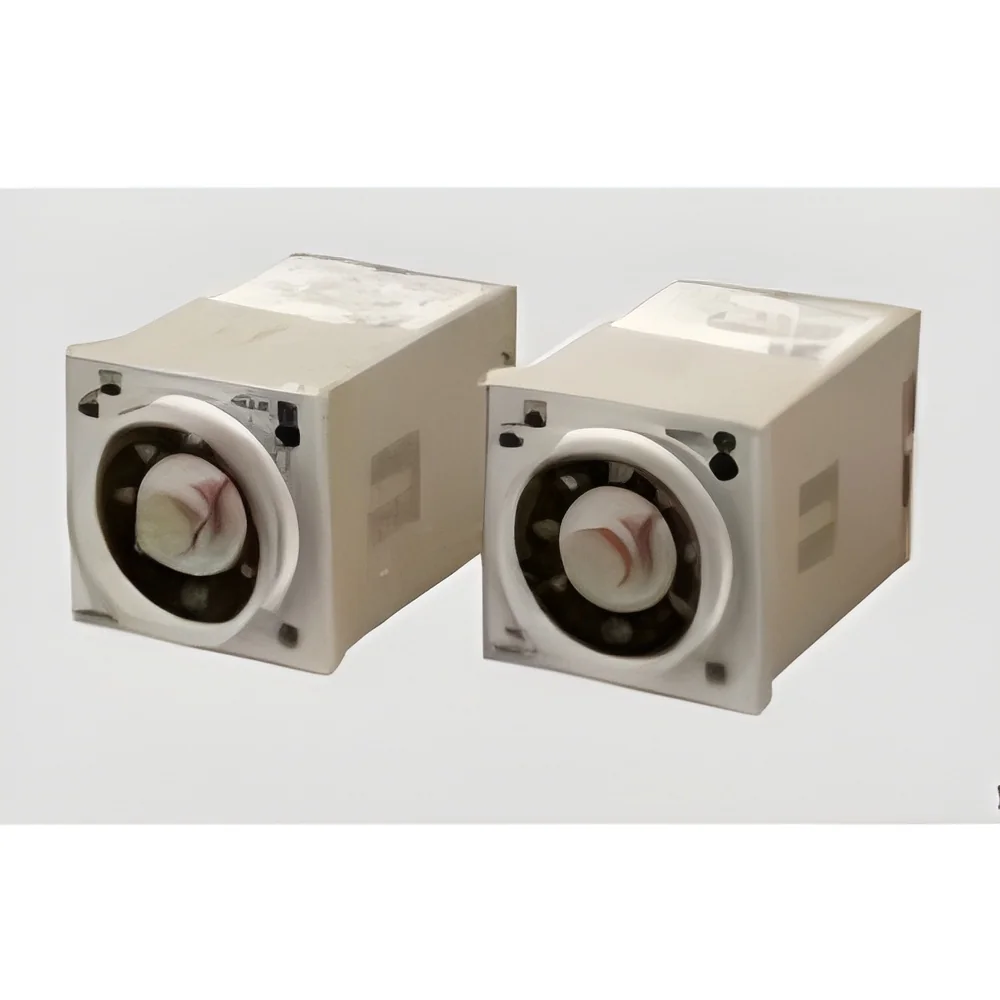
Description
Industrial Automation Optical Encoders are sophisticated electro-mechanical devices designed to deliver exceptional precision in motion control systems. They function by using a light source, a patterned disk, and photodetectors to generate digital pulses corresponding to mechanical movement. This technology provides highly accurate and reliable feedback on parameters like rotational speed, linear position, and direction of travel. Engineered for resilience, these encoders are built to perform consistently in challenging industrial settings, featuring robust housings that protect against contaminants like dust, oil, and moisture. They are available in various resolutions and output signal types to interface seamlessly with PLCs, drives, and motion controllers, forming the critical sensory link in automated systems.

These precision components are deployed across a spectrum of industries where control accuracy directly impacts product quality, safety, and efficiency. In advanced manufac...
Industrial Automation Optical Encoders are sophisticated electro-mechanical devices designed to deliver exceptional precision in motion control systems. They function by using a light source, a patterned disk, and photodetectors to generate digital pulses corresponding to mechanical movement. This technology provides highly accurate and reliable feedback on parameters like rotational speed, linear position, and direction of travel. Engineered for resilience, these encoders are built to perform consistently in challenging industrial settings, featuring robust housings that protect against contaminants like dust, oil, and moisture. They are available in various resolutions and output signal types to interface seamlessly with PLCs, drives, and motion controllers, forming the critical sensory link in automated systems.

These precision components are deployed across a spectrum of industries where control accuracy directly impacts product quality, safety, and efficiency. In advanced manufacturing, they are integral to CNC machines, coordinate measuring machines (CMMs), and automated assembly systems. The robotics sector utilizes them extensively in servo motors for precise actuator control. Within medical technology, they enable accurate movement in surgical robots, dialysis machines, and diagnostic imaging systems. The aerospace industry relies on them for flight control surface actuators and satellite positioning mechanisms, while the automotive sector incorporates them into automated paint shops, engine test stands, and tire balancing machines.

Investing in high-quality optical encoders delivers substantial business value by enhancing overall equipment effectiveness and reducing operational risk. Their reliability minimizes unplanned downtime and maintenance costs associated with sensor failure. The precision they provide reduces material waste, improves product consistency, and increases throughput. By ensuring machines operate as intended, they protect capital investments in automation and contribute to a stronger bottom line through optimized production. Their durability and long service life offer a favorable total cost of ownership, making them a dependable component for mission-critical applications where performance cannot be compromised.

Key Features:
- Advanced optical sensing mechanism for non-contact, high-resolution position and speed feedback.
- Durable construction with ingress protection (IP) ratings suitable for harsh industrial environments.
- Support for multiple output formats including incremental quadrature, absolute serial, and analog signals.
- Designed for a wide operating temperature range to ensure stability in varied conditions.
- Standardized mounting interfaces and shaft sizes for straightforward integration into existing systems.

Benefits:
- Enables precise machine control, leading to higher quality output and reduced scrap rates.
- Robust design ensures long-term reliability and reduces frequency of replacement or repair.
- Versatile signal compatibility allows for easy connection with a wide array of industrial controllers.
- Consistent performance across temperature variations enhances system stability and process repeatability.
- Simplified mechanical integration saves installation time and lowers total system implementation costs.
Specifications
| Additional Information | |
|---|---|
| Country of Origin | India |
Application
Optical encoders are fundamental sensors that translate mechanical rotation or linear motion into precise digital signals. This real-time feedback is crucial for closed-loop control systems, enabling machinery to accurately monitor its own speed, position, and direction. Their role is indispensable for maintaining the precision and repeatability required in modern automated processes, where even minor deviations can lead to significant quality issues or production downtime.
These devices excel in environments that demand unwavering reliability and long-term accuracy. From the high-vibration setting of a factory floor to the sterile conditions of a medical lab, optical encoders maintain consistent performance. Their non-contact sensing principle eliminates mechanical wear, making them ideal for applications involving continuous operation or high rotational speeds, ensuring data integrity over the product's entire lifecycle.
- CNC machining centers and lathes for controlling cutting tool position and spindle orientation with micron-level precision.
- Articulated robotic arms in assembly and welding cells, providing accurate feedback on joint angles for complex motion paths.
- Medical imaging devices like MRI and CT scanners, ensuring precise patient table movement and gantry rotation for clear diagnostics.
- Automated packaging and bottling lines, synchronizing conveyor speeds and controlling fill-level actuator positions.
- Semiconductor wafer handling and lithography equipment, where nanometer-scale positioning is critical for circuit fabrication.
Trade Details
| Available Stock | In Stock |
| Sample Availability | No |
Payment Terms
| Payment Terms |
|
Company Profile
Acme Controls, Madhya Pradesh
 Madhya Pradesh, India
Madhya Pradesh, IndiaElectronics & Electrical•Distributor / Wholesaler
Factory Details
Factory Size1000-5000 sqm
Annual Production Capacity0
Main Markets
Domestic
Industrial Automation Optical Encoders For Precision Motion Control
Industrial Automation Optical Encoders provide precise motion control and position feedback for robotics, CNC machinery, and medical equipment. These reliable components ensure high accuracy and durability in demanding industrial applications.
Min. Order Quantity: 1 unit
Shipping
Shipping fee and delivery date to be negotiated. Contact supplier now for more details.
Acme Controls
 Madhya Pradesh, India
Madhya Pradesh, IndiaElectronics & ElectricalDistributor / Wholesaler