IN
INundefined
Apparel & Fashion
Loading subcategories...
View More
Description
Industrial multipoint thermocouples are precision-engineered sensors designed for accurate, simultaneous temperature measurement at multiple points along a single probe. This advan...
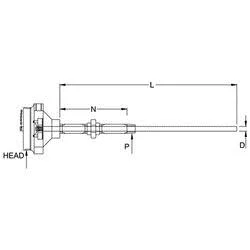
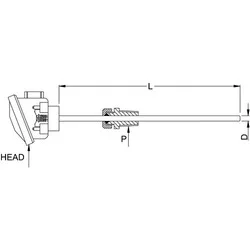
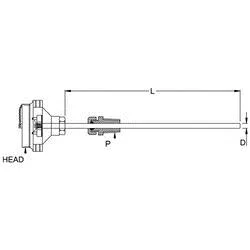
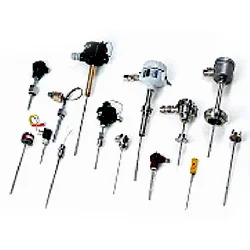
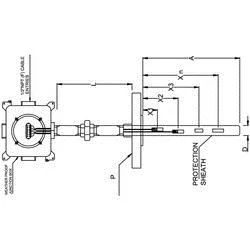
Industrial multipoint thermocouples are precision-engineered sensors designed for accurate, simultaneous temperature measurement at multiple points along a single probe. This advanced design is critical for applications where understanding thermal gradients or profiles within a process vessel, pipeline, or piece of equipment is necessary. Constructed with durable sheath materials like stainless steel or Inconel, these sensors are built to withstand the rigors of industrial environments, including high pressure, corrosive media, and extreme temperature cycles. Their primary function is to deliver reliable, real-time data that forms the backbone of effective process control and safety systems, making them an indispensable tool for engineers and plant operators.

These versatile instruments find application across a wide spectrum of heavy industries. In chemical and petrochemical plants, they are deployed inside reactors and columns to monitor exothermic reactions and prevent thermal runaway. Power generation facilities rely on them for detailed temperature mapping inside boilers and superheaters to optimize combustion and protect equipment. The pharmaceutical sector uses their precise readings to validate sterilization cycles and maintain controlled environments in bioreactors. Similarly, in food and beverage production, they ensure pasteurization and cooking processes meet strict safety standards. Their use extends to HVAC for large-scale duct monitoring and to various manufacturing processes requiring precise thermal management.

The investment in high-quality multipoint thermocouples translates directly into tangible business value through enhanced operational reliability and efficiency. By providing a comprehensive thermal picture, they enable finer process control, leading to improved product quality, reduced waste, and lower energy consumption. Their rugged construction minimizes unplanned downtime and maintenance costs, offering a long service life even in punishing conditions. This reliability ensures continuous data flow for automated control systems, supporting proactive decision-making and risk mitigation. Ultimately, these sensors contribute to a safer workplace, consistent output, and a stronger bottom line by safeguarding both process integrity and capital equipment.

Key Features:
- Multiple independent sensing junctions integrated into one robust probe for simultaneous multi-point measurement.
- Constructed with high-grade sheath materials such as 316SS or Inconel for corrosion and pressure resistance.
- Engineered to perform accurately across a wide temperature range suitable for diverse industrial processes.
- Available in various standard configurations for point spacing, insertion length, and connection types.
- Designed for direct integration with industry-standard PLCs, DCS, and data acquisition systems.

Benefits:
- Enables comprehensive thermal profiling for superior process understanding and control.
- Reduces installation complexity and cost compared to using multiple single-point sensors.
- Delivers reliable, accurate data in harsh environments, ensuring process safety and consistency.
- Durable construction leads to lower long-term maintenance and replacement costs.
- Provides critical data for optimizing energy use, improving yield, and ensuring product quality.
Specifications
| Additional Information | |
|---|---|
| Country of Origin | India |
| Customisable | No |
Application
Industrial multipoint thermocouples are essential for obtaining simultaneous temperature readings from various depths and positions within a single vessel or pipeline. This capability provides a complete thermal profile, crucial for maintaining strict process control, ensuring safety protocols, and optimizing operational efficiency in complex industrial systems. Their robust design is specifically built to perform reliably under demanding conditions, including exposure to high pressures, corrosive substances, and significant temperature swings. This resilience makes them a dependable choice for continuous monitoring where sensor failure is not an option, supporting consistent quality and production uptime.

Real-world applications:
- Monitoring temperature gradients in chemical reactor vessels to control reaction rates and ensure product consistency.
- Profiling heat distribution in refinery distillation columns and catalytic crackers for maximizing yield and safety.
- Measuring multi-zone temperatures in power generation boilers and heat recovery steam generators for efficiency.
- Ensuring precise thermal uniformity in pharmaceutical sterilization autoclaves and fermentation tanks.
- Validating temperature profiles in food industry retorts and pasteurizers for safety and compliance.
Trade Details
| Available Stock | In stock |
| Sample Availability | No |
Payment Terms
| Payment Terms |
|
Company Profile

Altop Industries Ltd, Gujarat
 Gujarat, India
Gujarat, IndiaManufacturerDistributor / WholesalerImporter / Exporter
Factory Details
Factory SizeBelow 1000 sqm
Annual Production Capacity0
Industrial Multipoint Thermocouples For Accurate Temperature Monitoring
Industrial multipoint thermocouples deliver high-precision temperature monitoring for critical processes. These durable sensors are engineered for harsh environments in chemical, power, and manufacturing sectors, ensuring reliable and accurate multi-zone thermal data.
Min. Order Quantity: 1 units
Shipping
Shipping fee and delivery date to be negotiated. Contact supplier now for more details.
Altop Industries Ltd Gujarat, India
Gujarat, IndiaManufacturer