IN
INundefined
Similar Products
Description
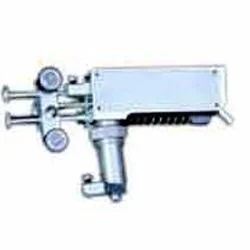
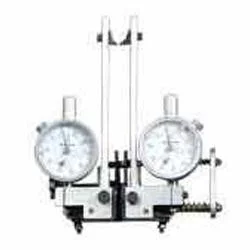
The mechanical extensometer is a precision measuring instrument designed to accurately determine specimen elongation under load conditions. This purely mechanical device operates w...
The mechanical extensometer is a precision measuring instrument designed to accurately determine specimen elongation under load conditions. This purely mechanical device operates without electronic components, offering exceptional reliability and straightforward operation in various testing environments. With an adjustable gauge length ranging from 25 to 120 mm and a measuring capacity of 0 to 3 mm, it accommodates diverse specimen sizes while maintaining high accuracy with a least count of 1/100 mm. The instrument handles specimen thicknesses from 1 to 20 mm and weighs approximately 0.3 kg, making it portable and easy to deploy across different laboratory settings for consistent strain measurement performance.

This extensometer serves critical functions across multiple industrial sectors including metallurgy, construction, aerospace, automotive, and plastics manufacturing. Metallurgical laboratories utilize it for testing metal alloys to determine tensile strength and ductility characteristics. Construction companies employ it to verify reinforcement steel quality, while aerospace engineers rely on its measurements for composite material development. Automotive manufacturers ensure component reliability through rigorous material testing, and research institutions along with universities utilize it for both educational purposes and advanced material studies, ensuring compliance with international testing standards throughout these diverse applications.

The mechanical extensometer delivers substantial business value through its proven reliability, measurement accuracy, and operational cost-effectiveness. Its mechanical operation eliminates risks associated with electronic component failures, ensuring consistent performance with minimal maintenance requirements. The device provides trustworthy data that significantly reduces material failure risks, supporting robust quality assurance programs and compliance with industry standards. This instrument helps businesses maintain high product quality standards, reduce warranty claims, and build customer confidence through verified material performance data that withstands rigorous scrutiny in competitive markets.

Key Features:
- Adjustable gauge length from 25 mm to 120 mm for versatile testing applications
- High precision measurement with least count of 1/100 mm ensuring accurate results
- Robust mechanical design without electronics for reliable operation in various conditions
- Wide specimen compatibility handling thicknesses from 1 mm to 20 mm
- Lightweight construction at approximately 0.3 kg for easy portability and handling

Benefits:
- Versatile testing capability across different specimen sizes and material types
- High measurement accuracy supporting reliable data for critical decisions
- Dependable mechanical operation with minimal maintenance requirements
- Broad compatibility with various materials and testing standards
- Easy deployment and handling across multiple laboratory environments
Specifications
| Additional Information | |
|---|---|
| Country of Origin | India |
| Customisable | No |
Application
Mechanical extensometers deliver precise strain measurements during tensile testing, providing critical data on material properties like elongation and yield strength. These instruments ensure compliance with international standards including ASTM and ISO, making them essential for quality assurance in manufacturing and construction sectors where material integrity directly impacts safety and performance across various applications.

Industries including aerospace, automotive, civil engineering, and metallurgy rely on mechanical extensometers for both routine quality checks and advanced research. The device's adaptability supports testing diverse specimen sizes and materials in research institutions, university labs, and production facilities. Its mechanical operation ensures reliable performance in different testing environments while maintaining accuracy for continuous monitoring and validation of material behavior under stress conditions.
- Tensile testing of metal alloys in automotive component manufacturing to ensure crash safety standards
- Quality verification of construction steel rebar and structural beams for building code compliance
- Polymer and plastic elongation measurement in consumer goods production for durability assurance
- Composite material development in aerospace engineering for lightweight component design
- Educational applications in university engineering labs for material science experiments and training
Trade Details
| Available Stock | In stock |
| Sample Availability | No |
Payment Terms
| Payment Terms |
|
Company Profile
Mechatronic Control Systems, Maharashtra
 Maharashtra, India
Maharashtra, IndiaConstruction•Importer / Exporter
Factory Details
Factory SizeBelow 1000 sqm
Annual Production Capacity0
Material Testing Labs Mechanical Extensometer for Accurate Elongation Measurement
Precision mechanical extensometer for accurate elongation measurement under load in material testing labs. Features adjustable gauge lengths and reliable mechanical operation for quality control and R&D applications across multiple industries.
Min. Order Quantity: 1 units
Shipping
Shipping fee and delivery date to be negotiated. Contact supplier now for more details.
Mechatronic Control Systems Maharashtra, India
Maharashtra, IndiaConstructionImporter / Exporter