IN
IN₹
Apparel & Fashion
Description
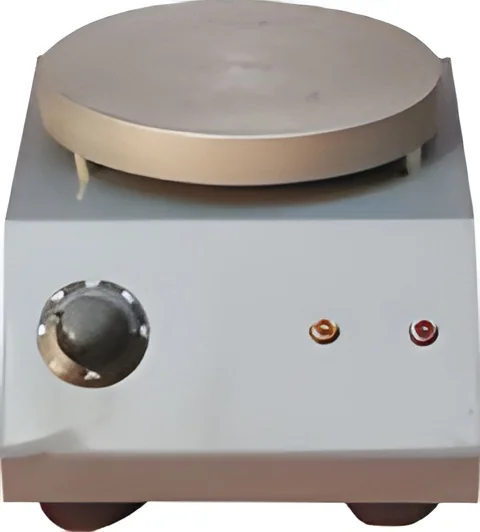
The laboratory round hot plate represents precision engineering for scientific heating applications requiring consistent temperature control. Designed with a circular heating surface that ensures uniform heat distribution, this equipment maintains reliable performance for various laboratory processes. Operating on 230 volts AC with maximum surface temperature of 300°C, it features efficient energy regulation and three heat control switches for precise temperature management. The intelligent design includes an overhanging top plate supported by MS pillars, creating essential air insulation between the heating surface and control compartment. This thermal management system keeps control components cool during operation, significantly enhancing equipment reliability and operational lifespan. Available in standard models with thick mild steel or GI sheet body with epoxy powder coating, plus GMP models featuring complete stainless steel construction for environments requiring stringent hygi...
The laboratory round hot plate represents precision engineering for scientific heating applications requiring consistent temperature control. Designed with a circular heating surface that ensures uniform heat distribution, this equipment maintains reliable performance for various laboratory processes. Operating on 230 volts AC with maximum surface temperature of 300°C, it features efficient energy regulation and three heat control switches for precise temperature management. The intelligent design includes an overhanging top plate supported by MS pillars, creating essential air insulation between the heating surface and control compartment. This thermal management system keeps control components cool during operation, significantly enhancing equipment reliability and operational lifespan. Available in standard models with thick mild steel or GI sheet body with epoxy powder coating, plus GMP models featuring complete stainless steel construction for environments requiring stringent hygiene standards.

This laboratory heating equipment serves critical functions across multiple industries that depend on precise temperature control. Pharmaceutical manufacturing and research facilities utilize it for drug development processes, sample preparation, and quality testing procedures where temperature accuracy is crucial. Chemical laboratories employ the hot plate for various reactions, solution preparation, and material testing applications requiring consistent heating performance. Educational institutions implement these units in science laboratories for teaching purposes and student experiments that demonstrate thermal principles. The food processing industry relies on them for quality control testing, while biotechnology firms incorporate them into research and development workflows. The stainless steel GMP model particularly serves regulated environments where hygiene and contamination control are paramount, making it essential for compliance-focused industries with strict operational standards.

The business value of this laboratory hot plate lies in its exceptional reliability and operational efficiency that translates to long-term cost savings. The robust construction ensures minimal downtime and reduced maintenance requirements, providing excellent return on investment for laboratories and research facilities. The energy regulator and multiple heat control switches allow precise temperature management, reducing energy consumption while maintaining optimal performance for various applications. The thermal insulation design not only protects control components but also enhances safety for laboratory personnel during extended operations. The availability of different construction variants enables organizations to select equipment that perfectly matches their specific operational requirements and environmental conditions. These differentiators make the hot plate a trusted choice for professionals who value durability, precision, and consistent performance in their laboratory equipment investments.

Key Features:
- Round heating plate design ensuring uniform heat distribution up to 300°C maximum temperature
- Advanced air insulation system with MS pillar support maintaining cool control compartments
- Two construction options: standard epoxy powder coated body and GMP stainless steel model
- Precision temperature control through energy regulator and three heat control switches
- 230 volts AC operation with robust mild steel or stainless steel construction for durability

Benefits:
- Consistent heating performance ensures reliable results across various laboratory applications
- Extended equipment lifespan through intelligent thermal management and cooling systems
- Versatile construction options suitable for different industry requirements and environments
- Energy-efficient operation with precise temperature control reducing operational costs
- Durable construction minimizes maintenance requirements and ensures long-term reliability
Specifications
| Additional Information | |
|---|---|
| Country of Origin | India |
Application
This laboratory round hot plate delivers precise temperature control up to 300°C for demanding scientific environments. Its consistent heating performance makes it suitable for research laboratories, quality control departments, and educational institutions. The robust construction ensures reliable operation even with continuous daily use in professional settings.
The advanced thermal insulation design maintains cool control compartments during operation, preventing overheating and extending equipment lifespan. Available in standard epoxy-coated and stainless steel GMP-compliant versions, it meets diverse industry requirements and safety standards for laboratory heating equipment across various sectors.
- Heating chemical solutions and reagents in research laboratories for experiments
- Sample preparation and testing in pharmaceutical quality control laboratories
- Educational demonstrations in university and school science laboratories
- Material testing procedures in industrial manufacturing facilities
- Small-scale production processes in biotechnology and food testing operations
Trade Details
| Available Stock | In Stock |
| Sample Availability | No |
Payment Terms
| Payment Terms |
|
Company Profile
Ashwani Brothers, Haryana
 Haryana, India
Haryana, IndiaManufacturer
Factory Details
Factory SizeBelow 1000 sqm
Annual Production Capacity0
Main Markets
South Asia
Laboratory Round Hot Plate with Precise Temperature Control up to 300C
Laboratory round hot plate with precise temperature control up to 300°C. Ideal for heating applications in research, pharmaceutical, and quality control labs. Features durable steel construction and reliable performance for scientific processes.
Min. Order Quantity: 1 unit
Shipping
Shipping fee and delivery date to be negotiated. Contact supplier now for more details.
Ashwani Brothers
 Haryana, India
Haryana, IndiaManufacturer