IN
IN₹
Apparel & Fashion
Loading subcategories...
View More
Description
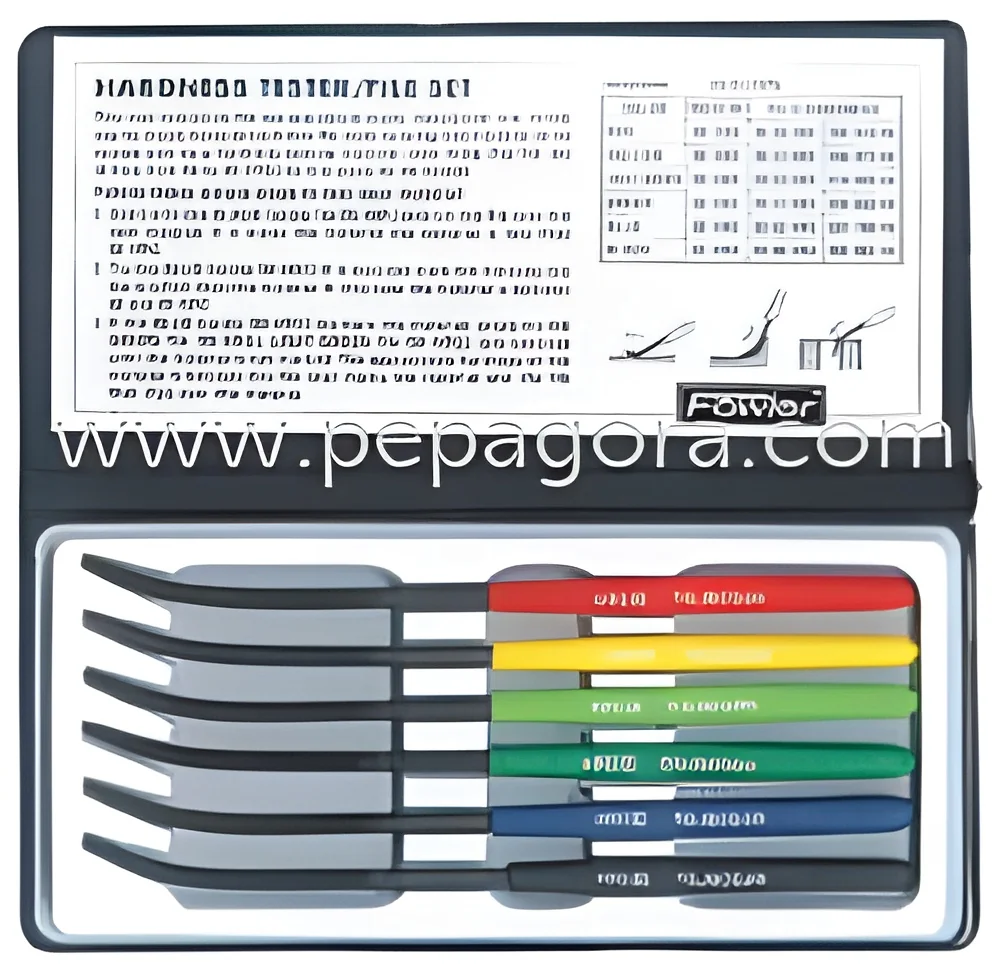
The professional hardness tester file set provides a straightforward, reliable method for determining material hardness across various industrial environments. This comprehensive kit includes color-coded files ranging from 40 to 65 HRC, each precision-engineered to specific hardness standards for accurate testing results. The testing process involves simply sliding the appropriate file across the material surface - if the file marks the material, the hardness is below the file's rating. This immediate visual feedback eliminates guesswork and provides quick hardness verification without requiring electrical power, complex calibration, or specialized training. The complete set comes with a durable leather-like case featuring secure closure, ensuring organized storage and easy transportation between different work locations and job sites.

This hardness testing solution finds extensive application across multiple industries where material hardness verification is critical for quality assu...
The professional hardness tester file set provides a straightforward, reliable method for determining material hardness across various industrial environments. This comprehensive kit includes color-coded files ranging from 40 to 65 HRC, each precision-engineered to specific hardness standards for accurate testing results. The testing process involves simply sliding the appropriate file across the material surface - if the file marks the material, the hardness is below the file's rating. This immediate visual feedback eliminates guesswork and provides quick hardness verification without requiring electrical power, complex calibration, or specialized training. The complete set comes with a durable leather-like case featuring secure closure, ensuring organized storage and easy transportation between different work locations and job sites.

This hardness testing solution finds extensive application across multiple industries where material hardness verification is critical for quality assurance and performance standards. Metal fabrication and machining operations use these files to verify heat treatment results on components and tooling systems. Automotive manufacturers employ them for quality control checks on engine components, transmission parts, and suspension elements requiring specific hardness properties. Aerospace facilities utilize the files for verifying material specifications on aircraft components and maintenance parts where material integrity is paramount. Construction equipment manufacturers rely on them for testing hardened steel elements in heavy machinery and structural components.

The business value of this hardness tester file set lies in its exceptional reliability, cost-effectiveness, and time-saving capabilities that enhance operational efficiency. Unlike electronic testers that require regular calibration and maintenance, these mechanical files provide consistent, dependable results without ongoing operational costs or technical support requirements. The immediate testing capability significantly reduces downtime associated with waiting for laboratory results, enabling faster decision-making in production environments and maintenance scenarios. The robust construction ensures long service life even in demanding industrial conditions, delivering excellent return on investment through years of reliable performance. The operational simplicity minimizes training requirements and reduces the potential for operator error, providing trustworthy results that professionals can confidently use for critical quality decisions and material verification processes.

Key Features:
- Six color-coded files covering comprehensive hardness range from 40 to 65 HRC
- Precision-engineered files with specific hardness ratings for accurate material testing
- Durable leather-like storage case with secure closure system for protection
- Optimal file dimensions of 4.30mm diameter and 175mm length for comfortable handling
- Includes hardness conversion chart for Vickers Hardness reference and comparison

Benefits:
- Immediate hardness verification without electrical power or complex equipment
- Significant time savings compared to laboratory testing methods and procedures
- Cost-effective solution with no ongoing calibration or maintenance requirements
- Portable design enables testing across multiple locations and work environments
- Simple operation reduces training time and minimizes potential operator errors
Specifications
| Additional Information | |
|---|---|
| Country of Origin | India |
| Customisable | No |
Application
This professional hardness tester file set enables rapid material verification across manufacturing and metalworking operations. The color-coded system allows technicians to quickly assess hardness ranges from 40 to 65 HRC without complex equipment or laboratory testing. This portable solution is ideal for quality control checks on production floors, incoming material inspection, and field service applications where immediate hardness verification is essential for maintaining production standards and material specifications.
The files provide instant feedback through straightforward scratch testing methodology, making them indispensable for maintenance teams, welding operations, and machine shops. Each file corresponds to specific hardness values, enabling precise material qualification without delays. The set serves critical functions in aerospace component verification, automotive part manufacturing, and tooling maintenance where material hardness directly impacts performance, durability, and safety compliance across industrial applications.
- Quality control verification during metal component manufacturing processes
- Heat treatment validation for hardened tools and machine components
- Incoming material inspection for raw metal stock and purchased parts
- Field maintenance testing for equipment wear assessment and replacement decisions
- Technical training and educational programs in materials science and metallurgy
Trade Details
| Available Stock | In Stock |
| Sample Availability | No |
Payment Terms
| Payment Terms |
|
Company Profile
Fine Spavy Associates Engineers Pvt Ltd, Maharashtra
 Maharashtra, India
Maharashtra, IndiaManufacturer•Retailer•Importer / Exporter
Factory Details
Factory SizeBelow 1000 sqm
Annual Production Capacity0
Professional Hardness Tester File Set 40 65 HRC Color Coded Portable
Professional hardness tester file set with color-coded 40-65 HRC files for reliable on-site material verification. Portable case included for metalworking quality control across manufacturing industries.
Min. Order Quantity: 1 unit
Shipping
Shipping fee and delivery date to be negotiated. Contact supplier now for more details.
Fine Spavy Associates Engineers Pvt Ltd
 Maharashtra, India
Maharashtra, IndiaManufacturer