IN
IN₹
Apparel & Fashion
Description
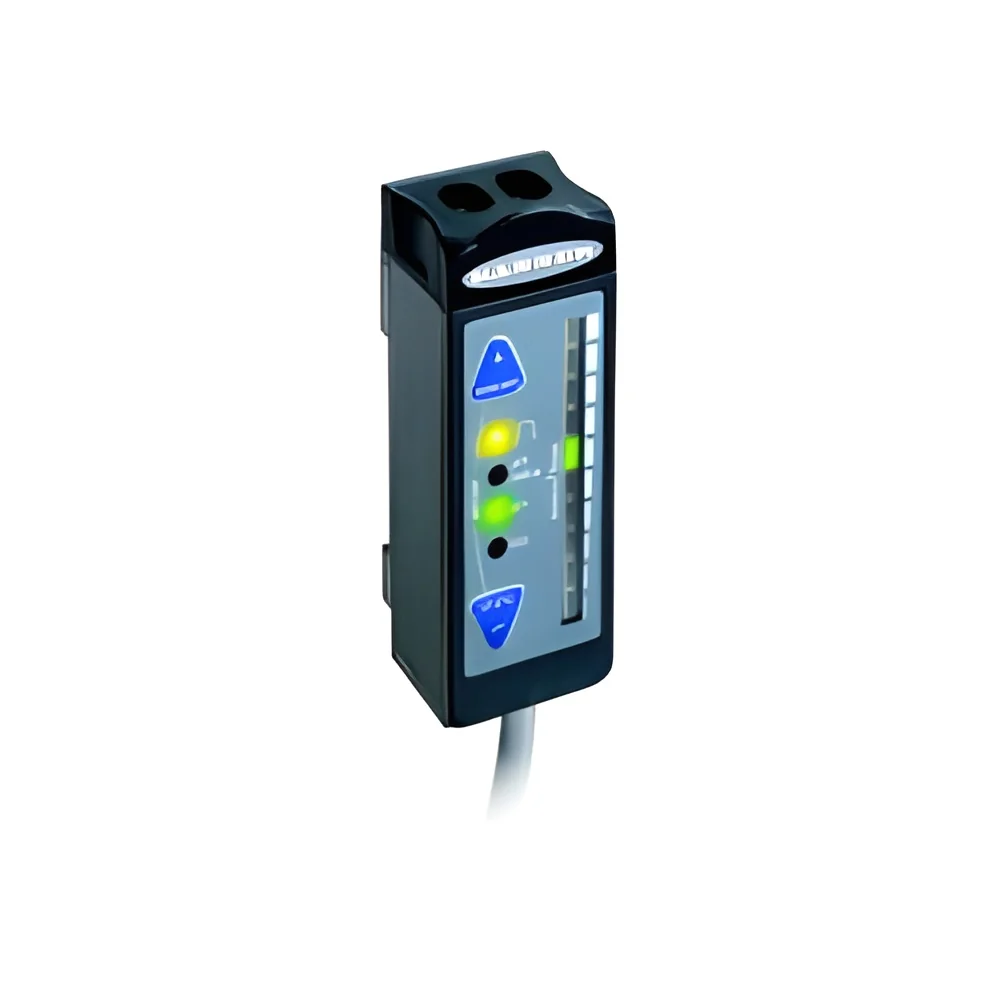
The Fiber Optic Series FOS-1 represents advanced photoelectric sensing technology engineered for industrial automation environments. This high-performance sensor delivers exceptional color contrast sensitivity and reliably detects 16 distinct grayscale levels at remarkable speeds up to 10,000 actuations per second. Available in two specialized fiber configurations, it offers economical plastic fibers for applications requiring repeated flexing and durable glass fibers designed for harsh industrial conditions. The sensor provides multiple LED options including infrared (available with glass fibers) or visible green, blue, red, and white LEDs, accommodating diverse detection requirements across various operational settings. With a 10 to 30V DC supply voltage and bipolar NPN or PNP outputs, the FOS-1 ensures seamless compatibility with different control systems while maintaining consistent, reliable performance.

This fiber optic sensor serves critical functions across multiple industrial...
The Fiber Optic Series FOS-1 represents advanced photoelectric sensing technology engineered for industrial automation environments. This high-performance sensor delivers exceptional color contrast sensitivity and reliably detects 16 distinct grayscale levels at remarkable speeds up to 10,000 actuations per second. Available in two specialized fiber configurations, it offers economical plastic fibers for applications requiring repeated flexing and durable glass fibers designed for harsh industrial conditions. The sensor provides multiple LED options including infrared (available with glass fibers) or visible green, blue, red, and white LEDs, accommodating diverse detection requirements across various operational settings. With a 10 to 30V DC supply voltage and bipolar NPN or PNP outputs, the FOS-1 ensures seamless compatibility with different control systems while maintaining consistent, reliable performance.

This fiber optic sensor serves critical functions across multiple industrial sectors including automotive manufacturing, electronics assembly, packaging operations, pharmaceutical production, and food processing. In automotive production environments, it detects small components and verifies assembly completeness with precision. Electronics manufacturers utilize its advanced capabilities for PCB component verification and miniature part detection during assembly processes. Packaging industries depend on its high-speed performance for label verification, fill level monitoring, and accurate product counting. Pharmaceutical companies employ the sensor for tamper-evident packaging verification and product presence detection, ensuring compliance with strict quality standards. Food processing applications include packaging integrity verification and product orientation checks, meeting rigorous hygiene and safety requirements.

The FOS-1 delivers substantial business value through its operational reliability, reduced production downtime, and minimal maintenance requirements. Its intuitive push-button programming enables straightforward setup for static, dynamic, and remote TEACH functions, while manual sensitivity adjustment ensures optimal performance without complex recalibration procedures. The compact design facilitates installation in confined spaces, supporting either flat mounting or 35mm DIN rail mounting, maximizing space utilization in crowded control panels. This sensor reduces operational costs through extended service life, consistent detection performance, and minimal false triggers, ultimately enhancing production efficiency and quality control throughout manufacturing operations.

Key Features:
- Advanced 16-level grayscale detection with superior color contrast sensitivity
- High-speed operation capability of 10,000 actuations per second
- Choice of plastic fiber for flexible applications or glass fiber for harsh conditions
- Multiple LED options including infrared (glass only) and visible green, blue, red, white
- 10 to 30V DC supply voltage with bipolar NPN or PNP output compatibility

Benefits:
- Enhanced detection accuracy across various materials and surface conditions
- Increased production throughput with high-speed operation capabilities
- Extended operational lifespan with minimal maintenance requirements
- Reduced installation time with push-button programming and easy setup
- Improved system compatibility with multiple voltage and output configurations
Specifications
| Additional Information | |
|---|---|
| Country of Origin | India |
Application
The Fiber Optic Series FOS-1 excels in precision detection across demanding industrial environments. Its high-speed 10,000 actuations per second capability and 16-level grayscale detection ensure accurate performance in automated manufacturing, packaging lines, and quality control systems. The sensor's robust design handles continuous operation with exceptional reliability across various production settings.
With two specialized fiber options, this sensor adapts to diverse operational requirements. Plastic fibers provide cost-effective flexibility for repetitive motion applications, while glass fibers withstand extreme temperatures, chemicals, and harsh industrial conditions. This versatility makes the FOS-1 suitable for electronics manufacturing, automotive production, pharmaceutical processing, food packaging, and material handling industries.
- Detecting miniature electronic components on high-speed assembly lines with precision accuracy
- Monitoring transparent packaging and fill levels in pharmaceutical and beverage production
- Verifying label presence and positioning on automated packaging machinery
- Counting small parts and components in automotive manufacturing processes
- Ensuring proper material orientation in textile and paper processing equipment
Trade Details
| Available Stock | In Stock |
| Sample Availability | No |
Payment Terms
| Payment Terms |
|
Company Profile

Automation Systems & Solution, New Delhi
 New Delhi, India
New Delhi, IndiaElectronics & Electrical•Manufacturer•Retailer
Factory Details
Factory SizeBelow 1000 sqm
Annual Production Capacity0
Fiber Optic Sensor FOS 1 High Speed Grayscale Detection Industrial
Fiber Optic Sensor FOS 1 delivers high-speed grayscale detection with 16 contrast levels at 10,000 actuations/sec. Choose economical plastic or rugged glass fiber types for reliable industrial sensing applications.
Min. Order Quantity: 1 unit
Shipping
Shipping fee and delivery date to be negotiated. Contact supplier now for more details.
Automation Systems & Solution
 New Delhi, India
New Delhi, IndiaElectronics & ElectricalManufacturer