IN
IN₹
Apparel & Fashion

Description
In modern industrial and commercial operations, the proliferation of non-linear electronic loads—from variable speed drives to switched-mode power supplies—generates harmonic currents that distort the voltage waveform. This distortion leads to a host of power quality issues, including equipment overheating, premature component failure, increased energy losses, and potential non-compliance with utility standards. Active Power Filter (APF) correction panels provide a sophisticated, dynamic solution to this challenge. They continuously monitor the electrical network, instantly detecting harmonic distortion and reactive power demand. Using advanced power electronics, they generate and inject precise compensating currents to cancel out the harmful components. This process ensures a clean, sinusoidal current waveform, stabilizes voltage, and maintains an optimal power factor, directly addressing the root cause of power quality degradation rather than just managing its symptoms.

These panels...
In modern industrial and commercial operations, the proliferation of non-linear electronic loads—from variable speed drives to switched-mode power supplies—generates harmonic currents that distort the voltage waveform. This distortion leads to a host of power quality issues, including equipment overheating, premature component failure, increased energy losses, and potential non-compliance with utility standards. Active Power Filter (APF) correction panels provide a sophisticated, dynamic solution to this challenge. They continuously monitor the electrical network, instantly detecting harmonic distortion and reactive power demand. Using advanced power electronics, they generate and inject precise compensating currents to cancel out the harmful components. This process ensures a clean, sinusoidal current waveform, stabilizes voltage, and maintains an optimal power factor, directly addressing the root cause of power quality degradation rather than just managing its symptoms.

These panels are indispensable assets across a wide spectrum of industries. In manufacturing, they are deployed to safeguard automated production lines, precision CNC machines, and robotic arms from the disruptive effects of harmonics, ensuring consistent product quality and minimizing unplanned downtime. The IT and telecommunications sector relies on them to provide flawless power to data centers, server racks, and network infrastructure, where even minor power anomalies can lead to significant data loss or service interruptions. Healthcare institutions install APF systems to guarantee the reliable operation of life-critical equipment like MRI machines, ventilators, and laboratory analyzers. Furthermore, they are essential in commercial real estate for optimizing the performance of centralized HVAC systems, elevator controls, and modern lighting networks, and in heavy industries such as metal processing, plastics, and textiles to manage the demanding loads from large motors, furnaces, and welding equipment.

For business decision-makers, investing in APF correction panels translates into tangible operational and financial value. Their primary contribution is enhanced reliability; by eliminating harmonics and correcting power factor, they prevent the tripping of protective devices, reduce motor vibrations, and extend the operational lifespan of transformers, cables, and connected equipment, significantly cutting maintenance and replacement costs. This directly reduces costly production halts and equipment repairs. Financially, they deliver substantial savings by improving energy efficiency—reducing system losses—and by avoiding the demand charges and penalties that utilities impose for poor power factor. Their robust, industrial-grade construction ensures long-term durability even in challenging environments, offering a dependable solution that protects your capital investment. The combination of operational resilience, cost savings, and compliance assurance makes APF panels a strategic investment for any organization focused on sustainable and efficient power management.

Key Features:
- Active harmonic filtering technology for real-time detection and compensation of distortion currents up to the 50th order.
- Dynamic power factor correction capability, automatically maintaining a near-unity power factor under varying load conditions.
- Fast response time, typically under 50 microseconds, to instantly counteract load changes and transient events.
- Modular and scalable design allowing for easy installation, expansion, and integration into new or existing switchgear.
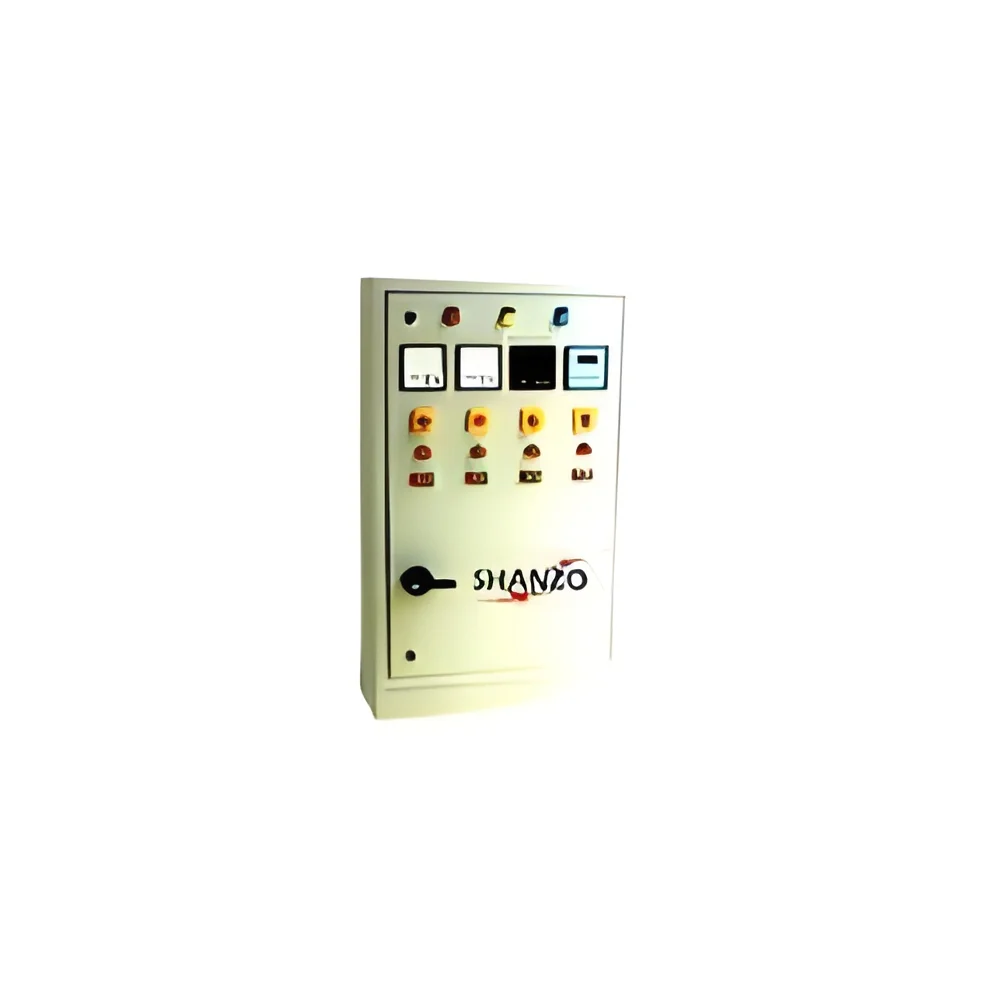
- Comprehensive digital display and communication interface for real-time monitoring of system performance, harmonic spectra, and energy metrics.

Benefits:
- Protects sensitive machinery and electronic equipment from damage caused by harmonic distortion, reducing downtime and repair costs.
- Improves overall energy efficiency by minimizing losses in transformers and cables, leading to lower electricity consumption.
- Helps avoid utility penalties and demand charges associated with poor power factor, reducing operational expenses.
- Enhances system stability and voltage regulation, ensuring consistent performance of all connected electrical loads.
- Extends the operational lifespan of electrical infrastructure components like motors, capacitors, and transformers, offering long-term value.
Specifications
| Additional Information | |
|---|---|
| Country of Origin | India |
Application
APF correction panels are engineered to mitigate harmonic distortion and reactive power issues prevalent in facilities with non-linear loads. They operate by injecting compensating currents in real-time, effectively neutralizing harmonics at their source before they can propagate through the electrical network. This active filtering approach protects sensitive equipment, prevents voltage waveform deterioration, and maintains compliance with power quality standards, ensuring the integrity of your entire electrical system.
These systems are critical across diverse sectors where power quality directly influences operational continuity and equipment longevity. Their fast dynamic response and precise compensation capabilities make them superior to passive solutions, adapting instantly to changing load conditions. From heavy industrial manufacturing to critical IT infrastructure, APF panels provide a scalable and efficient method to enhance system reliability, reduce energy losses, and avoid costly utility penalties associated with poor power factor.
- Manufacturing plants utilizing variable frequency drives (VFDs), robotics, and CNC machinery to prevent motor overheating and control system malfunctions.
- Data centers and server farms ensuring clean, stable power for critical IT loads, minimizing the risk of data corruption and hardware failure.
- Healthcare facilities protecting sensitive diagnostic imaging equipment (MRI, CT scanners) and patient monitoring systems from harmonic interference.
- Commercial buildings with complex HVAC systems, elevator banks, and LED lighting installations to improve energy efficiency and power stability.
- Industrial processing units with arc furnaces, welding machines, and large motor drives to correct power factor and reduce overall electricity consumption.
Trade Details
| Available Stock | In Stock |
| Sample Availability | No |
Payment Terms
| Payment Terms |
|
Company Profile
Hi Power Generators India, New Delhi
 New Delhi, India
New Delhi, IndiaElectronics & Electrical
Factory Details
Factory SizeBelow 1000 sqm
Annual Production Capacity0
Main Markets
South Asia
Industrial Power Quality APF Correction Panels For Harmonics Filtering
Industrial APF correction panels actively filter harmonics and correct power factor, ensuring stable voltage for manufacturing plants, data centers, and commercial facilities. Reliable power quality solution.
Min. Order Quantity: 1 unit
Shipping
Shipping fee and delivery date to be negotiated. Contact supplier now for more details.
Hi Power Generators India
 New Delhi, India
New Delhi, IndiaElectronics & Electrical