IN
IN₹
Apparel & Fashion
Description
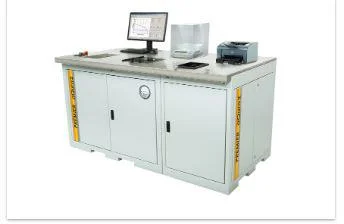
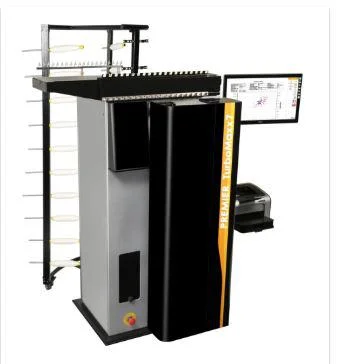
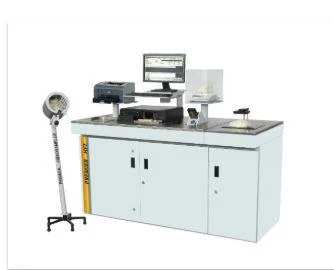
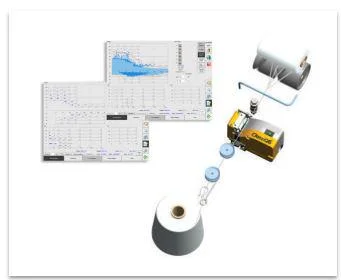
The ClassiQ 6 Yarn Classification System represents advanced technology for offline yarn quality assessment, designed to detect and analyze various imperfections in textile production. This sophisticated system identifies mass variations, foreign fibre contamination, and white polypropylene faults in both cleared and uncleared yarn samples. By providing detailed numerical data and graphical representations, it enables manufacturers to gain deep insights into yarn quality parameters. The system's comprehensive reporting covers imperfections, hairiness measurements, and drum-wise objectionable faults, offering a complete picture of yarn characteristics. With capabilities for determining clearing limits and analyzing exceptions for neps, thick and thin places, foreign fibres, polypropylene, and coefficient of mass variation, it serves as a complete solution for yarn quality evaluation.

This classification system finds extensive application across the textile manufacturing sector, particu...
The ClassiQ 6 Yarn Classification System represents advanced technology for offline yarn quality assessment, designed to detect and analyze various imperfections in textile production. This sophisticated system identifies mass variations, foreign fibre contamination, and white polypropylene faults in both cleared and uncleared yarn samples. By providing detailed numerical data and graphical representations, it enables manufacturers to gain deep insights into yarn quality parameters. The system's comprehensive reporting covers imperfections, hairiness measurements, and drum-wise objectionable faults, offering a complete picture of yarn characteristics. With capabilities for determining clearing limits and analyzing exceptions for neps, thick and thin places, foreign fibres, polypropylene, and coefficient of mass variation, it serves as a complete solution for yarn quality evaluation.

This classification system finds extensive application across the textile manufacturing sector, particularly in spinning mills and quality control laboratories. Production facilities use it to monitor yarn quality throughout manufacturing processes, ensuring consistency across different production batches. Textile testing laboratories rely on the system for accurate yarn classification and benchmarking against industry standards. The technology supports various yarn types and production methods, making it suitable for diverse manufacturing environments. By analyzing both cleared and uncleared yarn, it provides valuable data for process optimization and quality improvement initiatives throughout the textile production chain.

The ClassiQ 6 delivers significant business value through enhanced quality control capabilities and production optimization. Its reliability stems from precise measurement technology and consistent performance in industrial environments. The system's automatic speed sensing ensures accurate data collection regardless of yarn processing conditions. By enabling quality benchmarking and trend analysis, it helps manufacturers maintain competitive standards and identify improvement opportunities. The foreign fibre and vegetable matter analysis capabilities provide crucial insights for contamination control, while the comparison reports support data-driven decision making for production adjustments and quality management.

Key Features:
- Detects mass variations, foreign fibre contamination, and white polypropylene faults in yarn samples.
- Analyzes both cleared and uncleared yarn for comprehensive quality assessment.
- Generates numerical and graphical reports covering imperfections, hairiness, and objectionable faults.
- Determines clearing limits with exceptions for neps, thick/thin places, foreign fibres, and polypropylene.
- Provides trend analysis, comparison reports, and automatic speed sensing for accurate measurements.

Benefits:
- Optimizes clearer machine settings through data-driven insights and analysis.
- Improves yarn quality control by identifying and quantifying various imperfections.
- Enhances production efficiency by reducing waste and minimizing defects.
- Supports quality benchmarking and performance monitoring over time.
- Enables precise foreign fibre and vegetable matter analysis for contamination control.
Specifications
| Additional Information | |
|---|---|
| Country of Origin | India |
Application
The ClassiQ 6 system serves as an essential tool for comprehensive yarn quality assessment in textile manufacturing environments. It analyzes both cleared and uncleared yarn samples to identify imperfections that affect final product quality, enabling precise adjustments to production processes. This detailed analysis helps maintain consistent yarn standards across different batches and production runs.
Textile laboratories and spinning mills utilize this system for routine quality monitoring and process optimization. By examining foreign fibres, vegetable matter, and polypropylene contaminants, manufacturers can identify sources of defects and implement corrective measures. The system's reporting capabilities support data-driven decision making for clearer machine settings and production parameter adjustments.
Real-world applications:
- Quality control departments in spinning mills use it for daily yarn quality monitoring and defect analysis.
- Textile testing laboratories employ the system for comprehensive yarn classification and benchmarking studies.
- Production managers utilize the reports to optimize clearer machine settings and reduce waste.
- Research and development teams analyze yarn imperfections to improve manufacturing processes.
- Quality assurance teams monitor foreign fibre contamination to maintain product consistency.
Trade Details
| Available Stock | In Stock |
| Sample Availability | No |
Payment Terms
| Payment Terms |
|
| Payment Methods |
|
Company Profile

Premier Evolvics Pvt Ltd, Tamil Nadu
 Tamil Nadu, India
Tamil Nadu, IndiaIndustrial Equipment & Machinery•Manufacturer
Factory Details
Factory SizeBelow 1000 sqm
Textile Manufacturing Yarn Quality Control System With Fault Detection
ClassiQ 6 Yarn Classification System detects mass, foreign fibre, and white PP faults in cleared and uncleared yarn, providing numerical and graphical reports to optimize clearer settings and quality control for textile production.
Min. Order Quantity: 1 piece
Shipping
Shipping fee and delivery date to be negotiated. Contact supplier now for more details.
Premier Evolvics Pvt Ltd
 Tamil Nadu, India
Tamil Nadu, IndiaIndustrial Equipment & MachineryManufacturer