IN
₹

Description
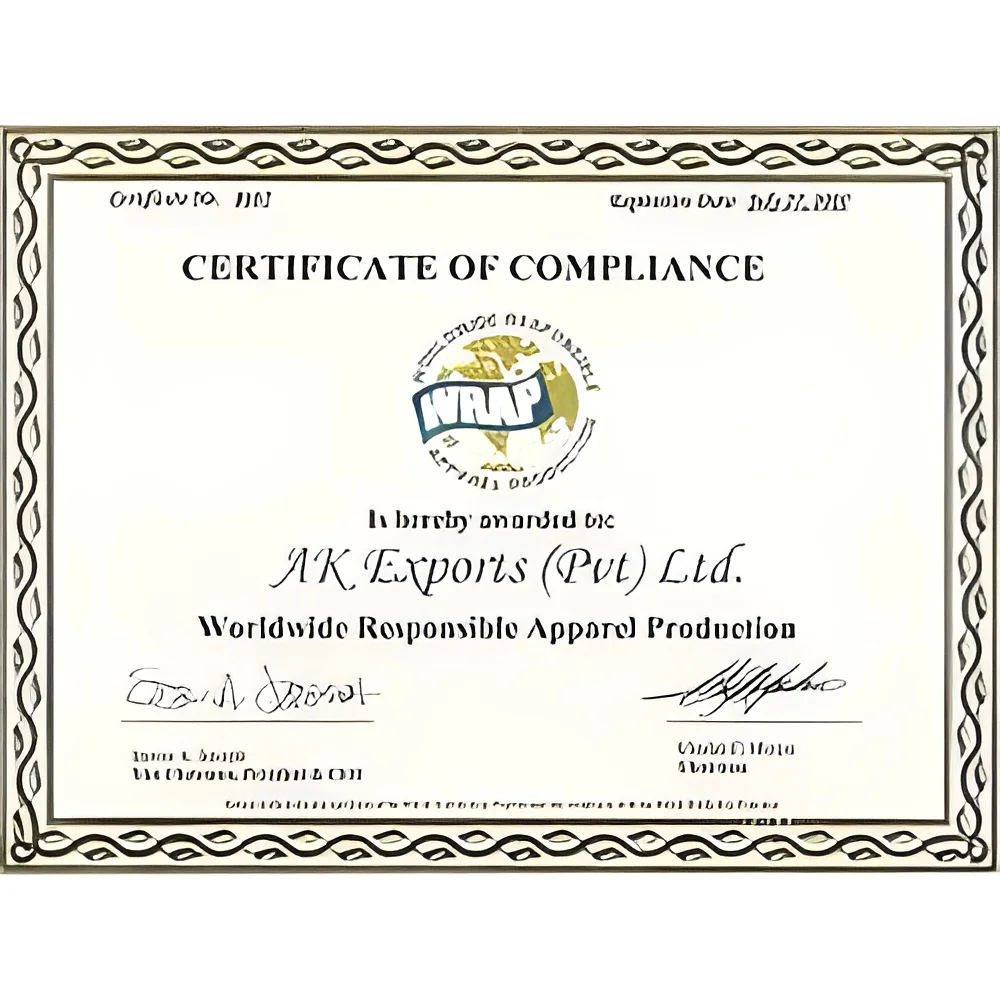
WRAP Certification is a globally recognized program dedicated to promoting ethical, lawful, and humane manufacturing conditions. Originally developed for the apparel, footwear, and sewn products sectors, its robust framework now serves a wide range of labor-intensive industries including jewelry, hotels, furniture, and construction. The certification verifies that factories operate in full compliance with strict standards covering labor practices, health and safety, environmental stewardship, and legal customs requirements. It provides credible, independent assurance to buyers, importers, and distributors that their products originate from facilities committed to social responsibility and sustainable operations. This makes it an essential tool for businesses aiming to meet international ethical norms and the expectations of partners and end consumers.

Industries such as apparel, footwear, textiles, and sewn products rely on WRAP Certification as a passport to global markets and partne...
WRAP Certification is a globally recognized program dedicated to promoting ethical, lawful, and humane manufacturing conditions. Originally developed for the apparel, footwear, and sewn products sectors, its robust framework now serves a wide range of labor-intensive industries including jewelry, hotels, furniture, and construction. The certification verifies that factories operate in full compliance with strict standards covering labor practices, health and safety, environmental stewardship, and legal customs requirements. It provides credible, independent assurance to buyers, importers, and distributors that their products originate from facilities committed to social responsibility and sustainable operations. This makes it an essential tool for businesses aiming to meet international ethical norms and the expectations of partners and end consumers.

Industries such as apparel, footwear, textiles, and sewn products rely on WRAP Certification as a passport to global markets and partnerships with leading brands. Its application has significantly expanded into jewelry manufacturing, hotel chains, furniture production, and construction firms, all seeking to validate their ethical commitments to workers and the environment. The program's adaptable structure addresses the specific operational challenges of each sector, offering a scalable and practical compliance framework. Businesses utilize WRAP to distinguish themselves from competitors, reduce the burden and cost of multiple audits, and streamline adherence to various international standards, making it a versatile and efficient solution for diverse manufacturing and service environments.

WRAP Certification delivers substantial business value by enhancing market access, reducing regulatory and reputational risks, and building durable trust with stakeholders. It signals a facility's reliability and serious commitment to ethical practices, which is increasingly a prerequisite for securing contracts with top-tier brands, retailers, and government buyers. The certification's emphasis on continuous improvement helps businesses optimize their operations, boost worker morale and retention, and prevent costly disruptions from compliance failures. Its broad recognition minimizes redundant auditing, saving significant time and resources. For sourcing partners, working with WRAP-certified suppliers means assured ethical quality, reduced supply chain vulnerabilities, and clear alignment with corporate responsibility objectives, representing a strategic investment for sustainable, long-term growth.

Key Features:
- Comprehensive verification of compliance with international labor, safety, and ethical standards.
- Broad applicability across apparel, footwear, sewn products, and expanding into construction, jewelry, and hospitality.
- Implementation supported by independent, accredited third-party auditing for maximum credibility.
- A structured framework focused on continuous operational improvement and sustainability.
- Ensures adherence to environmental compliance and customs security protocols.

Benefits:
- Enhances marketability and access to buyers and brands that mandate ethical sourcing.
- Reduces supply chain risk and protects brand reputation by verifying ethical operations.
- Streamlines compliance by often replacing the need for multiple, redundant factory audits.
- Improves operational efficiency and worker satisfaction through a focus on better workplace practices.
- Provides a globally recognized seal of trust that builds confidence with importers, distributors, and end consumers.
Specifications
| Additional Information | |
|---|---|
| Country of Origin | India |
Application
WRAP Certification is a critical standard for manufacturers in apparel, footwear, and sewn products to verify ethical production. It confirms adherence to labor laws, workplace safety, and environmental regulations, serving as a key credential for factories targeting international buyers and brands that demand responsible sourcing and transparent operations.
This certification is also widely adopted by diverse sectors including hospitality, jewelry manufacturing, furniture production, and construction. It provides a unified ethical framework, helping businesses mitigate risks, enhance their market reputation, and meet the growing global demand for accountable and sustainable supply chains across various industries.
- Apparel and footwear manufacturers use WRAP Certification to qualify for supply contracts with major retailers in North America and Europe.
- Jewelry producers implement WRAP to ensure ethical labor practices and material sourcing, securing partnerships with premium brands.
- Hotel and hospitality chains adopt WRAP to validate fair working conditions and strengthen their corporate social responsibility profile.
- Furniture manufacturers leverage WRAP to comply with international labor standards and access new export markets.
- Construction companies utilize WRAP to demonstrate a verified commitment to worker safety and ethical employment on projects.
Trade Details
| Available Stock | In Stock |
| Sample Availability | No |
Payment Terms
| Payment Terms |
|
Company Profile
Apex Certification Services, Haryana
 Haryana, India
Factory Details
Factory SizeBelow 1000 sqm
Annual Production Capacity0
Main Markets
Domestic
WRAP Certification For Ethical Manufacturing Compliance In Apparel Footwear
WRAP Certification ensures ethical manufacturing compliance for apparel, footwear, and labor-intensive industries like construction and jewelry. This globally recognized standard is trusted by buyers for responsible sourcing and supply chain integrity.
Min. Order Quantity: 1 unit
Shipping
Shipping fee and delivery date to be negotiated. Contact supplier now for more details.
Apex Certification Services
 Haryana, India