IN
IN₹
Apparel & Fashion
Description
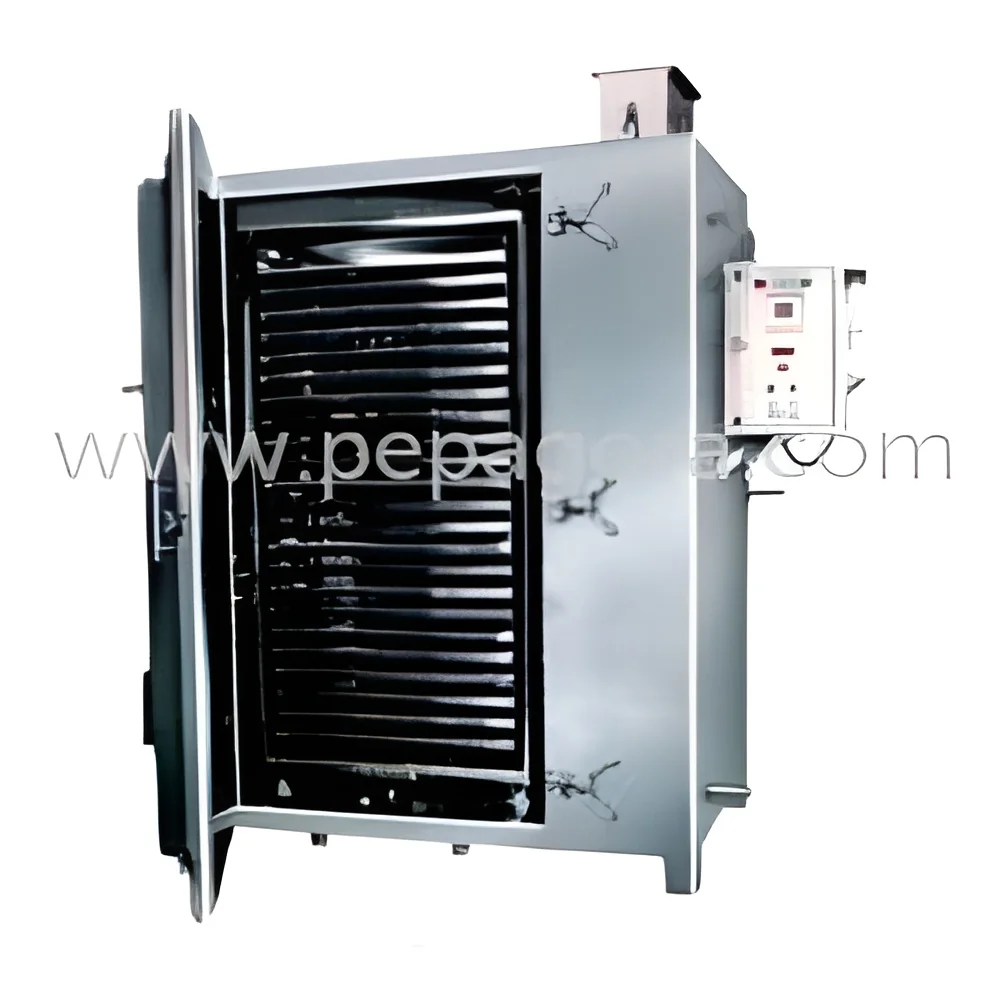
Industrial tray dryers represent essential equipment designed for efficient thermal processing and precise moisture removal operations. These enclosed insulated chambers feature multiple trays arranged vertically on mobile trolleys, creating an organized system for batch processing various materials. The design incorporates hot air circulation through electric heaters or steam radiator coils, while internal blower fans ensure uniform heat distribution across all trays. This configuration provides controlled drying environments suitable for sensitive materials requiring exact temperature management and consistent results across production batches, making them ideal for industries where product quality cannot be compromised.

Multiple manufacturing sectors depend on tray dryers for their essential production processes where heating and drying constitute critical operational stages. The pharmaceutical industry utilizes these systems for drying medicinal powders and granulated materials wh...
Industrial tray dryers represent essential equipment designed for efficient thermal processing and precise moisture removal operations. These enclosed insulated chambers feature multiple trays arranged vertically on mobile trolleys, creating an organized system for batch processing various materials. The design incorporates hot air circulation through electric heaters or steam radiator coils, while internal blower fans ensure uniform heat distribution across all trays. This configuration provides controlled drying environments suitable for sensitive materials requiring exact temperature management and consistent results across production batches, making them ideal for industries where product quality cannot be compromised.

Multiple manufacturing sectors depend on tray dryers for their essential production processes where heating and drying constitute critical operational stages. The pharmaceutical industry utilizes these systems for drying medicinal powders and granulated materials while maintaining strict quality standards and regulatory compliance. Chemical manufacturers employ tray dryers for processing dye stuffs, pigments, and various chemical compounds requiring controlled moisture removal and consistent thermal treatment. Food production facilities rely on them for dehydrating fruits, vegetables, and food ingredients while preserving nutritional value and product quality. Additional applications include color manufacturing and industrial material processing where consistent drying results directly impact final product performance and market acceptance.

Businesses select tray dryers for their proven reliability, operational efficiency, and long-term value proposition. These systems deliver consistent performance through robust construction and precision engineering, ensuring minimal operational downtime and reduced maintenance requirements. The customization capabilities allow adaptation to specific production needs, while the efficient heat transfer mechanism optimizes energy consumption and reduces operating costs. Manufacturers benefit from the flexibility to process various material types including wet solids and granular substances without compromising drying quality or production schedules. The trolley-based tray system enhances operational efficiency by simplifying loading and unloading procedures while maintaining continuous production workflow and maximizing throughput capacity.

Key Features:
- Enclosed insulated chamber design for optimal heat retention and energy efficiency
- Multiple tray configuration on mobile trolleys for efficient batch processing operations
- Hot air circulation system using electric heaters or steam radiator coils
- Internal blower fans ensuring uniform heat distribution across all material trays
- Robust construction with customization options for specific industry requirements

Benefits:
- Consistent batch drying results with uniform moisture removal across all materials
- Enhanced operational efficiency through streamlined loading and unloading processes
- Reduced energy consumption with optimized heat transfer and insulation systems
- Flexible processing capabilities for various material types and production scales
- Long-term reliability with minimal maintenance requirements and durable construction
Specifications
| Additional Information | |
|---|---|
| Country of Origin | India |
Application
Industrial tray dryers serve essential roles in sectors requiring precise moisture control and thermal processing. Their enclosed chamber design creates controlled drying environments perfect for sensitive materials across pharmaceutical manufacturing, chemical production, and food processing industries. These systems effectively handle various material forms including wet solids, powders, and granular substances while maintaining complete product integrity throughout the entire drying cycle.
Manufacturers appreciate tray dryers for their exceptional adaptability to different production scales and diverse material types. The trolley-mounted tray system enables efficient loading and unloading operations while guaranteeing consistent heat distribution across all material layers. Industries utilize these dryers for processes ranging from initial drying stages to final moisture content adjustment, making them indispensable components in quality-focused manufacturing environments where precision matters most.
- Pharmaceutical companies drying medicinal powders and tablet granules
- Chemical plants processing dye stuffs and pigment materials
- Food manufacturers dehydrating fruits, vegetables, and food ingredients
- Industrial operations drying chemical compounds and specialty materials
- Production facilities handling color manufacturing and processing applications
Trade Details
| Available Stock | In Stock |
| Sample Availability | No |
Payment Terms
| Payment Terms |
|
Company Profile
Febchem Engineering Works, Madhya Pradesh
 Madhya Pradesh, India
Madhya Pradesh, IndiaIndustrial Equipment & Machinery•Manufacturer•Importer / Exporter
Factory Details
Factory SizeBelow 1000 sqm
Annual Production Capacity0
Industrial Tray Dryers For Pharmaceuticals Chemicals Food Processing
Industrial tray dryers deliver efficient batch drying for pharmaceuticals, chemicals, and food processing. These reliable units feature customizable trays, uniform air circulation, and robust construction for consistent moisture removal and thermal processing results.
Min. Order Quantity: 1 unit
Shipping
Shipping fee and delivery date to be negotiated. Contact supplier now for more details.
Febchem Engineering Works
 Madhya Pradesh, India
Madhya Pradesh, IndiaIndustrial Equipment & MachineryManufacturer