IN
IN₹
Apparel & Fashion
Loading subcategories...
View More
Description
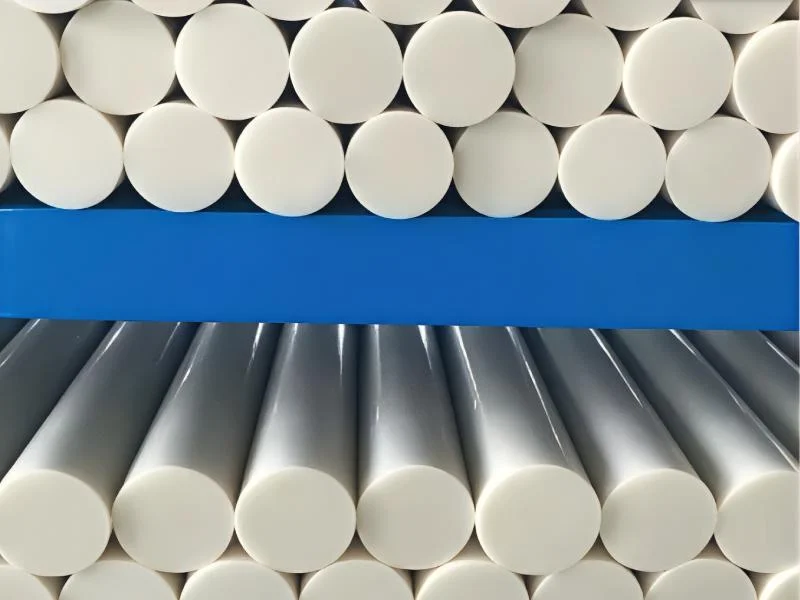
The Teflon PTFE Rod is a high-performance engineering material manufactured through precision moulding to deliver exceptional reliability in demanding industrial environments. This white, round rod measures 50 mm in diameter and 1000 mm in length, made from pure PTFE (Polytetrafluoroethylene) of industrial grade. It combines outstanding chemical resistance with a very low coefficient of friction, excellent thermal stability up to 260°C, and superior electrical insulation properties. The material's non-stick characteristics and near-zero moisture absorption make it ideal for creating precision-machined components that must maintain dimensional stability under harsh operating conditions. Its smooth surface finish and consistent density ensure predictable machining behavior, allowing manufacturers to produce complex parts with tight tolerances for critical applications.

This PTFE rod finds extensive use across multiple industries where material performance directly impacts operational sa...
The Teflon PTFE Rod is a high-performance engineering material manufactured through precision moulding to deliver exceptional reliability in demanding industrial environments. This white, round rod measures 50 mm in diameter and 1000 mm in length, made from pure PTFE (Polytetrafluoroethylene) of industrial grade. It combines outstanding chemical resistance with a very low coefficient of friction, excellent thermal stability up to 260°C, and superior electrical insulation properties. The material's non-stick characteristics and near-zero moisture absorption make it ideal for creating precision-machined components that must maintain dimensional stability under harsh operating conditions. Its smooth surface finish and consistent density ensure predictable machining behavior, allowing manufacturers to produce complex parts with tight tolerances for critical applications.

This PTFE rod finds extensive use across multiple industries where material performance directly impacts operational safety and efficiency. In chemical processing, it's machined into seals, valve seats, and pipe linings that resist corrosive acids, bases, and solvents. Food and pharmaceutical manufacturers utilize it for components in processing equipment where non-contamination, cleanability, and FDA-compliance are essential. The electrical industry employs PTFE rods for insulators, coil bobbins, and terminal blocks in high-voltage applications. Automotive and aerospace sectors use it for lightweight, durable bushings and bearings, while semiconductor manufacturers rely on its purity for wafer handling components. Industrial machinery builders incorporate PTFE parts for low-maintenance guides and wear surfaces.

The business value of this PTFE rod lies in its ability to reduce total cost of ownership through extended component lifespan and reduced maintenance requirements. Its exceptional chemical resistance prevents degradation from exposure to aggressive substances, minimizing unplanned downtime in processing plants. The low friction properties decrease energy consumption in moving assemblies and reduce wear on mating surfaces. Thermal stability ensures consistent performance across temperature fluctuations, eliminating the need for multiple material specifications. The material's machinability allows for cost-effective prototyping and production of custom parts without expensive tooling. Reliability is assured through consistent material properties batch-to-batch, dimensional accuracy, and compliance with industrial standards for critical applications.

Key Features:
- Excellent chemical resistance against virtually all industrial chemicals, acids, and solvents.
- Low coefficient of friction (0.04-0.10) for reduced wear and energy-efficient operation.
- High temperature stability with continuous service from -200°C to +260°C.
- Superior electrical insulation properties with high dielectric strength and volume resistivity.
- Precision moulded construction ensuring dimensional accuracy and consistent material density.

Benefits:
- Extends equipment lifespan by resisting chemical attack and reducing component wear.
- Minimizes maintenance requirements through self-lubricating properties and non-stick surface.
- Ensures operational safety in harsh environments with flame resistance and thermal stability.
- Reduces contamination risk in sensitive applications due to inert, non-toxic material composition.
- Provides cost-effective customization through easy machining into complex precision components.
Specifications
| Attribute | Value |
|---|---|
| Material | PTFE |
| Diameter | 50 mm |
| Length | 1000 mm |
| Process | Moulded |
| Color | White |
| Shape | Round |
| Grade | Industrial Grade |
| Chemical Resistance | Excellent |
| Additional Information | |
|---|---|
| Country of Origin | India |
| Customisable | No |
Application
This Teflon PTFE Rod serves as a versatile raw material for fabricating custom components across demanding sectors. Its unique properties make it indispensable where standard materials fail under extreme chemical, thermal, or mechanical stress. The rod's machinability allows for precise shaping into complex parts, ensuring reliable performance in critical applications. Industries rely on its consistent quality to maintain production efficiency and reduce equipment downtime, making it a trusted choice for engineers and procurement specialists.
From chemical processing plants to food production lines, this PTFE rod provides a durable solution for creating seals, bearings, and insulators. Its non-reactive nature prevents contamination in sensitive environments, while its low friction coefficient minimizes wear on moving parts. The material's stability across a wide temperature range ensures components perform reliably whether exposed to extreme heat or cryogenic conditions, offering long-term value and operational safety.
- Machining custom seals and gaskets for chemical pumps and valves that handle aggressive acids and solvents.
- Fabricating low-friction bushings, bearings, and wear strips for conveyor systems in food processing and packaging machinery.
- Creating electrical insulators and coil forms for high-voltage equipment and semiconductor manufacturing tools.
- Producing laboratory equipment components like stirrer shafts, vial liners, and reaction vessel parts requiring purity and chemical inertness.
- Manufacturing non-stick guides, rollers, and slides for textile, printing, and industrial automation machinery.
Trade Details
| Available Stock | In Stock |
| Sample Availability | No |
Payment Terms
| Payment Terms |
|
Company Profile

Unique Plast, Tamil Nadu
 Tamil Nadu, India
Tamil Nadu, India16 yrs
Manufacturer
Turn Over
₹25 Lakhs – ₹1 Crore
Factory Details
Factory Size1000-5000 sqm
Industrial PTFE Teflon Rod: Chemical Resistant, High Temp, Low Friction
Industrial-grade Teflon PTFE Rod offers excellent chemical resistance, low friction, and high-temperature stability for machining precision components in chemical, food, and industrial applications.
Min. Order Quantity: 1
Shipping
Shipping fee and delivery date to be negotiated. Contact supplier now for more details.
Unique Plast Tamil Nadu, India
Tamil Nadu, IndiaManufacturer