IN
IN₹
Apparel & Fashion
Description
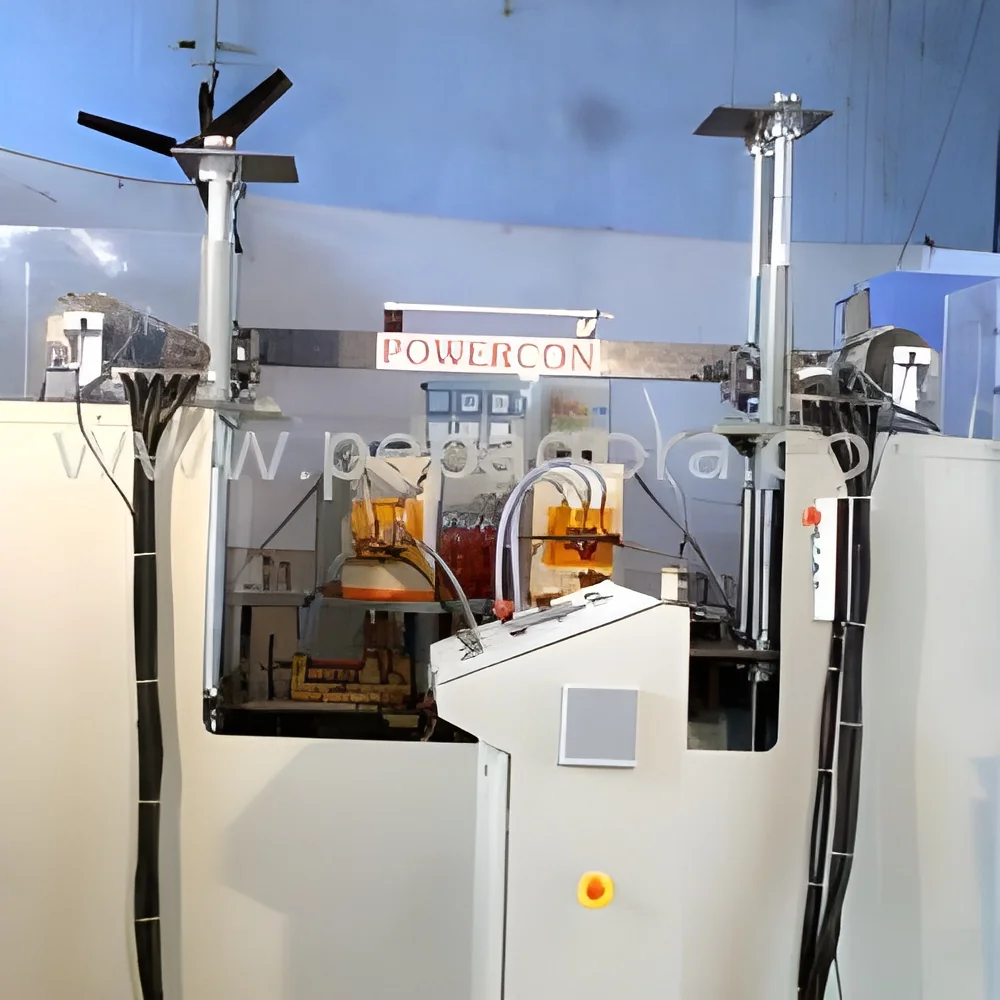
Industrial Automation Scanners with Single or Dual Spindle PLC Control represent the forefront of automated inspection technology, engineered specifically for manufacturing precision. These scanners deliver reliable quality assurance through high-accuracy scanning capabilities that consistently detect defects, verify critical dimensions, and ensure product specifications are met. Available in both single spindle and dual spindle configurations, with optional programmable logic controller (PLC) integration, these machines offer the flexibility needed to match specific production throughput and complexity requirements. Their industrial-grade construction guarantees reliable performance in continuous operation environments, maintaining scanning accuracy and repeatability even during extended production runs. Designed for seamless integration into existing manufacturing lines, these scanners deliver consistent, trustworthy inspection results that help uphold stringent quality standards whi...
Industrial Automation Scanners with Single or Dual Spindle PLC Control represent the forefront of automated inspection technology, engineered specifically for manufacturing precision. These scanners deliver reliable quality assurance through high-accuracy scanning capabilities that consistently detect defects, verify critical dimensions, and ensure product specifications are met. Available in both single spindle and dual spindle configurations, with optional programmable logic controller (PLC) integration, these machines offer the flexibility needed to match specific production throughput and complexity requirements. Their industrial-grade construction guarantees reliable performance in continuous operation environments, maintaining scanning accuracy and repeatability even during extended production runs. Designed for seamless integration into existing manufacturing lines, these scanners deliver consistent, trustworthy inspection results that help uphold stringent quality standards while optimizing overall production efficiency and reducing waste.

These precision scanners serve as essential quality gatekeepers across multiple manufacturing sectors where control directly impacts product reliability, safety, and compliance. In automotive manufacturing, they perform critical inspections on engine components, transmission parts, brake systems, and chassis elements to ensure dimensional accuracy and identify surface or subsurface defects. Electronics manufacturers utilize them for printed circuit board verification, component placement validation, solder joint inspection, and semiconductor integrity checks. Metal fabrication and machining industries implement these scanners for weld quality assessment, surface finish evaluation, dimensional verification of fabricated structures, and raw material inspection. Packaging operations rely on them for container integrity checks, fill level verification, label position confirmation, and cap seal inspections. Across these diverse applications, the scanners provide consistent, repeatable, and documentable inspection data that supports robust quality management systems and helps meet stringent regulatory compliance requirements.

The operational value of these industrial scanners extends far beyond basic inspection functions to deliver measurable, tangible improvements in manufacturing efficiency, product quality, and bottom-line results. By automating visual and dimensional inspection tasks, these machines significantly reduce human error and subjective judgment while increasing inspection speed and consistency. The PLC-controlled models offer programmable precision that can quickly adapt to different product specifications or new production runs without requiring costly physical adjustments, retooling, or extensive operator retraining. Their durable, industrial construction minimizes maintenance requirements and ensures consistent, dependable performance across multiple production shifts, dramatically reducing unexpected downtime and associated costs. The availability of both single and dual spindle configurations allows you to select the optimal setup for your specific throughput requirements, floor space, and inspection complexity. This powerful combination of precision engineering, operational reliability, and production adaptability delivers a substantial return on investment through improved first-pass yield rates, reduced scrap and rework, lower warranty claims, and enhanced overall production line efficiency and profitability.

Key Features:
- Available in reliable single spindle and dual spindle configurations for flexible production line integration and throughput matching.
- Optional PLC control enables fully programmable operation for easy adaptation to different products and inspection routines.
- High-precision scanning technology ensures accurate, repeatable defect detection and dimensional verification.
- Industrial-grade construction provides exceptional durability for continuous, demanding operation in manufacturing environments.
- Designed for seamless integration into existing production lines with minimal disruption or costly modifications.

Benefits:
- Significantly increases inspection throughput and consistency while maintaining or improving accuracy standards.
- Dramatically reduces human error and variability in quality control processes through automated, objective scanning.
- Easily adapts to changing production requirements or new products with programmable PLC-controlled operation.
- Minimizes maintenance needs, operational downtime, and total cost of ownership with robust industrial construction.
- Delivers reliable, trustworthy performance across extended production runs, multiple shifts, and varying conditions.
Specifications
| Additional Information | |
|---|---|
| Country of Origin | India |
Application
Our industrial automation scanners are engineered for manufacturing environments where consistent, reliable quality control is non-negotiable. These machines perform high-speed, accurate scanning of components to identify defects, verify dimensions, and ensure specifications are met throughout production. Their robust construction is built for continuous operation in demanding settings, maintaining precision and reliability across multiple shifts without compromise.
With configurable single or dual spindle designs and optional PLC integration, these scanners adapt precisely to specific production line requirements. They serve critical inspection functions across diverse industrial sectors, from verifying automotive parts to checking electronic components. This provides manufacturers with dependable automated quality assurance that significantly reduces manual inspection errors and boosts overall throughput efficiency, protecting your brand reputation.
- Automated dimensional verification of machined automotive components like engine blocks, transmission gears, and suspension parts.
- Precision defect detection on electronic assemblies including printed circuit boards, semiconductor wafers, and connector placements.
- Surface inspection and flaw identification in metal fabrication for castings, forgings, welded structures, and stamped parts.
- Quality control scanning of packaged goods for consistent fill levels, seal integrity, label positioning, and container defects.
- Component sorting and grading in high-volume production lines based on precise dimensional measurements and tolerance checks.
Trade Details
| Available Stock | In Stock |
| Sample Availability | No |
Payment Terms
| Payment Terms |
|
Company Profile
Powercon Superheat Pvt Ltd, Gujarat
 Gujarat, India
Gujarat, IndiaIndustrial Equipment & Machinery•Manufacturer•Importer / Exporter
Factory Details
Factory SizeBelow 1000 sqm
Annual Production Capacity0
Industrial Automation Scanners Single Dual Spindle PLC Control
Industrial Automation Scanners with single or dual spindle PLC control deliver precision scanning for manufacturing quality inspection, ensuring accurate defect detection and dimensional verification across production environments.
Min. Order Quantity: 1 unit
Shipping
Shipping fee and delivery date to be negotiated. Contact supplier now for more details.
Powercon Superheat Pvt Ltd
 Gujarat, India
Gujarat, IndiaIndustrial Equipment & MachineryManufacturer