IN
IN₹
Apparel & Fashion
Description
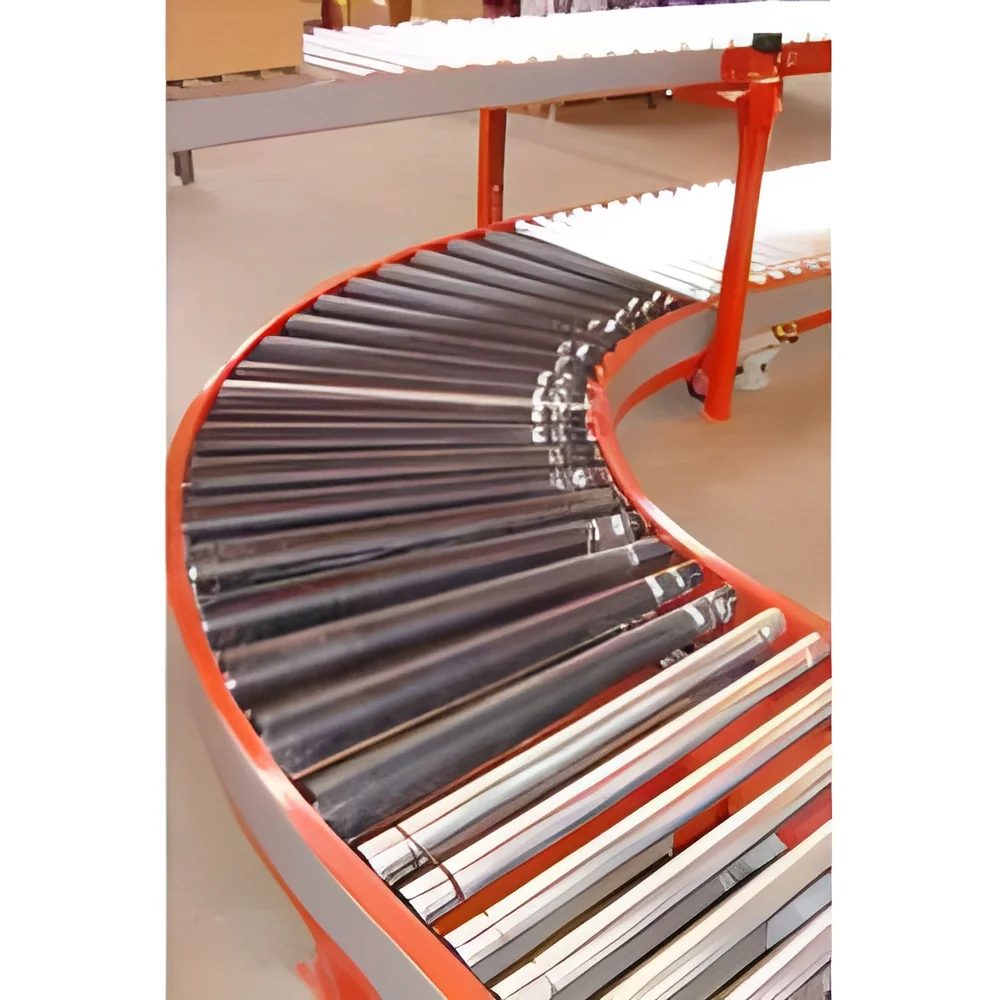
Industrial roller conveyors deliver efficient material handling solutions for businesses moving flat-based items like boxes, crates, and pallets. These systems utilize either gravity or powered rollers to transport goods smoothly along predetermined paths, reducing manual handling and increasing operational efficiency. Designed with durability as a priority, roller conveyors handle heavy and bulky items that would otherwise require significant labor or more complex equipment. The straightforward design makes them adaptable to various layouts including straight paths, curves, and transfer points between different conveyor systems. Operations can choose between gravity rollers for cost-effective movement or powered rollers for controlled transportation, depending on specific workflow requirements and material handling needs.

Multiple industries benefit from roller conveyor systems due to their versatility and reliability in demanding environments. Manufacturing facilities use them exten...
Industrial roller conveyors deliver efficient material handling solutions for businesses moving flat-based items like boxes, crates, and pallets. These systems utilize either gravity or powered rollers to transport goods smoothly along predetermined paths, reducing manual handling and increasing operational efficiency. Designed with durability as a priority, roller conveyors handle heavy and bulky items that would otherwise require significant labor or more complex equipment. The straightforward design makes them adaptable to various layouts including straight paths, curves, and transfer points between different conveyor systems. Operations can choose between gravity rollers for cost-effective movement or powered rollers for controlled transportation, depending on specific workflow requirements and material handling needs.

Multiple industries benefit from roller conveyor systems due to their versatility and reliability in demanding environments. Manufacturing facilities use them extensively in assembly lines to move components between workstations efficiently. Warehousing and distribution centers implement roller conveyors for sorting, order picking, and loading operations where consistent material flow is critical. The logistics sector relies on these systems for package handling and transportation between processing areas with minimal product damage. Automotive plants utilize heavy-duty roller conveyors for moving vehicle parts and assemblies through production stages. Food processing facilities employ versions suitable for their environments while fulfillment centers integrate them into automated sorting systems for efficient order processing and shipping.

Investing in quality roller conveyors delivers significant operational value through improved efficiency and reduced labor costs. These systems minimize product handling time, decrease workplace injury risks, and increase throughput in material handling operations. The reliability of well-engineered roller conveyors ensures consistent performance with minimal maintenance requirements, reducing downtime and operational disruptions. The construction quality ensures long service life even under continuous use in industrial settings. This durability makes roller conveyors a long-term investment that maintains performance through changing business requirements and growth, providing consistent value over many years of operation.

Key Features:
- Heavy-duty construction for handling bulky items and high loads
- Available in both gravity and powered roller configurations
- Customizable length, width, and roller spacing to match requirements
- Compatible with curves and transfer points for system integration
- Durable materials ensure long service life with minimal maintenance

Benefits:
- Reduces manual handling and associated labor costs
- Increases operational efficiency and throughput capacity
- Minimizes workplace injuries and product damage risks
- Provides reliable performance with low maintenance needs
- Adapts to various layouts and operational requirements
Specifications
| Additional Information | |
|---|---|
| Country of Origin | India |
Application
Roller conveyors provide efficient transportation for flat-bottomed items across industrial environments. They handle boxes, crates, pallets, and unit loads with consistent base profiles, making them ideal for assembly lines, packaging stations, and sorting operations. The robust design ensures smooth movement while reducing manual handling and labor costs in demanding applications.
These systems integrate seamlessly with other conveyor types, particularly at curves and transfer points where direction changes occur. Industries including logistics, automotive manufacturing, food processing, and distribution centers rely on roller conveyors for their adaptability to different layouts and operational requirements. The versatility supports various material handling needs from light packages to heavy palletized goods.
- Warehouse order picking and sorting operations for packaged goods
- Assembly line transportation in automotive and electronics manufacturing
- Loading and unloading zones in distribution centers and logistics hubs
- Packaging and palletizing stations in food and beverage facilities
- Integration with automated systems in e-commerce fulfillment centers
Trade Details
| Available Stock | In Stock |
| Sample Availability | No |
Payment Terms
| Payment Terms |
|
Company Profile
Veer Fabricators, Maharashtra
 Maharashtra, India
Maharashtra, IndiaIndustrial Equipment & Machinery•Distributor / Wholesaler
Factory Details
Factory SizeBelow 1000 sqm
Annual Production Capacity0
Industrial Roller Conveyors For Boxes And Pallets Material Handling
Industrial roller conveyors efficiently handle boxes and pallets in warehouses and manufacturing facilities. These heavy-duty systems offer reliable gravity or powered operation for smooth material transport with minimal maintenance requirements.
Min. Order Quantity: 1 unit
Shipping
Shipping fee and delivery date to be negotiated. Contact supplier now for more details.
Veer Fabricators
 Maharashtra, India
Maharashtra, IndiaIndustrial Equipment & MachineryDistributor / Wholesaler