IN
IN₹
Apparel & Fashion
Description
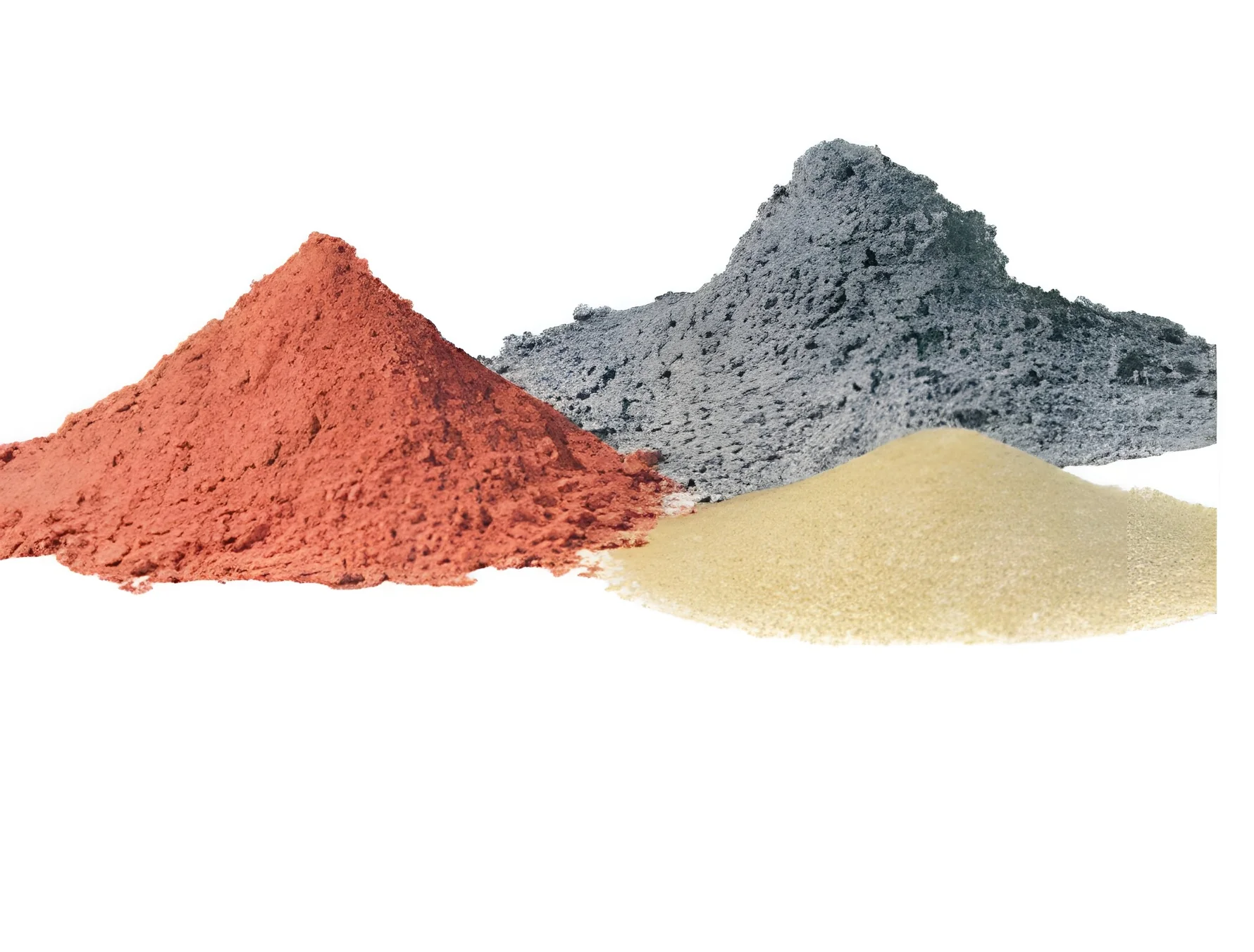
Pre-alloyed metal powders represent a significant advancement in materials science, where multiple alloying elements are homogeneously combined at the atomic level during the manufacturing process. This method ensures each powder particle has an identical chemical composition, eliminating segregation and delivering unparalleled consistency. The result is a material that provides predictable sintering behavior, excellent flow characteristics, and superior final part properties, including high density, enhanced strength, and improved corrosion resistance. These powders are engineered to meet the rigorous demands of modern manufacturing, offering a reliable solution for producing components where performance and precision are critical.

These advanced powders are utilized across a diverse range of industries that rely on precision metallurgy. In the automotive sector, they are essential for manufacturing transmission parts, engine components, and sintered filters that require high wear re...
Pre-alloyed metal powders represent a significant advancement in materials science, where multiple alloying elements are homogeneously combined at the atomic level during the manufacturing process. This method ensures each powder particle has an identical chemical composition, eliminating segregation and delivering unparalleled consistency. The result is a material that provides predictable sintering behavior, excellent flow characteristics, and superior final part properties, including high density, enhanced strength, and improved corrosion resistance. These powders are engineered to meet the rigorous demands of modern manufacturing, offering a reliable solution for producing components where performance and precision are critical.

These advanced powders are utilized across a diverse range of industries that rely on precision metallurgy. In the automotive sector, they are essential for manufacturing transmission parts, engine components, and sintered filters that require high wear resistance and durability. The industrial machinery and tooling industry uses them to produce robust gears, bearings, and cutting implements. Furthermore, the growing field of additive manufacturing depends on these consistent powders for 3D printing functional prototypes, custom jigs, fixtures, and even final production parts in aerospace and medical device manufacturing, where material integrity cannot be compromised.

For businesses, investing in high-quality pre-alloyed powders translates directly into operational value and reliability. Consistent material quality reduces production variability, minimizes waste, and lowers the risk of part failure, leading to more efficient manufacturing cycles and significant cost savings over time. The inherent uniformity ensures repeatable results batch after batch, which is crucial for maintaining supply chain integrity and meeting strict client specifications. By choosing a trusted supplier, manufacturers secure a dependable material foundation that enhances their product quality, strengthens their market reputation, and provides a competitive edge through superior end-component performance.

Key Features:
- Uniform chemical composition in every particle for consistent sintering and final properties.
- Engineered for excellent flowability and packing density in die filling and additive manufacturing processes.
- Available in various alloy systems including tool steels, stainless steels, and specialty alloys.
- High purity levels with controlled oxygen and nitrogen content to ensure superior metallurgical bonding.
- Consistent particle size distribution tailored for specific manufacturing techniques like pressing or 3D printing.

Benefits:
- Enables production of high-strength, complex net-shape parts with reduced machining and material waste.
- Provides reliable and repeatable performance, critical for mass production and quality assurance.
- Enhances final component properties such as tensile strength, wear resistance, and dimensional stability.
- Reduces processing time and energy consumption during sintering due to predictable material behavior.
- Offers a versatile material solution suitable for both traditional powder metallurgy and advanced additive manufacturing.
Specifications
| Additional Information | |
|---|---|
| Country of Origin | 106 |
Application
Our pre-alloyed metal powders are the foundational material for creating high-integrity, complex components through advanced manufacturing processes. They are specifically formulated to deliver consistent performance in powder metallurgy and additive manufacturing, ensuring every batch meets stringent industrial standards for density, purity, and particle morphology.
These powders are indispensable across sectors that demand materials with superior mechanical properties and dimensional stability. From producing durable automotive parts to intricate components for industrial machinery, they provide the necessary reliability for mass production and custom, high-performance applications where failure is not an option.
- Manufacturing high-strength, sintered automotive components like gears, bearings, and connecting rods.
- Producing complex, near-net-shape parts for industrial machinery and heavy equipment via metal injection molding.
- Enabling additive manufacturing (3D printing) of prototypes, tools, and end-use parts with excellent material properties.
- Fabricating cutting tools, dies, and wear-resistant parts from tool steel and stainless steel compositions.
- Creating specialized components for the aerospace and defense industries that require alloys with specific thermal and mechanical characteristics.
Trade Details
| Available Stock | In Stock |
| Sample Availability | No |
Payment Terms
| Payment Terms |
|
Company Profile
Bimetal Bearings Ltd, Tamil Nadu
 Tamil Nadu, India
Tamil Nadu, IndiaIndustrial Equipment & Machinery•Manufacturer
Factory Details
Factory SizeBelow 1000 sqm
Pre Alloyed Metal Powders For Sintering, Additive Manufacturing & Precision Metallurgy
Pre-alloyed metal powders for sintering, additive manufacturing, and precision metallurgy. Engineered for uniform composition, high strength, and reliability in demanding industrial applications.
Min. Order Quantity: 1 Gram
Shipping
Shipping fee and delivery date to be negotiated. Contact supplier now for more details.
Bimetal Bearings Ltd
 Tamil Nadu, India
Tamil Nadu, IndiaIndustrial Equipment & MachineryManufacturer