IN
IN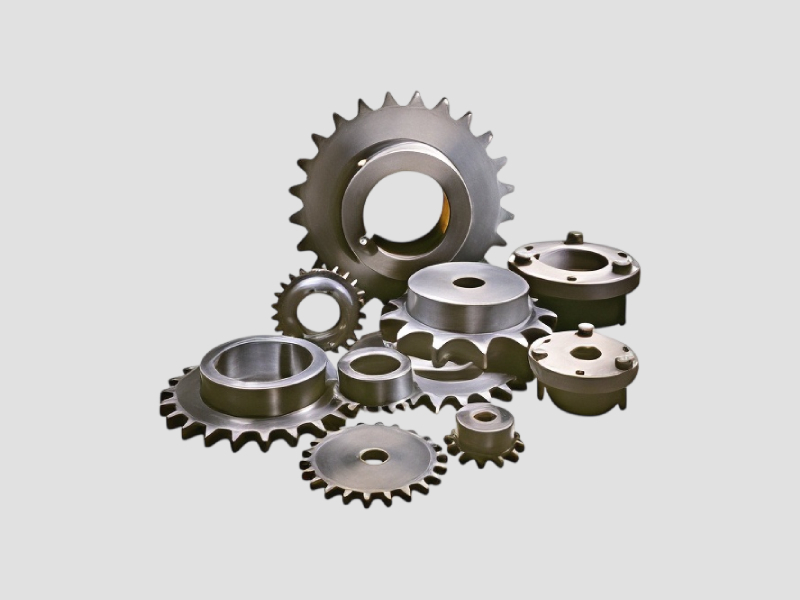
Description
Available in a wide range of pitch sizes and tooth counts, these sprockets are a mechanical necessity for systems requiring high-torque transfer without the slippage associated with belt drives. Manufactured from high-strength Carbon Steel, Alloy Steel, or Stainless Steel, our sprockets feature induction-hardened teeth to resist the abrasive wear caused by constant chain engagement.
Specifications
| Key Attributes | |
|---|---|
| Standard Compliance | ANSI B29.1 / DIN 8187 / ISO 606 |
| Pitch Sizes | 1/4" to 3" (No. 25 to No. 240) |
| Strand Configuration | Simplex, Duplex, Triplex, Quadruplex |
| Tooth Hardness | 45 HRC - 55 HRC (Induction Hardened) |
| Hub Styles | Type A, B, C / Taper-Bore / QD Style |
| Additional Information | |
|---|---|
| SKU | 1 |
| Country of Origin | India |
Application
Trade Details
| Production Lead Time | 8-14 Days |
| Available Stock | In Stock |
| Sample Availability | No |
Payment Terms
| Payment Methods |
|
Shipping & Logistics
| Shipping Internationally | No | |
| Methods |
| |
| IncoTerms |
| |
| Dispatch Lead time | Ships in 7 Days |
Company Profile


 Tamil Nadu, India
₹25 Lakhs – ₹1 Crore
Factory Details
Main Markets
Frequently Asked Questions
When should I use a "Duplex" sprocket instead of a "Simplex" one?
A Duplex sprocket uses two parallel chains. It is a mechanical necessity when the torque requirements are too high for a single chain, or when you need a redundant safety factor in heavy lifting or mission-critical industrial drives.
Why is "Induction Hardening" important for sprocket teeth?
Without hardening, the metal-on-metal contact with the chain rollers will quickly "hook" the teeth, causing the chain to jump or snap. Hardening the teeth to 50 HRC ensures the sprocket retains its shape for millions of cycles.
What is the difference between Type A and Type B sprockets?
Type A is a flat sprocket with no hub (plate-style), often bolted to a flange. Type B has a hub on one side, which allows for a keyway and set-screw to secure it directly to a rotating shaft.
Can I use a different brand of chain with your sprockets?
Yes, as long as the "Pitch" (distance between pins) and "Roller Diameter" match the ANSI or DIN standard of the sprocket. For example, any standard #40 chain will work with any #40 sprocket.
How do I know when it’s time to replace a sprocket?
Inspect the teeth for "fish-hooking" (where the teeth look curved or sharp). If the teeth are worn, the chain will not seat properly, leading to increased noise, vibration, and eventual chain failure.
Multi-size drive sprockets for power transmission.
Multi-Size Drive Sprockets are precision-toothed wheels designed to engage with roller chains to transmit rotary motion between two or more shafts.
Shipping
Shipping fee and delivery date to be negotiated. Contact supplier now for more details.

 Tamil Nadu, India