IN
IN₹
Description
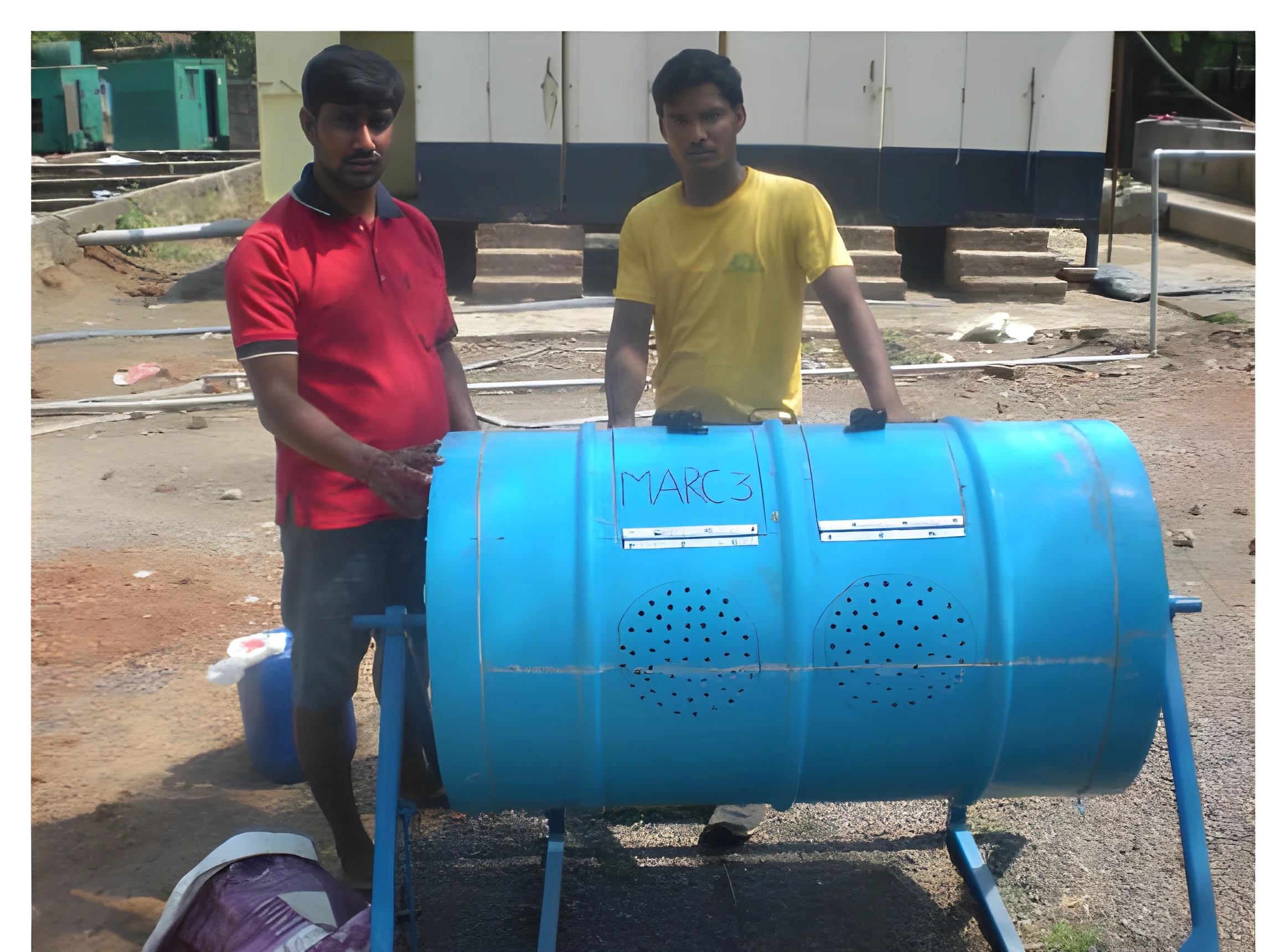
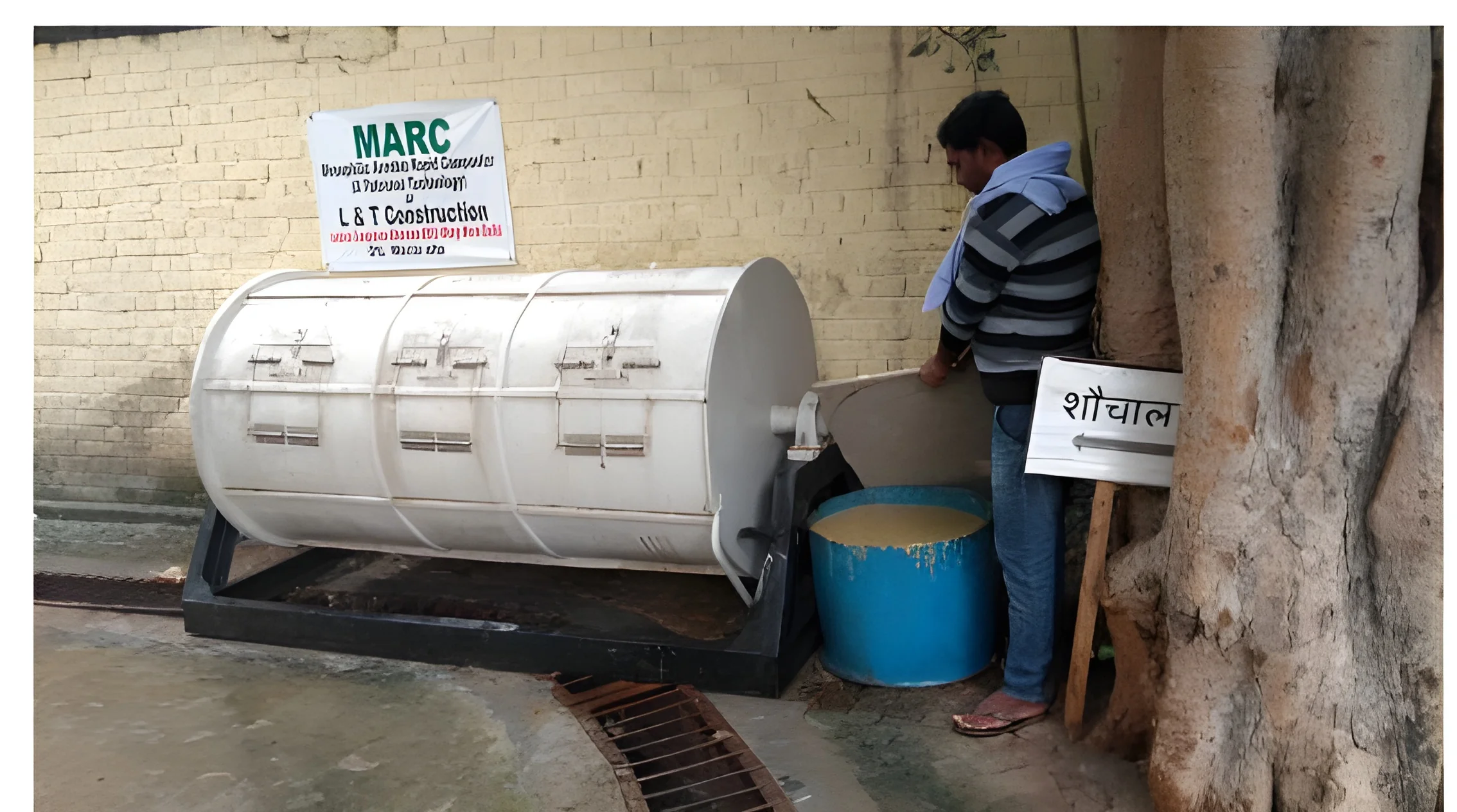
The MARC (Mesophilic Aerobic Rapid Composter) is an advanced, continuous aerobic composting system engineered for the decentralized management of organic solid waste. Its robust FRP cylindrical design rotates smoothly on a durable MS stand equipped with balls and bearings, enabling natural aeration without any electrical input. This innovative approach addresses key urban waste challenges by eliminating the need for large storage space, lengthy composting cycles, and high operational costs. Supported by the Department of Scientific and Industrial Research (DSIR), Ministry of Science & Technology, and with a patent application filed (IPO no. 1793/DEL/2051 dated 26.6.2015), the MARC system delivers proven reliability. It produces ready-to-use compost within 20 days from the last feeding, with output quality compliant with the Solid Waste Management Rules 2016 and the Fertilizer Control Order 2013.

This composter is extensively utilized across sectors that generate consistent organic was...
The MARC (Mesophilic Aerobic Rapid Composter) is an advanced, continuous aerobic composting system engineered for the decentralized management of organic solid waste. Its robust FRP cylindrical design rotates smoothly on a durable MS stand equipped with balls and bearings, enabling natural aeration without any electrical input. This innovative approach addresses key urban waste challenges by eliminating the need for large storage space, lengthy composting cycles, and high operational costs. Supported by the Department of Scientific and Industrial Research (DSIR), Ministry of Science & Technology, and with a patent application filed (IPO no. 1793/DEL/2051 dated 26.6.2015), the MARC system delivers proven reliability. It produces ready-to-use compost within 20 days from the last feeding, with output quality compliant with the Solid Waste Management Rules 2016 and the Fertilizer Control Order 2013.

This composter is extensively utilized across sectors that generate consistent organic waste and seek sustainable, in-house processing solutions. Residential complexes and housing societies employ it to manage kitchen and garden waste effectively, reducing dependency on municipal collection. Institutions such as educational campuses, hospitals, and corporate offices integrate it into their waste management plans for cafeteria and landscape refuse. The hospitality industry, including hotels and restaurants, values it for daily food waste conversion. Furthermore, municipal bodies and local governance units deploy these systems in small clusters or wards to minimize transport logistics and promote community-level composting, supporting broader urban sustainability goals.

For serious buyers, the MARC composter offers significant business value through operational efficiency and cost savings. Its electricity-free aeration removes a major recurring expense and simplifies maintenance, ensuring long-term reliability. The system's compact and continuous design allows for installation in space-constrained areas, providing a practical waste solution without extensive infrastructure. The quality of the final compost product creates an additional revenue stream or cost-offset opportunity, as it can be used on-site or sold locally. The unit's odor-free operation and compliance with national regulations make it a trustworthy and socially responsible investment, enhancing an organization's environmental stewardship while delivering tangible waste management results.

Key Features:
- Continuous aerobic composting system with a robust FRP cylindrical body mounted on a durable MS stand.
- Natural aeration mechanism requiring zero electricity, achieved through smooth rotation on balls and bearings.
- Fast processing cycle producing ready compost within 20 days from the last feeding.
- Compact and space-efficient design suitable for decentralized installation in various settings.
- Output compost quality meets Solid Waste Management Rules 2016 and Fertilizer Control Order 2013 standards.

Benefits:
- Eliminates dependency on electrical power for aeration, drastically reducing operational costs and complexity.
- Provides a reliable, on-site solution for organic waste, cutting down transportation and centralized processing fees.
- Transforms waste into valuable, quality compost that can be used for landscaping or create potential revenue.
- Odor-free operation ensures community and stakeholder acceptance in residential or institutional environments.
- Supported by DSIR and with a patent application, offering assurance of researched, tested, and credible technology.
Specifications
| Additional Information | |
|---|---|
| Country of Origin | 106 |
Application
The MARC composter provides an efficient, decentralized solution for managing daily organic waste streams. Its compact, continuous operation makes it ideal for locations where space is limited and reliable, odor-free processing is essential. This system transforms organic waste into valuable compost without requiring electrical power for aeration, significantly reducing operational complexity and costs.
Suitable for various settings generating consistent organic waste, the MARC unit handles food scraps, garden trimmings, and other biodegradable materials. It serves as a practical alternative to traditional composting methods or centralized waste collection, promoting local resource recovery and environmental sustainability.
- Deploy in residential apartments, gated communities, and housing societies for on-site processing of kitchen and garden waste.
- Install within institutions like schools, hospitals, and office complexes to manage cafeteria and landscape organic waste.
- Utilize in hotels, restaurants, and catering facilities for daily food waste conversion into usable compost.
- Implement in municipal wards or small clusters for decentralized organic waste management, reducing transport needs.
- Support urban farming, rooftop gardens, and nurseries by producing quality compost locally for soil enrichment.
Trade Details
| Available Stock | In Stock |
| Sample Availability | No |
Payment Terms
| Payment Terms |
|
Company Profile
Marc Sanitation (P) Ltd, New Delhi
 New Delhi, India
New Delhi, IndiaServices & Support•Manufacturer
Factory Details
Factory SizeBelow 1000 sqm
MARC Mesophilic Aerobic Rapid Composter: Decentralized Organic Waste Management Device
MARC Mesophilic Aerobic Rapid Composter is a continuous aerobic composting device for decentralized organic waste management requiring no electricity for aeration, offering reliable and fast processing.
Min. Order Quantity: 1 ton
Shipping
Shipping fee and delivery date to be negotiated. Contact supplier now for more details.
Marc Sanitation (P) Ltd
 New Delhi, India
New Delhi, IndiaServices & SupportManufacturer