IN
IN₹
Apparel & Fashion
Description
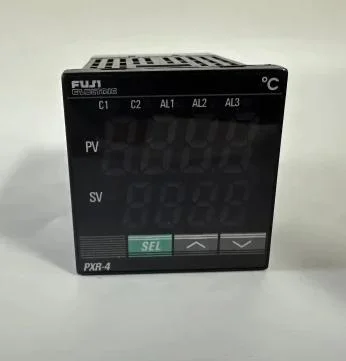
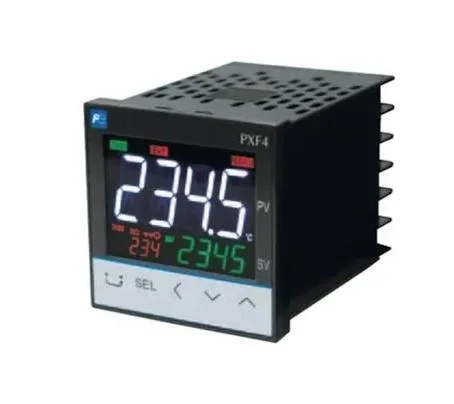
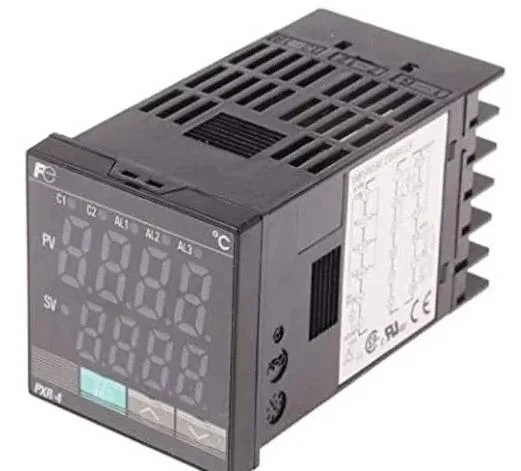
The Fuji PXR4TCY1 PID temperature controller represents advanced technology for precise thermal management in industrial settings. Utilizing Proportional-Integral-Derivative (PID) algorithms, this device ensures accurate temperature regulation by continuously adjusting control outputs based on real-time feedback. It supports standard temperature sensors like thermocouples and RTDs, offering flexibility for various installation requirements. With features such as auto-tuning and customizable control parameters, it simplifies setup while maintaining high performance. The controller's compact design and user-friendly interface make it easy to integrate into existing systems, providing reliable operation with minimal maintenance needs.

This temperature controller finds extensive use across multiple industries where temperature control is vital. In manufacturing, it regulates heating processes in metalworking, plastics, and rubber production. The food and beverage sector employs it for pas...
The Fuji PXR4TCY1 PID temperature controller represents advanced technology for precise thermal management in industrial settings. Utilizing Proportional-Integral-Derivative (PID) algorithms, this device ensures accurate temperature regulation by continuously adjusting control outputs based on real-time feedback. It supports standard temperature sensors like thermocouples and RTDs, offering flexibility for various installation requirements. With features such as auto-tuning and customizable control parameters, it simplifies setup while maintaining high performance. The controller's compact design and user-friendly interface make it easy to integrate into existing systems, providing reliable operation with minimal maintenance needs.

This temperature controller finds extensive use across multiple industries where temperature control is vital. In manufacturing, it regulates heating processes in metalworking, plastics, and rubber production. The food and beverage sector employs it for pasteurization, baking, and refrigeration systems. Pharmaceutical and chemical industries rely on it for maintaining strict temperature conditions in reactors and storage units. Additionally, it serves HVAC systems, laboratory equipment, and environmental testing chambers. Its versatility and robustness make it a preferred choice for engineers and technicians seeking dependable temperature management solutions.

Businesses benefit from the Fuji PXR4TCY1 through enhanced operational efficiency and reduced downtime. Its reliability ensures consistent product quality by minimizing temperature fluctuations, which can lead to defects or waste. The controller's fast response time adapts quickly to process changes, improving energy efficiency and lowering operational costs. Built with durability in mind, it withstands harsh industrial environments, offering long-term value with minimal service interruptions. This makes it a cost-effective investment for companies aiming to optimize their processes and maintain competitive advantages in their markets.

Key Features:
- PID control algorithm for precise and stable temperature regulation.
- Compatibility with standard temperature sensors including thermocouples and RTDs.
- Auto-tuning function for simplified setup and optimized performance.
- Compact design with easy integration into automation panels and systems.
- User-friendly interface with customizable parameters for flexible operation.

Benefits:
- Ensures consistent product quality by maintaining accurate temperature control.
- Reduces energy consumption through efficient and responsive thermal management.
- Minimizes downtime with reliable operation in demanding industrial environments.
- Enhances process efficiency with fast adaptation to changing conditions.
- Offers long-term durability and low maintenance requirements for cost savings.
Specifications
| Additional Information | |
|---|---|
| Country of Origin | India |
Application
The Fuji PXR4TCY1 PID temperature controller is engineered for demanding industrial environments where temperature stability is critical. It integrates seamlessly into automation systems, providing consistent control for various heating processes and maintaining optimal operating conditions across different applications.
This controller is widely adopted in sectors requiring precise thermal management, from manufacturing to processing industries. Its robust design handles continuous operation, making it suitable for integration into control panels and systems where accuracy and reliability are non-negotiable for operational efficiency and product quality.
Real-world applications:
- Regulating temperatures in industrial ovens and furnaces for consistent heat treatment processes.
- Maintaining precise thermal conditions in plastic injection molding and extrusion machinery.
- Controlling heating elements in food processing equipment to ensure safety and quality standards.
- Managing temperature in chemical reactors and distillation columns for stable production.
- Monitoring and adjusting temperatures in environmental test chambers and laboratory equipment.
Trade Details
| Available Stock | In Stock |
| Sample Availability | No |
Payment Terms
| Payment Terms |
|
| Payment Methods |
|
Company Profile

Vigital India, New Delhi
 New Delhi, India
New Delhi, IndiaElectronics & Electrical•Manufacturer•Importer / Exporter
Factory Details
Factory SizeBelow 1000 sqm
Main Markets
South Asia
Industrial PID Temperature Controller Fuji PXR4TCY1 For Process Control
Fuji PXR4TCY1 PID temperature controller delivers precise temperature regulation for industrial heating and process control applications, ensuring reliable performance with fast response times and sensor compatibility.
Min. Order Quantity: 1 piece
Shipping
Shipping fee and delivery date to be negotiated. Contact supplier now for more details.
Vigital India
 New Delhi, India
New Delhi, IndiaElectronics & ElectricalManufacturer