IN
IN₹
Apparel & Fashion
Description
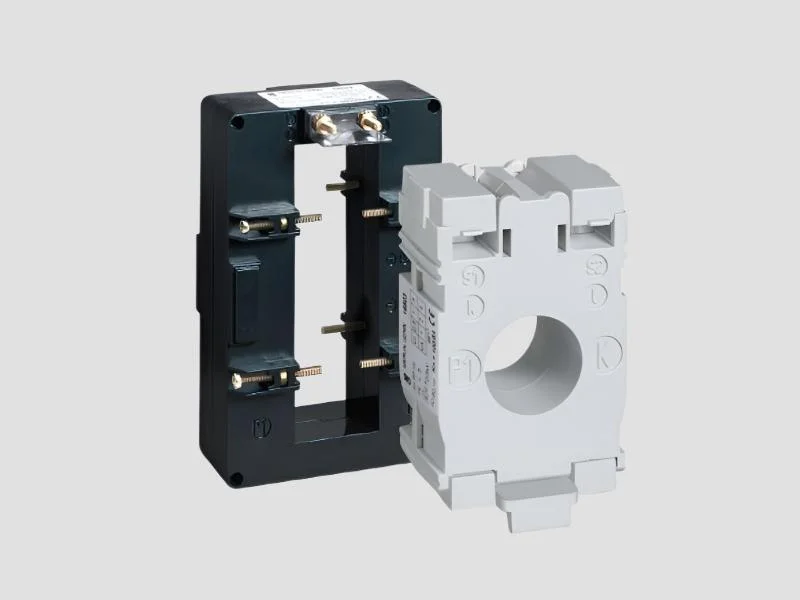
The Electrical Metering Current Transformer is a precision instrument designed to safely and accurately measure high electrical currents in power systems. By converting primary currents to standardized secondary values, it enables monitoring equipment, meters, and protection devices to function effectively without direct exposure to dangerous voltage levels. This transformer maintains measurement accuracy across various load conditions while ensuring complete electrical isolation between the high-current circuit and measurement instruments. Its reliable performance makes it indispensable for maintaining system visibility and control in complex electrical networks where current monitoring is critical for operational safety and efficiency.

These current transformers find extensive application across multiple industries that rely on robust electrical infrastructure. In utility substations, they enable precise monitoring of power transmission and distribution networks. Manufacturing plant...
The Electrical Metering Current Transformer is a precision instrument designed to safely and accurately measure high electrical currents in power systems. By converting primary currents to standardized secondary values, it enables monitoring equipment, meters, and protection devices to function effectively without direct exposure to dangerous voltage levels. This transformer maintains measurement accuracy across various load conditions while ensuring complete electrical isolation between the high-current circuit and measurement instruments. Its reliable performance makes it indispensable for maintaining system visibility and control in complex electrical networks where current monitoring is critical for operational safety and efficiency.

These current transformers find extensive application across multiple industries that rely on robust electrical infrastructure. In utility substations, they enable precise monitoring of power transmission and distribution networks. Manufacturing plants utilize them to monitor energy consumption of heavy machinery and production equipment. Commercial facilities incorporate them into building management systems for power monitoring and load balancing. Renewable energy installations use them to track power generation from solar arrays and wind turbines. Industrial complexes depend on them for protecting expensive equipment through accurate fault detection and system protection.

Businesses value these current transformers for their proven reliability and suitability for demanding electrical environments. Their consistent performance reduces maintenance requirements and minimizes system downtime, providing long-term operational stability. The precise current measurement capabilities enable better energy management decisions and help optimize power consumption. By ensuring accurate protection system operation, they prevent equipment damage and reduce safety risks. Their durable construction withstands industrial conditions while maintaining measurement accuracy over extended service periods, delivering sustained value through reliable performance.

Key Features:
- Precise current reduction from high primary to standardized secondary values
- Electrical isolation between measurement circuits and high-voltage systems
- Robust construction suitable for industrial environments and substations
- Consistent accuracy maintained across varying load conditions
- Compatibility with standard monitoring equipment and protection relays

Benefits:
- Enables safe current measurement without direct high-voltage exposure
- Supports accurate power monitoring and energy management decisions
- Provides reliable input for protection systems to prevent equipment damage
- Reduces maintenance requirements through durable, long-lasting performance
- Enhances system safety by enabling precise fault detection and response
Specifications
| Additional Information | |
|---|---|
| Country of Origin | India |
Application
This current transformer serves as a critical component in electrical metering systems, accurately converting high currents to measurable levels for monitoring equipment. It ensures reliable performance in demanding environments where precise current measurement is essential for system integrity and operational efficiency.
Designed for integration into protection systems, it provides stable input signals to protection relays that trigger circuit breakers during fault conditions. Its robust construction makes it suitable for continuous operation in substations and power distribution panels across various industrial settings, maintaining accuracy under different load conditions.
Real-world applications:
- Monitoring power consumption in manufacturing facilities with high-current machinery
- Providing input signals to protection relays in electrical substations
- Measuring current flow in commercial building power distribution systems
- Enabling fault detection in industrial plant electrical networks
- Supporting energy management systems in data centers and large facilities
Trade Details
| Available Stock | In Stock |
| Sample Availability | No |
Payment Terms
| Payment Terms |
|
| Payment Methods |
|
Company Profile

Atithi Enterprises, Tamil Nadu
 Tamil Nadu, India
Tamil Nadu, IndiaDistributor / Wholesaler
Turn Over
Below ₹25 Lakhs
Factory Details
Factory SizeBelow 1000 sqm
Industrial Electrical Metering Current Transformer For Protection Systems Substations
Electrical Metering Current Transformer by reliable manufacturers for protection systems and substations, featuring precise current reduction for safe monitoring and fault detection in industrial electrical installations.
Min. Order Quantity: 1 piece
Shipping
Shipping fee and delivery date to be negotiated. Contact supplier now for more details.
Atithi Enterprises Tamil Nadu, India
Tamil Nadu, IndiaDistributor / Wholesaler