
 IN
IN₹
Apparel & Fashion
Loading subcategories...
View More
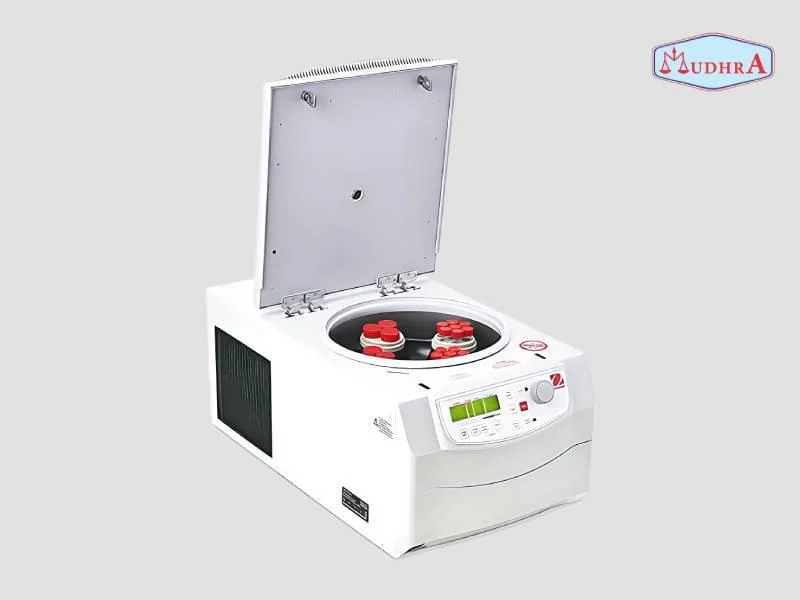
Description
Centrifuges represent essential separation technology for modern laboratories and industrial facilities, utilizing centrifugal force to efficiently separate mixture components by d...
Centrifuges represent essential separation technology for modern laboratories and industrial facilities, utilizing centrifugal force to efficiently separate mixture components by density. These precision instruments operate across a wide speed spectrum from 200 to 14,000 RPM, generating forces up to 21,194 × g to accommodate diverse separation requirements. Available in multiple configurations including refrigerated models that maintain temperatures from 2°C to 40°C, these centrifuges preserve sample integrity during processing. The equipment features adjustable acceleration and deceleration rates to minimize sample disruption, while swing-out and fixed-angle rotors handle container volumes ranging from microtubes (0.2 mL) to large bottles (1,000 mL). This flexibility ensures optimal performance across various applications and sample types.

Multiple industries rely on centrifugation technology for critical separation processes. Medical and clinical laboratories utilize these instruments for blood component separation, plasma preparation, and diagnostic testing. Pharmaceutical companies employ centrifuges in drug development, compound purification, and quality control procedures. Biotechnology firms depend on them for cell culture processing, protein isolation, and DNA sample preparation. Industrial applications include wastewater treatment, chemical manufacturing, and food processing where efficient liquid-solid separation is essential. Research institutions across life sciences, chemistry, and materials science utilize centrifuges as fundamental tools for experimental procedures and sample analysis.

Businesses investing in quality centrifuges gain significant operational advantages through improved process efficiency and reliable performance. These instruments deliver consistent separation results batch after batch, reducing variability in experimental and production outcomes. The robust construction ensures long-term reliability with minimal maintenance requirements, providing excellent return on investment. Customization options allow organizations to select specific rotor configurations, temperature control features, and capacity parameters that match their unique operational needs. The precision engineering and quality manufacturing behind these centrifuges translate to reduced downtime and dependable performance in demanding environments.

Key Features:
- Wide speed range from 200 to 14,000 RPM for diverse applications
- High relative centrifugal force up to 21,194 × g with specialized rotors
- Multiple capacity options from 0.2 mL microtubes to 1,000 mL bottles
- Refrigerated models maintaining 2°C to 40°C for temperature-sensitive samples
- Adjustable acceleration and deceleration rates to protect sample integrity

Benefits:
- Consistent and reliable separation performance across all sample types
- Enhanced sample protection through controlled temperature operation
- Operational flexibility with interchangeable rotor systems
- Reduced processing time compared to gravitational separation methods
- Long-term durability with minimal maintenance requirements
Specifications
| Attribute | Value |
|---|---|
| Speed RangeRelative Centrifugal Force (RCF)CapacityTemperature ControlAcceleration/Deceleration Rates |
| Additional Information | |
|---|---|
| Country of Origin | 106 |
| Customisable | No |
Application
Laboratory centrifuges serve critical functions across multiple industries by efficiently separating mixtures based on density differentials. These precision instruments handle everything from delicate biological samples to industrial compounds, providing consistent results for research, manufacturing, and quality control processes. Their versatility makes them indispensable tools in settings ranging from hospital laboratories to large-scale production facilities.

In medical and pharmaceutical environments, centrifuges ensure sample integrity through controlled temperature operation and adjustable acceleration settings. The availability of various rotor types accommodates diverse container sizes from microtubes to large bottles, while robust construction guarantees long-term reliability. These machines deliver the precision required for sensitive applications where consistent separation is paramount to successful outcomes. Real-world applications:
Real-world applications:
- Blood component separation for medical diagnostics and transfusion medicine
- Cell culture processing in biotechnology and pharmaceutical research
- DNA and protein sample preparation in molecular biology laboratories
- Industrial wastewater treatment and sludge dewatering processes
- Pharmaceutical compound purification and drug development workflows
Trade Details
| Available Stock | In Stock |
| Sample Availability | No |
Payment Terms
| Payment Terms |
|
Company Profile

Mudhra Weighing, Andhra Pradesh Andhra Pradesh, India
Andhra Pradesh, IndiaIndustrial Equipment & Machinery•Manufacturer
Factory Details
Factory SizeBelow 1000 sqm
High Performance Laboratory Centrifuges For Precise Separation
High-performance laboratory centrifuges for precise separation of liquids and solids. Ideal for medical, pharmaceutical, and industrial applications with reliable speed control and temperature management.
Min. Order Quantity: 1
Shipping
Shipping fee and delivery date to be negotiated. Contact supplier now for more details.
Mudhra Weighing
 Andhra Pradesh, India
Andhra Pradesh, IndiaIndustrial Equipment & MachineryManufacturer