IN
IN₹
Apparel & Fashion
Description
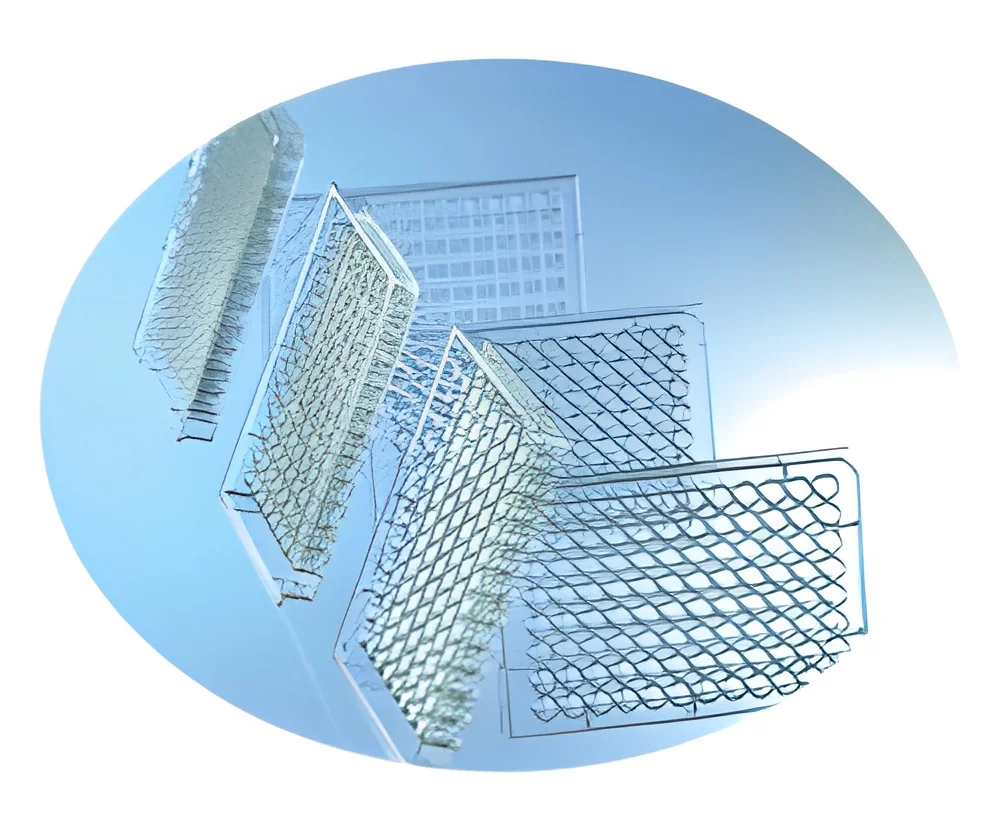
Our 96-well polystyrene cell culture microplates with solid bottom and clear design are precision tools built for demanding laboratory environments. They feature a physical surface treatment that enhances cell adhesion without chemical coatings, promoting natural cell growth and attachment. The chimney well design, combined with raised rims, effectively minimizes the risk of cross-contamination between adjacent wells. Each plate is manufactured from high-clarity polystyrene, providing optimal optical properties for both microscopic examination and absorbance-based plate reading. Individually wrapped in sterile, peel-off packaging with consecutive lot numbering, these plates ensure quality, traceability, and convenience for daily laboratory use. Their stackable design and compatibility with automated systems make them ideal for scalable research operations.

These microplates serve as fundamental consumables across critical industries. In pharmaceutical and biotech sectors, they are ind...
Our 96-well polystyrene cell culture microplates with solid bottom and clear design are precision tools built for demanding laboratory environments. They feature a physical surface treatment that enhances cell adhesion without chemical coatings, promoting natural cell growth and attachment. The chimney well design, combined with raised rims, effectively minimizes the risk of cross-contamination between adjacent wells. Each plate is manufactured from high-clarity polystyrene, providing optimal optical properties for both microscopic examination and absorbance-based plate reading. Individually wrapped in sterile, peel-off packaging with consecutive lot numbering, these plates ensure quality, traceability, and convenience for daily laboratory use. Their stackable design and compatibility with automated systems make them ideal for scalable research operations.

These microplates serve as fundamental consumables across critical industries. In pharmaceutical and biotech sectors, they are indispensable for high-throughput screening during drug discovery, target validation, and lead optimization processes. Academic and government research institutions rely on them for a wide array of cell-based assays, including genomics, proteomics, and basic biological research. Clinical diagnostics and contract research organizations (CROs) utilize these plates for standardized testing protocols, biomarker discovery, and cell line development. Their uniform performance and reliability support reproducible science, which is essential for publications, regulatory submissions, and advancing therapeutic innovations.

The business value delivered by these microplates centers on operational efficiency, data reliability, and risk reduction. Their design minimizes manual handling errors and cross-contamination, leading to more trustworthy and reproducible experimental outcomes. Automation compatibility translates to significant time savings and increased throughput, allowing laboratories to process more samples with consistent quality. The clear material and standardized dimensions ensure compatibility with most plate readers and imagers, protecting investments in existing laboratory equipment. Features like alphanumeric coding and lot traceability streamline sample management and support compliance with quality standards, ultimately reducing operational costs and accelerating research timelines for organizations.

Key Features:
- Physical surface treatment for enhanced cell adhesion without chemical modification.
- Solid-bottom, clear polystyrene construction for superior optical clarity in microscopy and plate reading.
- Chimney well design with raised rims to prevent cross-contamination and spillover.
- Alphanumeric well coding for straightforward sample identification and tracking.
- Individually wrapped in sterile, peel-off packaging with consecutive lot numbering for guaranteed quality.

Benefits:
- Promotes reliable and consistent cell growth, leading to more reproducible assay results.
- Reduces risk of cross-contamination between wells, protecting the integrity of valuable samples.
- Saves time and increases throughput through full compatibility with automated liquid handling systems.
- Ensures excellent optical performance for accurate microscopic analysis and absorbance measurements.
- Provides guaranteed sterility, easy handling, and full traceability with individual packaging and lot coding.
Specifications
| Additional Information | |
|---|---|
| Country of Origin | India |
Application
These 96-well microplates are engineered for high-throughput cell-based assays, supporting both adherent and suspension cultures. Their physical surface treatment promotes superior cell attachment while maintaining full compatibility with automated liquid handling and robotic systems, streamlining workflow in busy laboratories. The standardized format and clear polystyrene construction ensure consistent, reproducible results across various experimental platforms and instruments, making them a dependable choice for demanding research environments.
Widely adopted in pharmaceutical development, biotechnology, and academic research, these plates provide the optical clarity required for precise microscopic analysis and plate reading. Their robust design minimizes evaporation and cross-contamination, which is critical for long-term experiments and sensitive assays. This combination of reliability and performance makes them suitable for a broad spectrum of cell culture applications where data integrity is paramount.
- High-throughput screening (HTS) of drug compounds and libraries in pharmaceutical discovery.
- Cell viability, proliferation, and cytotoxicity testing for toxicology and safety assessments.
- Antibody production, hybridoma screening, and immunoassay development in immunology research.
- Viral infectivity studies, plaque assays, and vaccine development in virology laboratories.
- Stem cell culture, expansion, and differentiation protocols in regenerative medicine studies.
Trade Details
| Available Stock | In Stock |
| Sample Availability | No |
Payment Terms
| Payment Terms |
|
Company Profile
Bio Globus, New Delhi
 New Delhi, India
New Delhi, IndiaDistributor / Wholesaler•Importer / Exporter
Factory Details
Factory SizeBelow 1000 sqm
Annual Production Capacity0
Cell Culture 96 Well Polystyrene Microplates Solid Bottom Clear
Cell Culture 96 Well Polystyrene Microplates Solid Bottom Clear from Pepagora offer reliable, high-throughput cell culture with improved adhesion and automation compatibility for consistent research results.
Min. Order Quantity: 1 unit
Shipping
Shipping fee and delivery date to be negotiated. Contact supplier now for more details.
Bio Globus
 New Delhi, India
New Delhi, IndiaDistributor / Wholesaler