IN
IN₹
Apparel & Fashion
Description
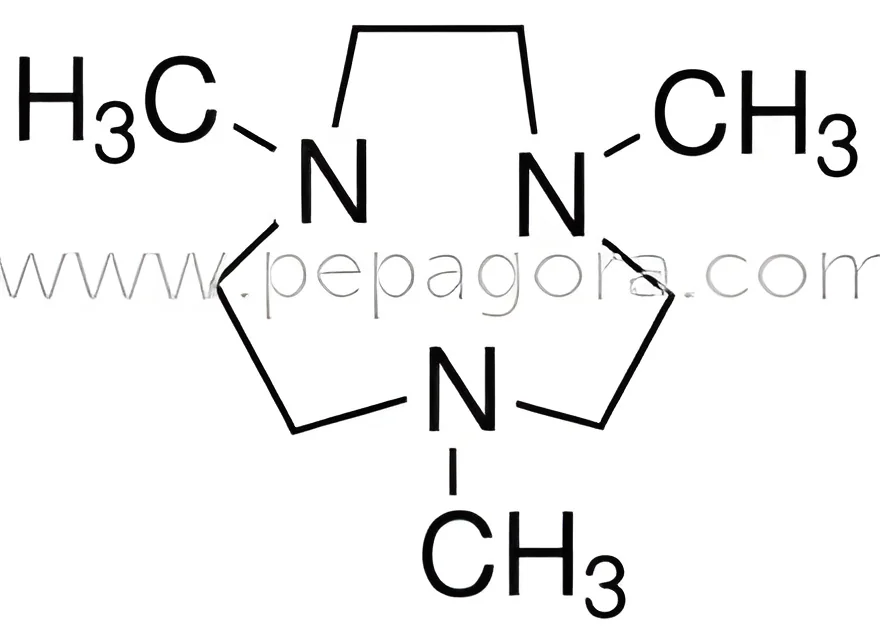
1,4,7 Trimethyl 1,4,7-Triazacyclononane (CAS 96556-05-7) represents a premium macrocyclic triamine ligand distinguished by exceptional chelating capabilities and structural stability. Manufactured to meet rigorous industrial and research requirements, this high-purity compound features three nitrogen donor atoms within a nine-membered ring structure, optimized for forming stable complexes with various metal ions. Produced under controlled conditions to ensure consistency and reliability, it delivers predictable performance in critical processes. The product's molecular design enables precise control over metal center reactivity, making it an indispensable tool for advanced chemical synthesis and catalytic applications where accuracy cannot be compromised.

This specialized compound finds extensive application across multiple industries requiring precision chemistry. In pharmaceutical manufacturing, it serves as a catalyst or intermediate in synthesizing active pharmaceutical ingredient...
1,4,7 Trimethyl 1,4,7-Triazacyclononane (CAS 96556-05-7) represents a premium macrocyclic triamine ligand distinguished by exceptional chelating capabilities and structural stability. Manufactured to meet rigorous industrial and research requirements, this high-purity compound features three nitrogen donor atoms within a nine-membered ring structure, optimized for forming stable complexes with various metal ions. Produced under controlled conditions to ensure consistency and reliability, it delivers predictable performance in critical processes. The product's molecular design enables precise control over metal center reactivity, making it an indispensable tool for advanced chemical synthesis and catalytic applications where accuracy cannot be compromised.

This specialized compound finds extensive application across multiple industries requiring precision chemistry. In pharmaceutical manufacturing, it serves as a catalyst or intermediate in synthesizing active pharmaceutical ingredients and complex organic molecules. Agrochemical producers utilize it to develop advanced pesticides and herbicides by enhancing reaction selectivity and yield. The materials science sector employs it for creating metal-organic frameworks, polymer production catalysts, and nanomaterials with specific properties. Research institutions and industrial laboratories rely on it for exploring new catalytic systems and advancing coordination chemistry knowledge, while specialty chemical manufacturers value its precision in fine chemical production processes.

Businesses achieve significant operational advantages through this product's proven reliability, which minimizes process variability and ensures consistent manufacturing outcomes. The compound's high purity reduces impurities that could compromise downstream processes, enhancing overall process economics and product quality. Its role in improving catalytic efficiency translates to substantial cost savings and increased productivity across applications. Manufacturers benefit from scalable production capabilities and technical support that addresses specific application challenges. The product's stability under various chemical conditions ensures broad applicability while maintaining performance integrity, making it a trusted choice for demanding industrial processes worldwide.

Key Features:
- High-purity macrocyclic triamine ligand with CAS number 96556-05-7
- Excellent chelating properties for forming stable metal complexes
- Consistent batch-to-batch reliability through strict quality control
- Stable under various chemical conditions for broad applicability
- Optimized molecular structure with three nitrogen donor atoms

Benefits:
- Enhances reaction efficiency and selectivity in catalytic processes
- Improves process economics through consistent performance and purity
- Enables development of advanced materials and chemical compounds
- Supports reproducible results in both research and production environments
- Provides reliable performance in demanding industrial applications
Specifications
| Additional Information | |
|---|---|
| Country of Origin | India |
Application
1,4,7 Trimethyl 1,4,7-Triazacyclononane serves as a specialized macrocyclic ligand essential in coordination chemistry and catalytic processes. Its strong chelating properties enable formation of stable complexes with transition metals, enhancing reaction efficiency and selectivity across various industrial applications. The compound's structural rigidity and ability to modify metal center reactivity make it invaluable for advanced chemical synthesis where precision molecular architecture is required. Industries depend on its consistent performance for reproducible results in both research and production environments.
This chemical compound plays critical roles in pharmaceutical manufacturing, agrochemical production, and materials science development. It functions as a precursor or catalyst in reactions demanding high specificity and optimal yield. Research laboratories utilize it extensively for developing new catalytic systems and studying metal-ligand interactions. Its stability under diverse processing conditions makes it suitable for demanding industrial applications. Companies select this product for its proven effectiveness in complex syntheses and reliable performance in regulated industries.
- Catalyst in polymerization reactions for producing high-performance plastics and polymers
- Key ligand in pharmaceutical synthesis for creating complex drug molecules and intermediates
- Used in agrochemical production to develop efficient pesticides and herbicides
- Essential in materials science for designing metal-organic frameworks and nanomaterials
- Employed in research laboratories for studying catalytic mechanisms and chemical processes
Trade Details
| Available Stock | In Stock |
| Sample Availability | No |
Payment Terms
| Payment Terms |
|
Company Profile
Yash Rasayan & Chemicals, Gujarat
 Gujarat, India
Gujarat, IndiaManufacturer•Distributor / Wholesaler•Importer / Exporter
Factory Details
Factory SizeBelow 1000 sqm
Annual Production Capacity0
High Purity 1,4,7 Trimethyl 1,4,7 Triazacyclononane CAS 96556 05 7
High Purity 1,4,7 Trimethyl 1,4,7 Triazacyclononane CAS 96556-05-7 is a macrocyclic ligand for catalysts, pharmaceuticals, and research applications with reliable quality from trusted manufacturer.
Min. Order Quantity: 1 unit
Shipping
Shipping fee and delivery date to be negotiated. Contact supplier now for more details.
Yash Rasayan & Chemicals
 Gujarat, India
Gujarat, IndiaManufacturer