
 IN
INundefined
Similar Products


Description
The Tyre Coupling is an engineered flexible shaft coupling designed for reliable power transmission in demanding industrial environments. It consists of two precision-machined meta...
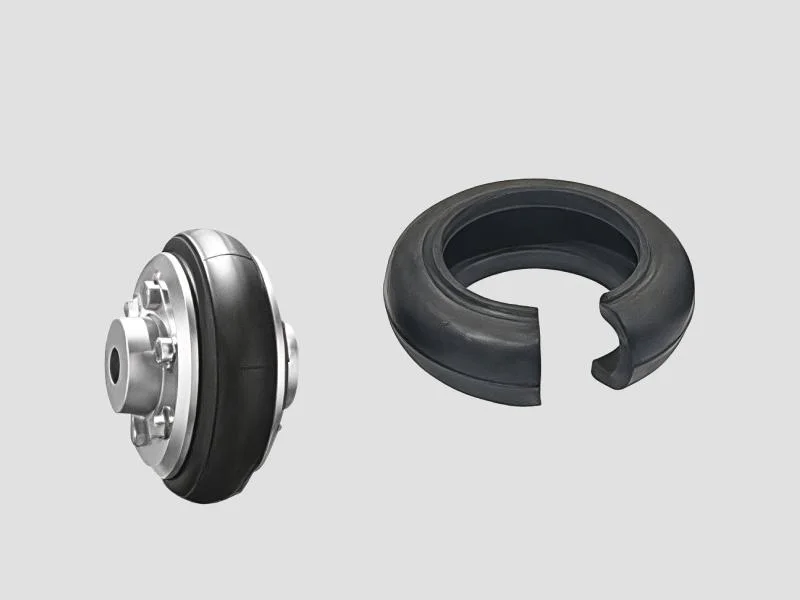
The Tyre Coupling is an engineered flexible shaft coupling designed for reliable power transmission in demanding industrial environments. It consists of two precision-machined metal hubs connected by a durable, elastic rubber tyre element. This unique construction allows the coupling to perform its core functions: transmitting rotational torque from a driving shaft to a driven shaft while actively absorbing shock loads, dampening harmful vibrations, and accommodating angular, parallel, and axial shaft misalignments. The rubber tyre acts as a dynamic cushion, isolating connected equipment from sudden impacts and torque spikes. Its split design facilitates straightforward installation and replacement without the need to disassemble or reposition the hubs, significantly reducing downtime. Furthermore, the coupling operates without lubrication, eliminating a common maintenance point and associated costs, making it a simple and robust solution for continuous operation.

This coupling finds extensive application across numerous heavy-duty and process industries due to its protective capabilities and reliability. In the water and wastewater treatment sector, it is indispensable for connecting motors to centrifugal and submersible pumps, safeguarding them from the hydraulic shocks common in pumping systems. Chemical and pharmaceutical plants utilize these couplings on mixers, agitators, and compressor drives where process integrity requires smooth operation. Industries like cement, mining, and sugar rely on them for conveyor drives, crushers, and mills where misalignment and heavy shock loads are prevalent. Similarly, in manufacturing, paper production, and power generation, tyre couplings are the preferred choice for fans, blowers, and general machinery drives, ensuring long-term protection for expensive motors and gearboxes from the damaging effects of vibration and misalignment.

The business value of the Tyre Coupling lies in its direct contribution to reduced operational costs and increased equipment lifespan. By effectively isolating vibrations and shocks, it prevents the cascading failures that can damage motor bearings, gear teeth, and shaft seals, leading to fewer breakdowns and lower repair expenses. Its ability to compensate for misalignment reduces the need for perfect and permanent shaft alignment during installation and over time, saving on precision labor costs. The non-lubricated, low-maintenance design translates into less scheduled downtime for servicing and eliminates lubricant purchase and disposal costs. This reliability ensures consistent production uptime, protects capital investment in primary equipment, and delivers a strong return on investment through sustained, trouble-free operation.

Key Features:
- Flexible rubber tyre element constructed from high-grade natural rubber, EPDM, or Neoprene for superior shock and vibration absorption.
- Two-piece split tyre design enabling easy installation and replacement without moving the connected hubs or shafts.
- Capable of accommodating angular, parallel, and axial shaft misalignments to protect connected equipment.
- Requires no lubrication for operation, simplifying maintenance and reducing long-term operational costs.
- Robust cast iron or steel hubs with precision-machined bores and keyways for secure torque transmission.

Benefits:
- Extends the service life of motors, pumps, gearboxes, and bearings by isolating them from damaging shock loads and vibrations.
- Reduces overall maintenance requirements and costs due to a non-lubricated design and minimal wearing parts.
- Lowers operational noise levels in machinery, contributing to a better and safer working environment.
- Ensures reliable power transmission and smooth operation in applications with frequent start-stop cycles or variable torque.
- Provides a cost-effective and durable coupling solution suitable for a wide range of industrial machinery and harsh conditions.
Specifications
| productDetailPage.specification.attribute | productDetailPage.specification.value |
|---|---|
| Product NameCategoryCoupling TypeFunctionConstructionTyre Material |
| Additional Information | |
|---|---|
| Country of Origin | India |
| Customisable | No |
Application
Tyre Couplings serve as a critical link in power transmission systems, connecting driving and driven shafts while effectively managing operational stresses. Their primary function is to transmit torque while simultaneously absorbing shock loads, dampening vibrations, and compensating for minor shaft misalignments. This dual action is essential for maintaining system integrity and preventing premature wear on connected components.

The coupling's robust design makes it suitable for connecting electric motors to a wide array of industrial equipment. It is commonly installed between motors and centrifugal pumps, blowers, compressors, mixers, screw conveyors, fans, and gearboxes. The flexible tyre element is particularly effective in applications with frequent start-stop cycles, variable torque loads, or where perfect shaft alignment is difficult to maintain, ensuring smooth and reliable power transfer.
- Connecting electric motors to centrifugal and slurry pumps in water treatment and chemical processing plants to protect pump bearings from shock loads.
- Linking motors to blowers and compressors in HVAC systems and industrial air handling units to dampen vibration and reduce operational noise.
- Installing between drive motors and screw conveyors or bucket elevators in cement, mining, and agricultural processing facilities to handle misalignment and torque fluctuations.
- Coupling motors to mixers and agitators in chemical, pharmaceutical, and food processing industries where smooth torque transmission is critical for product consistency.
- Protecting gearboxes and driven machinery in paper mills, sugar plants, and general manufacturing from the damaging effects of vibration and minor shaft misalignment.
Trade Details
| Available Stock | In stock |
| Sample Availability | No |
Payment Terms
| Payment Terms |
|
Company Profile

PC Pumps & Systems, Tamil Nadu Tamil Nadu, India
Tamil Nadu, IndiaIndustrial Equipment & Machinery•Manufacturer
Factory Details
Factory SizeBelow 1000 sqm
Industrial Tyre Coupling For Motors Pumps Blowers Conveyors
Tyre Coupling is a flexible shaft coupling with a rubber tyre element that absorbs shock, vibration, and misalignment. It is easy to install, requires low maintenance, and protects motors and gearboxes in pumps, blowers, conveyors, and industrial machinery.
Min. Order Quantity: 1
Shipping
Shipping fee and delivery date to be negotiated. Contact supplier now for more details.
PC Pumps & Systems
 Tamil Nadu, India
Tamil Nadu, IndiaIndustrial Equipment & MachineryManufacturer