IN
IN₹
Apparel & Fashion
Description
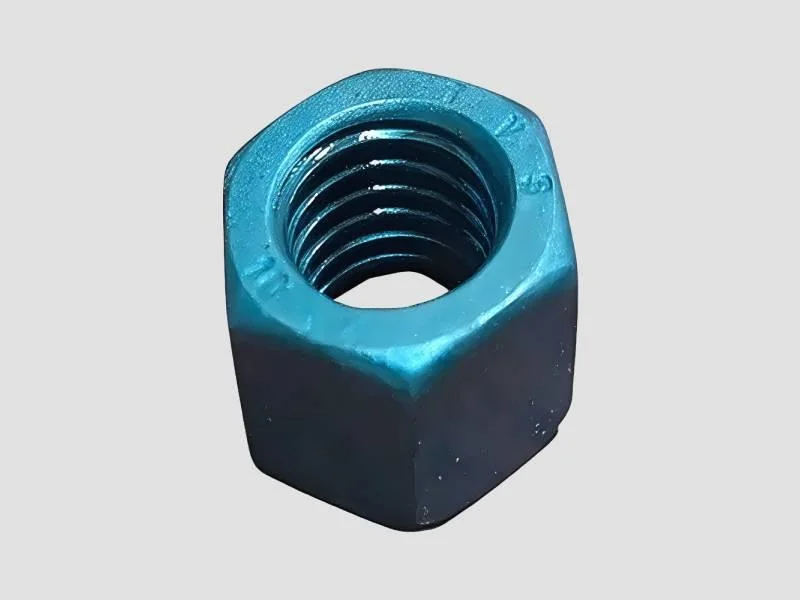
The TVS Hex Nut is a precision-engineered industrial fastener designed to deliver secure, durable, and reliable connections in the most demanding mechanical and structural applications. Its hexagonal profile allows for easy grip with standard wrenches, ensuring efficient tightening and uniform torque distribution for a consistent clamp load. Available in a comprehensive range of material grades—including 8, 10, 12, and ASTM A194 Grade 2H—and diameters from M5 to M48 (metric) and 1/4" to 2" (inch), this nut meets diverse technical requirements. With a tensile strength of up to 1040 MPa and a hardness range of 25–39 HRC, it is built to withstand high stress, vibration, and fatigue. Manufactured to comply with international standards such as IS 1364, DIN 934, ISO 4032, and ASTM A194, the TVS Hex Nut guarantees dimensional accuracy, thread consistency, and a precise fit, forming the backbone of safe and stable assemblies.

These hex nuts are indispensable across heavy industries where join...
The TVS Hex Nut is a precision-engineered industrial fastener designed to deliver secure, durable, and reliable connections in the most demanding mechanical and structural applications. Its hexagonal profile allows for easy grip with standard wrenches, ensuring efficient tightening and uniform torque distribution for a consistent clamp load. Available in a comprehensive range of material grades—including 8, 10, 12, and ASTM A194 Grade 2H—and diameters from M5 to M48 (metric) and 1/4" to 2" (inch), this nut meets diverse technical requirements. With a tensile strength of up to 1040 MPa and a hardness range of 25–39 HRC, it is built to withstand high stress, vibration, and fatigue. Manufactured to comply with international standards such as IS 1364, DIN 934, ISO 4032, and ASTM A194, the TVS Hex Nut guarantees dimensional accuracy, thread consistency, and a precise fit, forming the backbone of safe and stable assemblies.

These hex nuts are indispensable across heavy industries where joint integrity is critical. In construction and infrastructure, they are used to connect structural steel elements in buildings, bridges, and transmission towers, providing the high load-bearing capacity needed for safety. The automotive and transportation sector relies on them for assembling engines, chassis, and suspension systems where vibration resistance is paramount. Machinery manufacturers integrate them into frames, presses, and conveyor systems for robust, long-lasting performance. The energy sector, including power plants and renewable energy installations, utilizes these nuts in turbines and high-pressure equipment due to their ability to perform under extreme temperatures and pressures. Similarly, the oil, gas, and marine industries value them for applications in corrosive environments, often specifying coated versions for enhanced durability.

For businesses, the value of the TVS Hex Nut lies in its proven reliability and suitability, which directly translate into reduced maintenance costs, minimized downtime, and enhanced operational safety. By specifying a fastener with clear grade specifications and certified performance, engineers and procurement managers mitigate the risk of joint failure, which can lead to catastrophic equipment damage and safety incidents. The nut's design for both manual and tool-driven operation offers installation flexibility, improving efficiency on the assembly line or in the field. Its compliance with global standards ensures interchangeability and simplifies the sourcing process for projects with international specifications. This combination of high performance, standardization, and trustworthiness makes it a prudent, value-driven choice for serious industrial buyers who prioritize long-term asset integrity over initial cost savings.

Key Features:
- Manufactured in high-strength material grades including 8, 10, 12, and ASTM A194 Grade 2H for varied application demands.
- Offers a high tensile strength of up to 1040 MPa and a hardness of 25–39 HRC for durability under stress.
- Available in a wide diameter range from M5 to M48 (Metric) and 1/4" to 2" (Inch) for comprehensive compatibility.
- Designed for both manual and tool-driven operation, providing installation versatility.
- Complies with international standards including IS 1364, DIN 934, ISO 4032, and ASTM A194 for guaranteed quality and dimensional accuracy.

Benefits:
- Ensures secure, vibration-resistant connections that enhance the safety and longevity of mechanical assemblies.
- Reduces the risk of downtime and costly repairs by providing reliable, high-performance fastening solutions.
- Simplifies procurement and inventory management with availability in standard metric and imperial sizes.
- Delivers consistent torque distribution and clamp load for uniform joint integrity across applications.
- Built to withstand harsh industrial environments, contributing to lower lifecycle costs and improved asset reliability.
Specifications
| Key Attributes | |
|---|---|
| Product Type | Industrial Fastener / Nut |
| Brand | TVS |
| Category | Nuts & Bolts / Fasteners |
| Operation Type | Manual / Tool Driven |
| Material Grade | 8 / 10 / 12 / ASTM A194 Grade 2H |
| Tensile Strength | Up to 1040 MPa (Depending on Grade) |
| Hardness | 25–39 HRC |
| Diameter Range | M5 to M48 (Metric) / ¼†to 2†(Inch) |
| Additional Information | |
|---|---|
| Country of Origin | India |
Application
TVS Hex Nuts are engineered for demanding mechanical and structural applications where secure, vibration-resistant fastening is non-negotiable. Their high tensile strength, ranging up to 1040 MPa depending on grade, and hardness of 25–39 HRC make them suitable for assemblies subjected to significant stress, dynamic loads, and harsh environmental conditions. The availability in metric (M5 to M48) and imperial (1/4" to 2") diameters ensures compatibility with a vast range of bolts and studs across global engineering standards.
These nuts are designed for both manual and tool-driven installation, providing versatility on the shop floor or at the job site. Manufactured from robust material grades including 8, 10, 12, and ASTM A194 Grade 2H, they deliver consistent performance in critical joints. This reliability is essential for industries where fastener failure can lead to operational downtime, safety risks, and costly repairs, making them a trusted component in heavy-duty engineering and manufacturing.
- Securing structural steel frameworks, bridges, and heavy building components in construction and infrastructure projects.
- Fastening engine blocks, chassis components, and suspension systems in automotive and heavy vehicle manufacturing.
- Assembling machine frames, gearboxes, industrial conveyors, and press tools in machinery and equipment production.
- Installing and maintaining turbines, boilers, and high-pressure piping in power generation and energy plants.
- Providing reliable connections for pipelines, offshore platforms, and processing equipment in the oil, gas, and marine sectors.
Trade Details
| Available Stock | In Stock |
| Sample Availability | No |
Payment Terms
| Payment Terms |
|
Company Profile

Chennai Enterprises, Tamil Nadu
 Tamil Nadu, India
Tamil Nadu, India16 yrs
Manufacturer•Retailer
Turn Over
₹25 Lakhs – ₹1 Crore
Factory Details
Factory SizeBelow 1000 sqm
TVS High Strength Hex Nuts M5 M48 Grade 8 12 ASTM A194 2H
TVS Hex Nuts are high-strength industrial fasteners for secure mechanical and structural connections, available in grades 8, 10, 12, and ASTM A194 2H with diameters from M5 to M48, offering up to 1040 MPa tensile strength.
Min. Order Quantity: 1
Shipping
Shipping fee and delivery date to be negotiated. Contact supplier now for more details.
Chennai Enterprises Tamil Nadu, India
Tamil Nadu, IndiaManufacturer