
 IN
INundefined
Similar Products
Description
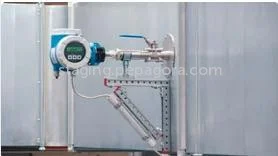
The Thermal Mass Flowmeter represents advanced gas measurement technology designed for industrial applications requiring precise, reliable flow data. Utilizing the thermal dispersi...
The Thermal Mass Flowmeter represents advanced gas measurement technology designed for industrial applications requiring precise, reliable flow data. Utilizing the thermal dispersion principle, this instrument measures mass flow directly without the need for separate pressure or temperature compensation systems. This innovative approach eliminates multiple sensor requirements while delivering accurate readings across a wide measurement range. The flowmeter's robust construction ensures long-term stability and minimal maintenance, making it an ideal solution for continuous monitoring applications. With digital communication options including HART, Modbus RS485, and PROFIBUS PA, integration into existing industrial networks is straightforward and efficient.

Across industrial sectors, thermal mass flowmeters provide essential measurement capabilities for various gas applications. In manufacturing facilities, they monitor compressed air systems for energy management and leak detection. The oil and gas industry relies on them for natural gas flow measurement and allocation. Chemical processing plants utilize these instruments for precise process gas monitoring, while wastewater treatment facilities employ them for biogas measurement. HVAC systems benefit from airflow balancing capabilities, and energy producers use them for combustion air monitoring. This widespread industry adoption demonstrates the versatility and reliability of thermal mass flow measurement technology.

The business value of thermal mass flowmeters extends beyond accurate measurement to deliver tangible operational benefits. Their direct mass flow measurement capability reduces installation and maintenance costs by eliminating additional sensors and compensation systems. High repeatability ensures consistent process control, leading to improved product quality and reduced material waste. Digital communication features enable remote monitoring and data integration for comprehensive energy management programs. The instruments' reliability minimizes downtime and maintenance requirements, while their customization options allow for tailored solutions specific to each application's requirements.

Key Features:
- Direct mass flow measurement without pressure or temperature compensation
- Wide turndown ratio for broad measurement range capability
- Digital communication protocols including HART, Modbus, and PROFIBUS
- Robust construction for harsh industrial environments
- Minimal maintenance design with no moving parts

Benefits:
- Reduced installation and operational costs through simplified design
- Improved process control and product quality through high repeatability
- Enhanced energy management and cost allocation capabilities
- Lower maintenance requirements and reduced downtime
- Customizable solutions for specific application requirements
Specifications
| Additional Information | |
|---|---|
| Country of Origin | 106 |
| Customisable | No |
Application
Thermal mass flowmeters serve critical roles in industrial gas monitoring and energy management systems. These instruments provide direct mass flow measurement for various gases including compressed air, natural gas, nitrogen, and process gases without requiring additional pressure or temperature compensation. Their robust design ensures accurate readings in demanding industrial environments where reliable gas flow data is essential for operational efficiency and cost control.

These flowmeters find extensive application across multiple industries including manufacturing, oil and gas, chemical processing, and energy production facilities. The technology enables precise monitoring of gas consumption, helping businesses optimize their energy usage, reduce waste, and maintain consistent process parameters. With digital communication capabilities, these devices integrate seamlessly into modern industrial control systems for comprehensive gas management solutions. Real-world applications:
Real-world applications:
- Compressed air system monitoring and leak detection in manufacturing plants
- Natural gas consumption tracking for energy management and cost allocation
- Process gas flow measurement in chemical and pharmaceutical production
- Biogas and landfill gas monitoring for renewable energy projects
- HVAC system airflow balancing and burner control optimization
Trade Details
| Available Stock | In stock |
| Sample Availability | No |
Payment Terms
| Payment Terms |
|
Shipping & Logistics
| Shipping Internationally | No | |
| Methods | -- | |
| IncoTerms | -- | |
| Port of Dispatch | Chennai | |
| Packaging Type | -- | |
| Units per Package | -- | |
| Barcode / HSN / GTIN / UPC | -- | |
| Dispatch Lead time | -- |
Company Profile

ENDRESS HAUSER (I) PVT. LTD., Maharashtra Maharashtra, India
Maharashtra, IndiaIndustrial Equipment & Machinery•ManufacturerTrading CompanyDistributor / Wholesaler
Factory Details
Factory SizeBelow 1000 sqm
Industrial Gas Flow Measurement Thermal Mass Flowmeter For Energy Monitoring
Thermal Mass Flowmeter delivers precise gas and air flow measurement without pressure or temperature compensation. Ideal for industrial energy monitoring and process gas applications with reliable performance.
Min. Order Quantity: 1 Unit
Shipping
Shipping fee and delivery date to be negotiated. Contact supplier now for more details.
ENDRESS HAUSER (I) PVT. LTD.
 Maharashtra, India
Maharashtra, IndiaIndustrial Equipment & MachineryManufacturer