IN
INundefined
Similar Products
Description
Our precision temperature transmitter represents the gold standard in industrial temperature measurement and signal conversion technology. Engineered for reliability and accuracy, ...
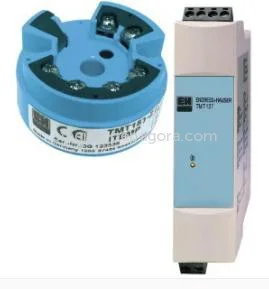
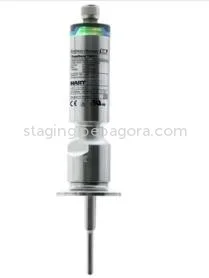
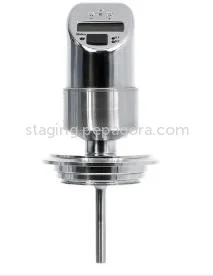
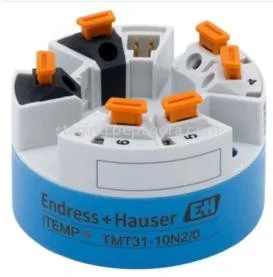
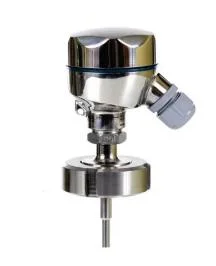
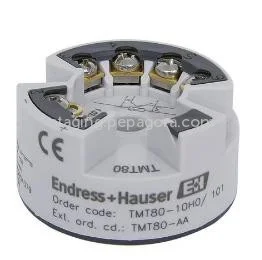
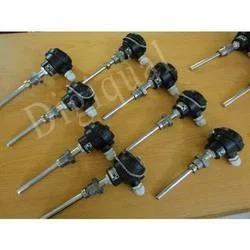
Our precision temperature transmitter represents the gold standard in industrial temperature measurement and signal conversion technology. Engineered for reliability and accuracy, this compact device seamlessly converts signals from RTD or thermocouple sensors into industry-standard 4-20mA outputs that integrate effortlessly with modern control systems. Available in head-mount, rail-mount, and field-mount configurations, it supports various sensor types including Pt100, Pt1000, and multiple thermocouple varieties (J, K, T, E, N). Advanced features include HART, PROFIBUS, and FOUNDATION Fieldbus communication protocols, temperature linearization, sensor drift detection, and galvanic isolation for enhanced signal integrity in electrically noisy environments. This temperature transmitter serves critical functions across diverse industrial sectors including manufacturing, energy, chemical processing, and building management. In manufacturing, it ensures precise temperature control in production processes and quality assurance. Energy sector applications include monitoring critical equipment in power plants and substations. Chemical and petrochemical industries rely on these transmitters for reactor temperature control and safety systems, while HVAC applications benefit from accurate building climate control and energy efficiency optimization. The business value of our temperature transmitter extends beyond mere temperature measurement to delivering operational reliability and cost savings. Its robust construction and advanced features minimize downtime through early fault detection and precise monitoring. The standardization of 4-20mA output simplifies integration with existing control systems, reducing installation time and costs. Customization options allow for tailored solutions that match specific application requirements, while the device's longevity and minimal maintenance needs contribute to lower total cost of ownership and enhanced operational efficiency.

Key Features:


Benefits:
Specifications
| Additional Information | |
|---|---|
| Country of Origin | 106 |
| Customisable | No |
Application
Our industrial temperature transmitter serves as the critical link between temperature sensors and control systems across numerous applications. It reliably converts RTD and thermocouple signals into standardized 4-20mA outputs that modern automation systems can easily interpret and act upon, ensuring precise temperature monitoring where it matters most. This versatile instrument finds applications across multiple sectors where temperature control directly impacts product quality, safety, and operational efficien

cy. From manufacturing facilities to energy plants, these transmitters provide the accurate data needed for optimal process control and equipment protection in demanding environments. Real-world applications: Temperature monitoring in industrial ovens and heat treatment processes Critical temperature control in chemical processing and reactor systems HVAC system monitoring for commercial and industrial buildings Power generation equipment temperature supervision Food and beverage processing temperature regulation
Real-world applications:
Trade Details
| Available Stock | In stock |
| Sample Availability | No |
Payment Terms
| Payment Terms |
|
Shipping & Logistics
| Shipping Internationally | No | |
| Methods | -- | |
| IncoTerms | -- | |
| Port of Dispatch | Coimbatore, India | |
| Packaging Type | -- | |
| Units per Package | -- | |
| Barcode / HSN / GTIN / UPC | -- | |
| Dispatch Lead time | -- |
Company Profile

ENDRESS HAUSER (I) PVT. LTD., Maharashtra Maharashtra, India
Maharashtra, IndiaIndustrial Equipment & Machinery•ManufacturerTrading CompanyDistributor / Wholesaler
Factory Details
Factory SizeBelow 1000 sqm
Industrial Temperature Transmitter RTD Thermocouple 4 20mA Output
Accurate industrial temperature transmitter converts RTD or thermocouple signals to 4-20mA output. Ideal for process control, automation, and reliable temperature monitoring across multiple industries.
Min. Order Quantity: 10 Unit
Shipping
Shipping fee and delivery date to be negotiated. Contact supplier now for more details.
ENDRESS HAUSER (I) PVT. LTD.
 Maharashtra, India
Maharashtra, IndiaIndustrial Equipment & MachineryManufacturer