IN
IN₹
Apparel & Fashion
Description
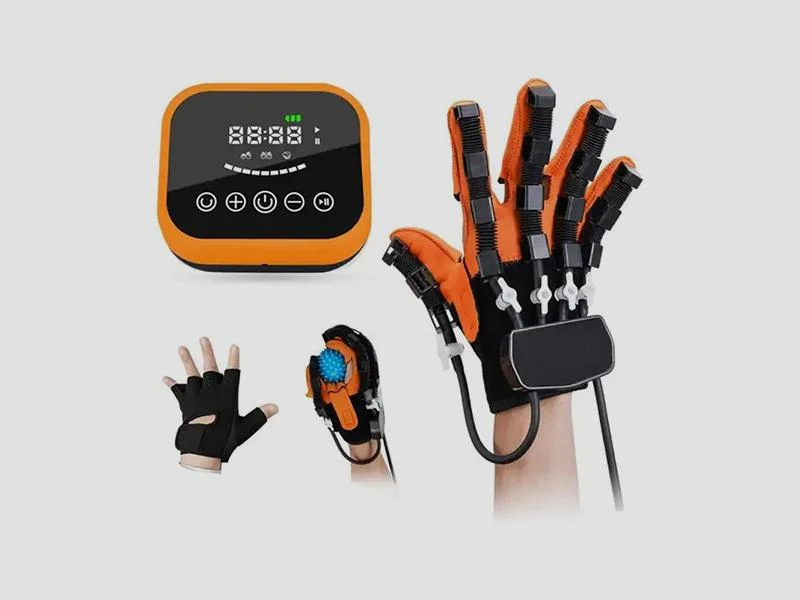
The Robotic Hand Exercise Device is a precision rehabilitation tool designed to assist patients in recovering hand and finger function. It delivers controlled, repetitive motion therapy with adjustable resistance levels and multiple programmable modes, catering to individual therapeutic needs. Built with a focus on patient safety and clinical efficacy, it features a user-friendly touchscreen interface, durable construction, and operates within a wide range of environmental conditions. Its compact design and reliable performance make it a practical addition to any therapy space, supporting consistent treatment protocols essential for motor recovery after injury, surgery, or neurological events.

This device is widely utilized in hospitals, outpatient rehabilitation clinics, physiotherapy centers, and long-term care facilities. It serves patients undergoing recovery from strokes, hand trauma, orthopedic surgeries, and chronic neurological conditions. Therapists value its ability to deliv...
The Robotic Hand Exercise Device is a precision rehabilitation tool designed to assist patients in recovering hand and finger function. It delivers controlled, repetitive motion therapy with adjustable resistance levels and multiple programmable modes, catering to individual therapeutic needs. Built with a focus on patient safety and clinical efficacy, it features a user-friendly touchscreen interface, durable construction, and operates within a wide range of environmental conditions. Its compact design and reliable performance make it a practical addition to any therapy space, supporting consistent treatment protocols essential for motor recovery after injury, surgery, or neurological events.

This device is widely utilized in hospitals, outpatient rehabilitation clinics, physiotherapy centers, and long-term care facilities. It serves patients undergoing recovery from strokes, hand trauma, orthopedic surgeries, and chronic neurological conditions. Therapists value its ability to deliver standardized, measurable therapy, freeing them to focus on patient assessment and manual techniques while the device handles repetitive exercise routines. Its application spans acute recovery phases to long-term maintenance therapy, making it a versatile asset in multidisciplinary rehabilitation teams.

For healthcare providers, this robotic exercise device represents a significant value proposition through enhanced treatment efficiency and improved patient outcomes. Its reliability is ensured by robust engineering, adherence to medical device standards, and a design that withstands frequent clinical use. The device differentiates itself through its combination of precise force control, a range of motion matching natural hand kinematics, and an intuitive interface that reduces staff training time. Investing in this technology supports a clinic's reputation for advanced, evidence-based care, potentially increasing patient throughput and satisfaction by offering a modern, engaging approach to hand rehabilitation.

Key Features:
- Offers 3 to 5 degrees of freedom per finger for natural, multi-joint movement patterns during therapy.
- Provides adjustable force output from 5 to 20 Newtons per finger, allowing tailored resistance for different recovery stages.
- Features a programmable touchscreen interface (5 to 10 inches) with 3 to 10 preset therapy modes for varied treatment protocols.
- Includes configurable session parameters: speed (0.5 to 2 Hz), repetitions (1 to 100 per session), and duration (5 to 60 minutes).
- Designed for clinical durability with a compact footprint (300 x 200 x 150 mm), wide power supply compatibility (100-240V AC), and 1-3 hour battery backup.

Benefits:
- Accelerates motor recovery by enabling high-repetition, task-specific practice that is difficult to achieve manually.
- Allows therapists to standardize treatment and objectively measure patient progress through programmable settings.
- Reduces therapist fatigue by automating repetitive exercise delivery, allowing focus on complex patient needs.
- Enhances patient engagement and adherence with interactive feedback and controlled, pain-free movement.
- Provides reliable, clinic-ready operation with robust construction and tolerance for typical clinical environments (10-40°C, 10-90% RH).
Specifications
| Key Attributes | |
|---|---|
| Degrees of Freedom | 3 – 5 Per Finger |
| Range of Motion | 0 – 90° Per Joint |
| Force Output / Assistance Level | 5 – 20 N Per Finger |
| Speed / Motion Rate | 0.5 – 2 Hz |
| Repetition Range | 1 – 100 Repetitions Per Session |
| Session Duration | 5 – 60 Minutes |
| Device Weight | 2 – 10 kg |
| Device Dimensions (L × W × H) | 300 × 200 × 150 mm |
| Power Supply | 100 – 240 V AC / 50 – 60 Hz |
| Battery Backup | 1 – 3 Hours |
| Control Interface | Touchscreen 5 – 10 Inches |
| Number of Therapy Programs | 3 – 10 |
| Operating Temperature | 10 – 40 °C |
| Humidity Range | 10 – 90% RH |
| Additional Information | |
|---|---|
| Country of Origin | India |
Application
This robotic hand exercise device is engineered for clinical rehabilitation settings, providing structured therapy for patients recovering from hand injuries, surgeries, or neurological impairments. Its programmable modes and adjustable resistance allow therapists to create personalized treatment plans that target specific recovery goals, from regaining basic grip strength to improving fine motor control and dexterity.
The device supports consistent, repetitive motion exercises essential for neuroplasticity and motor relearning. It is suitable for various patient populations, including those recovering from stroke, traumatic hand injuries, arthritis, or post-surgical procedures. The intuitive touchscreen interface and range of pre-set programs make it easy for both clinicians and patients to use, ensuring therapy sessions are productive and trackable over time.
- Post-stroke rehabilitation to regain hand function, grip strength, and coordination through guided, repetitive exercises.
- Recovery from hand trauma or orthopedic surgeries, such as tendon repairs or fractures, to restore range of motion and prevent stiffness.
- Management of neurological conditions like Parkinson's or multiple sclerosis to maintain hand mobility and slow functional decline.
- Arthritis therapy to improve joint flexibility, reduce pain, and enhance daily living activities through low-impact motion.
- Sports injury rehabilitation for athletes recovering from hand or wrist injuries to safely rebuild strength and return to sport.
Trade Details
| Available Stock | In Stock |
| Sample Availability | No |
Payment Terms
| Payment Terms |
|
Company Profile

Sterling Healthcare, Tamil Nadu
 Tamil Nadu, India
Tamil Nadu, India14 yrs
Trading Company•Distributor / Wholesaler
Turn Over
₹5 Crore – ₹10 Crore
Factory Details
Factory Size1000-5000 sqm
Robotic Hand Exercise Device For Rehabilitation Therapy With Adjustable Resistance
Robotic hand exercise device for rehabilitation therapy offers adjustable resistance, programmable modes, and reliable operation for hospitals, clinics, and physiotherapy centers to support motor recovery.
Min. Order Quantity: 1 piece
Shipping
Shipping fee and delivery date to be negotiated. Contact supplier now for more details.
Sterling Healthcare Tamil Nadu, India
Tamil Nadu, IndiaTrading Company