IN
IN₹
Apparel & Fashion
Description
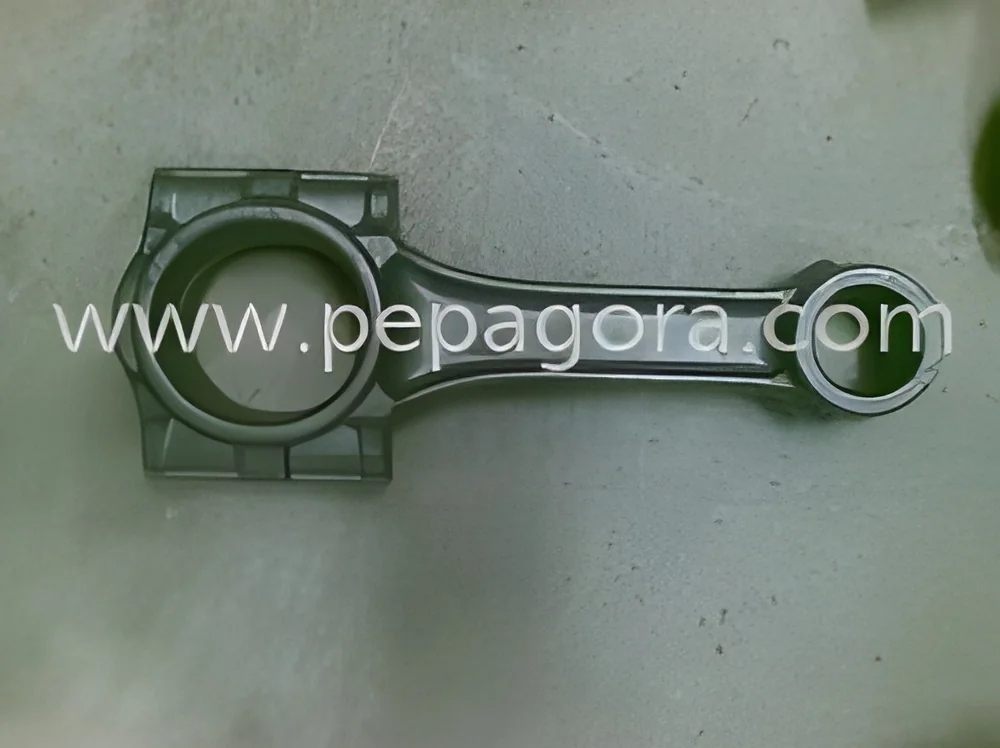
Industrial Forged Crank Shafts represent the pinnacle of engine component engineering, designed for applications where standard parts fall short. Manufactured through a controlled forging process that compresses and shapes high-grade alloy steel under tremendous pressure, these crank shafts develop a continuous grain flow that mirrors the component's contours. This fundamental manufacturing difference grants them superior mechanical properties—including higher tensile strength, better fatigue resistance, and greater impact toughness—compared to cast or machined alternatives. The result is a component built to endure the extreme cyclical loads, high torque, and punishing environments found in professional and industrial settings, offering a definitive upgrade in reliability and service life.

These crank shafts are deployed across a spectrum of heavy-duty industries. In the automotive sector, they are essential for performance vehicles, commercial fleets, and racing engines where high R...
Industrial Forged Crank Shafts represent the pinnacle of engine component engineering, designed for applications where standard parts fall short. Manufactured through a controlled forging process that compresses and shapes high-grade alloy steel under tremendous pressure, these crank shafts develop a continuous grain flow that mirrors the component's contours. This fundamental manufacturing difference grants them superior mechanical properties—including higher tensile strength, better fatigue resistance, and greater impact toughness—compared to cast or machined alternatives. The result is a component built to endure the extreme cyclical loads, high torque, and punishing environments found in professional and industrial settings, offering a definitive upgrade in reliability and service life.

These crank shafts are deployed across a spectrum of heavy-duty industries. In the automotive sector, they are essential for performance vehicles, commercial fleets, and racing engines where high RPM and power density are critical. The marine industry relies on their corrosion-resistant properties and ability to manage constant, heavy loads in propulsion and auxiliary ship engines. For heavy equipment manufacturers, they are the heart of engines powering construction machinery, agricultural vehicles, and mining equipment, where operational uptime is directly tied to profitability. Furthermore, they are found in stationary power generation sets that provide primary or backup electricity, where engine failure can have significant consequences. This widespread adoption is a testament to their proven performance in safeguarding against costly downtime and catastrophic engine failure.

Choosing forged crank shafts delivers tangible business value by enhancing operational security and optimizing total cost of ownership. Their inherent durability and resistance to metal fatigue drastically reduce the risk of in-service failures, which can lead to expensive unplanned downtime, collateral damage, and repair costs. This reliability translates into predictable maintenance schedules, longer intervals between overhauls, and ultimately, a lower cost per operating hour. By investing in a component engineered for the long haul, businesses protect their capital assets, ensure consistent project execution, and build a reputation for dependable performance with their own clients. It is a strategic procurement decision that prioritizes long-term operational stability over short-term cost savings.

Key Features:
- Manufactured via advanced hot forging processes that align the metal grain structure for maximum strength and fatigue resistance.
- Precision machined to exacting tolerances for perfect balance, smooth operation, and seamless integration into engine assemblies.
- Constructed from high-grade alloy steels, often heat-treated, to achieve optimal hardness, toughness, and wear characteristics.
- Engineered to withstand extreme torsional stress, bending moments, and high-cycle fatigue inherent in demanding applications.
- Available in a range of standard and application-specific designs to suit various engine configurations and performance requirements.

Benefits:
- Exceptional durability and long service life minimize the frequency of replacements and associated labor costs.
- Superior reliability reduces the risk of catastrophic engine failure and the resulting expensive operational downtime.
- Enhanced engine performance through precise balancing, leading to smoother operation and reduced vibration.
- Provides a higher safety factor and operational margin in critical applications where component failure is unacceptable.
- Delivers a superior return on investment through extended operational life and reduced total maintenance expenditures.
Specifications
| Additional Information | |
|---|---|
| Country of Origin | India |
Application
Forged crank shafts are the core rotating component in internal combustion engines, transforming the linear motion of pistons into the rotational force that drives machinery. Their exceptional structural integrity, achieved through high-pressure forging, allows them to withstand immense torsional and bending stresses. This makes them indispensable for applications where failure is not an option, ensuring smooth power delivery and operational longevity across diverse sectors.
These robust components are specified by engineers in industries that demand peak performance under extreme conditions. From high-revving automotive engines to constant-load marine propulsion and punishing heavy equipment cycles, forged crank shafts provide the necessary resilience. Their design and material science directly contribute to engine efficiency, reduced vibration, and the ability to handle peak power outputs, forming the reliable backbone of critical power systems worldwide.
- Automotive manufacturing for passenger cars, commercial trucks, and high-performance vehicles requiring durable engine cores.
- Marine industry for propulsion engines in ships, workboats, and vessels operating in corrosive saltwater environments.
- Power generation sector for diesel generators and industrial plants needing reliable, continuous operation under load.
- Agricultural machinery such as tractors and combines that endure dust, vibration, and variable loads in field operations.
- Heavy construction and mining equipment including excavators, bulldozers, and drills where engine reliability directly impacts project timelines.
Trade Details
| Available Stock | In Stock |
| Sample Availability | No |
Payment Terms
| Payment Terms |
|
Company Profile
Alltech Engineering, Tamil Nadu
 Tamil Nadu, India
Tamil Nadu, IndiaRaw Materials & Chemicals•Manufacturer•Retailer
Factory Details
Factory SizeBelow 1000 sqm
Annual Production Capacity0
Industrial Forged Crank Shafts for Automotive Marine Heavy Equipment
Industrial Forged Crank Shafts deliver superior strength and durability for automotive, marine, and heavy equipment engines. Precision-engineered for optimal performance and reliability in demanding applications.
Min. Order Quantity: 1 unit
Shipping
Shipping fee and delivery date to be negotiated. Contact supplier now for more details.
Alltech Engineering
 Tamil Nadu, India
Tamil Nadu, IndiaRaw Materials & ChemicalsManufacturer