IN
₹
Description
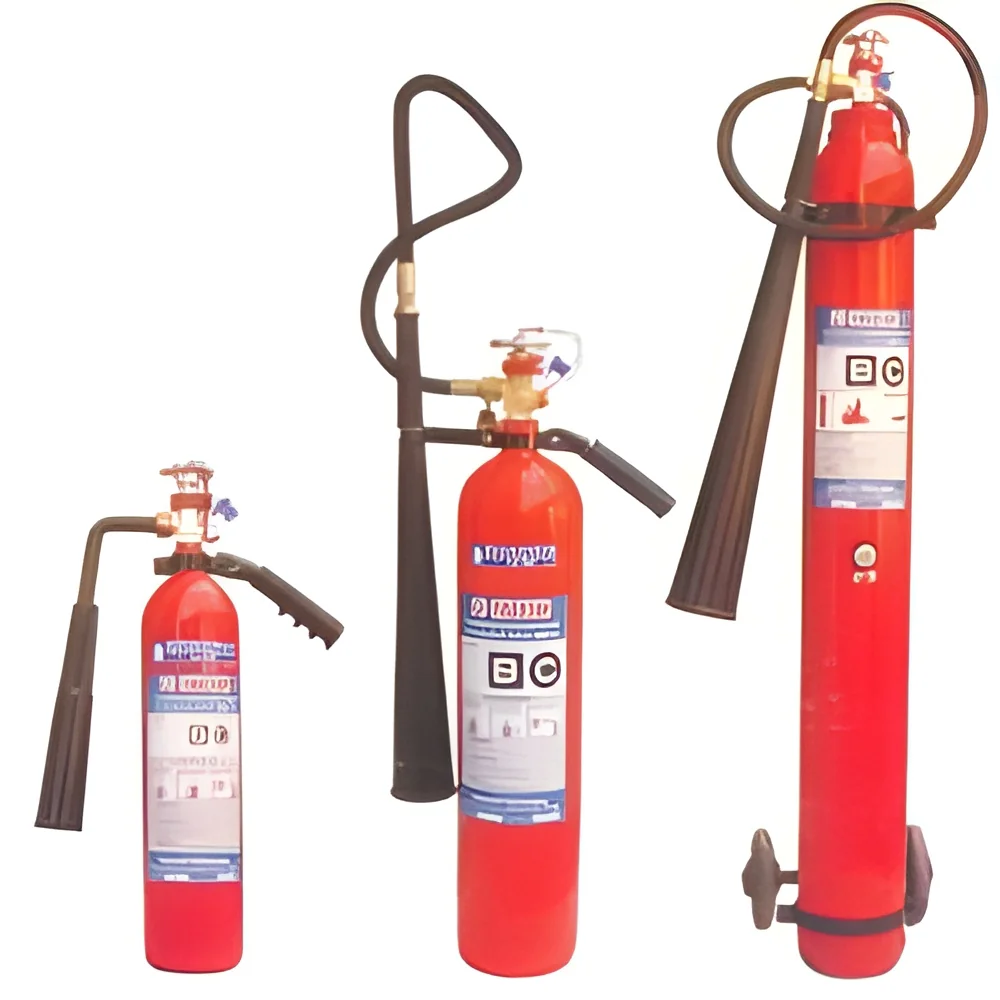
Carbon dioxide fire extinguishers are essential safety devices designed to combat Class B and C fires, which involve flammable liquids, gases, and electrical equipment. These extinguishers operate by releasing CO2 gas, which displaces oxygen to smother flames and simultaneously cools the fire area. Unlike other extinguishing agents, CO2 leaves no residue, making it ideal for environments where equipment cleanliness and protection are critical. Built with durable materials and approved by relevant safety authorities, these extinguishers meet stringent standards for reliability and performance, ensuring they function effectively in emergencies when rapid response is vital.

Industries that utilize sensitive electronics, machinery, and flammable materials greatly benefit from carbon dioxide fire extinguishers. In manufacturing plants, they protect assembly lines and equipment from fires involving oils, solvents, and gases. Data centers and telecommunications facilities rely on them to saf...
Carbon dioxide fire extinguishers are essential safety devices designed to combat Class B and C fires, which involve flammable liquids, gases, and electrical equipment. These extinguishers operate by releasing CO2 gas, which displaces oxygen to smother flames and simultaneously cools the fire area. Unlike other extinguishing agents, CO2 leaves no residue, making it ideal for environments where equipment cleanliness and protection are critical. Built with durable materials and approved by relevant safety authorities, these extinguishers meet stringent standards for reliability and performance, ensuring they function effectively in emergencies when rapid response is vital.

Industries that utilize sensitive electronics, machinery, and flammable materials greatly benefit from carbon dioxide fire extinguishers. In manufacturing plants, they protect assembly lines and equipment from fires involving oils, solvents, and gases. Data centers and telecommunications facilities rely on them to safeguard servers and electrical panels without risk of residue-related damage. Laboratories handling volatile chemicals, power generation facilities with transformers, and automotive workshops with flammable fluids all depend on CO2 extinguishers for their non-conductive and non-corrosive properties. These extinguishers are also prevalent in aviation, marine, and healthcare settings, where electrical fires are a constant concern and asset protection is paramount.

The business value of carbon dioxide fire extinguishers lies in their ability to minimize fire damage, reduce operational downtime, and protect high-value assets. By deploying CO2 extinguishers, businesses invest in a solution that prevents secondary damage from residue, which can be expensive to clean and repair. Their proven reliability ensures compliance with safety regulations, lowering legal risks and enhancing workplace safety credentials. These extinguishers are designed for ease of use and maintenance, offering long-term cost savings and peace of mind. Their effectiveness in critical applications makes them a trusted choice for importers, distributors, and wholesalers serving safety-focused markets.

Key Features:
- Effective on Class B and C fires involving flammable liquids, gases, and electrical equipment.
- Discharges clean CO2 gas without residue, ideal for sensitive machinery and electronics.
- Approved by explosive departments and government safety standards for assured reliability.
- Non-conductive and non-corrosive properties ensure safe use on live electrical systems.
- Robust construction with durable materials for long-lasting performance in demanding conditions.

Benefits:
- Protects valuable assets and equipment from fire damage without leaving harmful residue.
- Reduces downtime and maintenance costs by preventing secondary damage from extinguishing agents.
- Ensures compliance with safety regulations, enhancing workplace safety and reducing legal risks.
- Safe for use on live electrical systems, providing reliable suppression in high-risk environments.
- Offers long-term reliability and ease of maintenance, delivering consistent performance and cost savings.
Specifications
| Additional Information | |
|---|---|
| Country of Origin | India |
Application
Carbon dioxide fire extinguishers are engineered for high-risk environments where electrical systems and flammable liquids are present. They discharge CO2 gas to smother flames rapidly without leaving any residue, making them perfect for safeguarding delicate electronics, machinery, and instrumentation. This clean agent is non-conductive and safe for use around live electrical equipment, providing reliable fire suppression that minimizes damage and downtime in critical situations.
These extinguishers are widely adopted across industries such as manufacturing, data centers, laboratories, and power generation. Their ability to extinguish fires without corrosive or conductive byproducts ensures protection for valuable assets and compliance with safety standards. Businesses rely on CO2 extinguishers for their efficiency in handling flammable liquid and electrical fires, helping maintain operational continuity and reduce potential losses during emergencies.
- Data centers and server rooms to protect electronic equipment from electrical fires without residue damage.
- Industrial manufacturing facilities for extinguishing flammable liquid fires near machinery and production lines.
- Laboratories and research centers where chemical fires require a clean, non-damaging suppression agent.
- Power generation plants and electrical substations to safely combat transformer and switchgear fires.
- Automotive and aviation maintenance areas for handling flammable fluids and electrical system fires.
Trade Details
| Available Stock | In Stock |
| Sample Availability | No |
Payment Terms
| Payment Terms |
|
Company Profile

Arjun Associates, Gujarat
 Gujarat, India
Construction•Trading Company•Distributor / Wholesaler•Retailer
Factory Details
Factory SizeBelow 1000 sqm
Annual Production Capacity0
CO2 Fire Extinguisher For Electrical And Flammable Liquid Fires
CO2 fire extinguishers combat Class B and C fires from flammable liquids and electrical equipment. They protect sensitive machinery and electronics with clean, residue-free suppression, ensuring safety and asset protection.
Min. Order Quantity: 1 unit
Shipping
Shipping fee and delivery date to be negotiated. Contact supplier now for more details.
Arjun Associates
 Gujarat, India
ConstructionTrading Company