IN
IN₹
Apparel & Fashion
Loading subcategories...
View More
Description
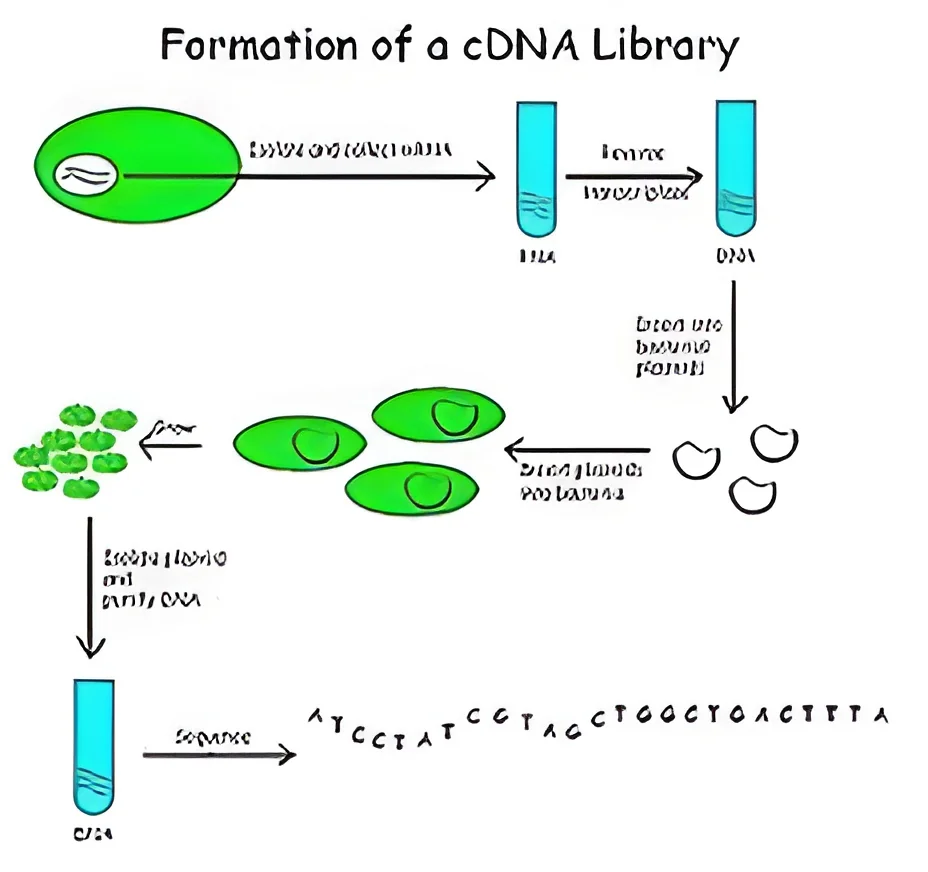
Advanced Genomic Research cDNA Libraries represent essential resources for modern genetic investigation, providing researchers with comprehensive access to expressed gene sequences from specific biological samples. These libraries are constructed through precise reverse transcription of mRNA molecules, resulting in complementary DNA that accurately reflects the active gene expression profile of the source material. This sophisticated process captures only the coding regions of genes while eliminating introns and non-coding sequences, making cDNA libraries particularly valuable for studying protein-coding genes and their expression levels under various conditions. The quality and reliability of cDNA libraries directly influence downstream research outcomes, making purity and accuracy essential factors for achieving successful experimental results. Our cDNA libraries undergo rigorous quality control protocols to ensure high fidelity, full-length clones, and comprehensive transcriptome co...
Advanced Genomic Research cDNA Libraries represent essential resources for modern genetic investigation, providing researchers with comprehensive access to expressed gene sequences from specific biological samples. These libraries are constructed through precise reverse transcription of mRNA molecules, resulting in complementary DNA that accurately reflects the active gene expression profile of the source material. This sophisticated process captures only the coding regions of genes while eliminating introns and non-coding sequences, making cDNA libraries particularly valuable for studying protein-coding genes and their expression levels under various conditions. The quality and reliability of cDNA libraries directly influence downstream research outcomes, making purity and accuracy essential factors for achieving successful experimental results. Our cDNA libraries undergo rigorous quality control protocols to ensure high fidelity, full-length clones, and comprehensive transcriptome coverage that meets the demanding requirements of contemporary genomic research.

Various research-intensive industries utilize cDNA libraries to advance their specific scientific and development objectives. Pharmaceutical companies integrate these libraries into their drug discovery pipelines to identify potential therapeutic targets and validate promising drug candidates through systematic analysis. Biotechnology enterprises employ cDNA libraries for developing innovative diagnostic tools and engineered biological systems that address complex healthcare challenges. Agricultural research institutions apply these resources to study plant gene expression patterns, leading to improvements in crop yield, disease resistance, and environmental adaptability. Academic research laboratories depend on cDNA libraries for fundamental genetic studies, educational programs, and publication-quality research that pushes the boundaries of scientific knowledge. Clinical research organizations utilize these libraries for investigating disease mechanisms and identifying molecular biomarkers for various health conditions, contributing to improved diagnostic and treatment strategies.

The inherent value of high-quality cDNA libraries lies in their capacity to accelerate research timelines while enhancing experimental reliability and reproducibility. By providing consistently characterized libraries, we enable researchers to avoid costly experimental failures and maintain research integrity across multiple projects. Our comprehensive quality assurance processes ensure that businesses can depend on consistent research quality throughout their development cycles, supporting confident decision-making and strategic planning. This reliability translates into significant cost savings through reduced repeat experiments and more efficient research processes, ultimately facilitating faster innovation and product development. The robust nature of our cDNA libraries ensures they perform reliably across various applications, from basic research to commercial development, providing tangible value through dependable performance and consistent results.

Key Features:
- High-quality full-length cDNA inserts ensuring comprehensive gene coverage
- Rigorous quality control protocols maintaining high clone viability and representation
- Construction from specific biological sources including tissues and cell types
- Detailed metadata documentation including library complexity measurements
- Optimization for multiple downstream applications including sequencing platforms

Benefits:
- Accelerated research timelines through reliable and consistent performance
- Enhanced experimental reproducibility across multiple research projects
- Reduced costs associated with experimental repeats and validation studies
- Comprehensive gene coverage supporting thorough expression analysis
- Versatile compatibility with various molecular biology techniques and platforms
Specifications
| Additional Information | |
|---|---|
| Country of Origin | India |
| Customisable | No |
Application
cDNA libraries serve as fundamental tools in molecular biology research, enabling comprehensive study of gene expression patterns across different biological conditions. These libraries capture actively expressed genes from specific tissues or cells, providing researchers with valuable insights into functional genomics and transcriptional activity. Their construction from mRNA transcripts ensures accurate representation of coding sequences, making them essential for various scientific investigations and discovery processes.
Multiple research sectors utilize cDNA libraries for advancing their scientific objectives and innovation goals. Pharmaceutical development relies on these resources for target identification and validation, while agricultural research applies them to improve crop characteristics. Academic institutions employ cDNA libraries for educational purposes and groundbreaking research projects, and diagnostic developers use them for creating advanced testing methodologies. The versatility of these libraries supports numerous molecular techniques and research approaches.
- Pharmaceutical drug discovery and therapeutic target validation processes
- Genetic disease research and molecular biomarker identification studies
- Agricultural biotechnology for crop improvement and gene expression analysis
- Cancer research investigations into tumor-specific genetic profiles
- Academic genomics projects and advanced sequencing initiatives
Trade Details
| Available Stock | In Stock |
| Sample Availability | No |
Payment Terms
| Payment Terms |
|
Company Profile
Bio Globus, New Delhi
 New Delhi, India
New Delhi, IndiaDistributor / Wholesaler•Importer / Exporter
Factory Details
Factory SizeBelow 1000 sqm
Annual Production Capacity0
Advanced Genomic Research cDNA Libraries For Gene Expression Analysis
Advanced Genomic Research cDNA Libraries provide high-quality gene expression analysis tools for biotech, pharmaceutical, and academic laboratories, ensuring accurate and reliable genomic research outcomes with consistent performance.
Min. Order Quantity: 1 unit
Shipping
Shipping fee and delivery date to be negotiated. Contact supplier now for more details.
Bio Globus
 New Delhi, India
New Delhi, IndiaDistributor / Wholesaler